

Understanding Hammer Candlestick Patterns
Discover how hammer candlestick patterns signal potential trend reversals in trading 📉. Learn to spot hammer and inverted hammer candles for smarter moves in South African markets 📊.
Edited By
James Harrington
Chart patterns form a vital part of trading, providing insights into possible price movements by analysing historical data visuals. For South African traders, spotting these patterns can improve entry and exit timing, especially given market idiosyncrasies like higher volatility in JSE shares or effects from local events such as load shedding or political developments.
Recognising reliable chart patterns helps minimise guesswork and sharpens your understanding of buyer and seller behaviour. Common examples include head and shoulders, double tops and bottoms, flags, pennants, and triangles. Each signals momentum shifts or trend continuation, guiding your trades with evidence-backed cues.
Mastering these patterns is not about predicting the future but about interpreting probability with clarity and discipline.
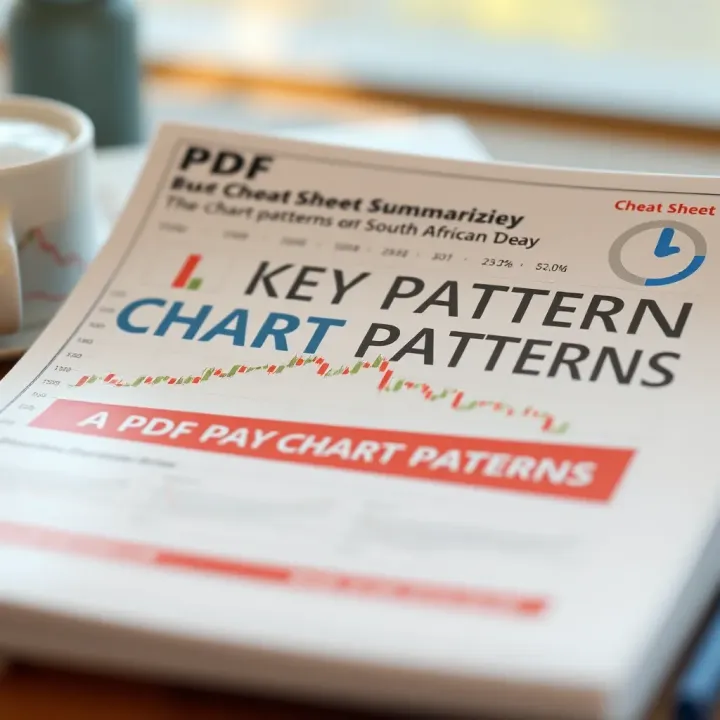
To make these concepts easier to apply, this guide includes a practical PDF cheat sheet summarising patterns with visual cues and typical signals. The cheat sheet is designed with quick referencing in mind, perfect for traders monitoring markets like Sasol shares, Absa Bank stocks, or commodity futures during a hectic trading day.
South African platforms like EasyEquities, IG Markets, or Standard Bank's Webtrader support charting tools where you can test and track these patterns live. Whether you’re trading equities, forex, or commodities, recognising these chart patterns provides a grounded approach to your technical analysis.
In short, this guide steers you through spotting, interpreting, and applying key chart patterns suited to South African markets and trading platforms. It’s a toolkit for making data-driven decisions amid local market realities.
Next up, we break down the main chart patterns you’ll encounter, how to identify them accurately, and the signals they send for better trade management.
Chart patterns reveal the story behind price movements in financial markets. Essentially, they represent the psychological tug-of-war between buyers and sellers, visible through the shapes formed by price fluctuations on a chart. Understanding these patterns equips traders and analysts with clues about potential market behaviour, helping to make better-informed decisions rather than just guessing the next move.
At their core, chart patterns are visual footprints left by market participants. For example, a double bottom pattern signals that sellers tried twice to push the price lower but buyers defended the area, often signalling a reversal upwards. On the other hand, a pennant pattern typically forms after a sharp price movement, suggesting a consolidation before the trend continues. These shapes aren’t just random; they capture shifts in supply and demand, often reflecting traders’ collective emotions such as fear, greed, or hesitation.
Patterns act like signposts rather than crystal balls. Recognising a head and shoulders pattern, for instance, can help anticipate potential trend reversals before they happen, allowing traders to position themselves accordingly. That said, no pattern guarantees outcomes — they should be paired with volume analysis or other indicators for better reliability. Still, their ability to summarise market sentiment over time gives them value, especially for those who prefer technical analysis over relying on news or fundamentals alone.
Successful traders don’t just spot patterns; they understand the story behind them and use them to anticipate key levels where price might stall or accelerate.
Chart patterns appear across different timeframes depending on your trading style. Swing traders may focus on daily or four-hour charts, while day traders often pay closer attention to 15-minute or even five-minute intervals. The key is consistency; applying the same timeframe suited to your style enhances pattern reliability. As for chart styles, candlestick charts remain a favourite among South African traders and globally, as they provide detailed open-high-low-close information clearly. Bar charts also work well, though line charts often lack the full picture needed for pattern recognition. Familiarity with these styles helps traders quickly identify and react to patterns during live market conditions.
In summary, understanding chart patterns is a foundational skill in trading. By recognising what patterns represent in price action and how to use them within suitable timeframes and chart styles, traders gain a clearer perspective on probable market moves. This guide aims to sharpen your ability to decode those chart signals confidently, especially when combined with pragmatic tools like our PDF cheat sheet tailored for South African markets.
Chart patterns provide visual clues on a price chart, helping traders anticipate future moves. Knowing the key patterns isn’t just academic — it’s essential for making informed trading decisions quickly. For example, spotting a reliable reversal pattern early can prevent losses or identify new opportunities amid South Africa’s volatile market environment.
Reversal patterns signal that the current trend, either bullish or bearish, may be about to change direction. The Head and Shoulders pattern, one of the most trusted reversal signals, resembles a peak (head) flanked by two smaller peaks (shoulders). When the price breaks below the neckline support, it often indicates a shift from an uptrend to a downtrend. A South African trader might see this pattern on the JSE’s Top 40 chart after a strong rally and act accordingly by closing long positions.

Double Tops and Double Bottoms are simpler yet effective patterns where price hits a horizontal resistance or support level twice and fails to break through. A Double Top suggests a bearish reversal, while a Double Bottom points to a bullish reversal. These patterns help anticipate turning points without complex indicators.
Continuation patterns indicate a pause before the price continues its existing trend. Flags appear as tight, downward or upward sloping rectangles after a sharp move, typically reflecting a brief consolidation. For example, after a sudden spike in MTN shares, a flag pattern could signal a quick breather before the upward trend resumes.
Pennants look like small symmetrical triangles formed by converging trendlines after a strong price move. They also suggest the trend will continue once broken out.
Triangles come in various forms — ascending, descending, and symmetrical — highlighting tightening price action. Traders watch for a breakout from the triangle’s boundaries to confirm continuation. These patterns are practical for timing entries or adding to existing positions.
The Cup and Handle pattern shows a rounded bottom (cup) followed by a short consolidation (handle). This pattern generally precedes an upward breakout, making it useful for catching upswings in sectors like mining stocks where steady accumulation happens.
Wedges slope against the prevailing trend; rising wedges usually hint at upcoming bearish reversals, while falling wedges suggest bullish moves. These can be spotted on South African market indices during periods of erratic volume or uncertain sentiment.
Rectangles mark periods where price moves sideways between clear support and resistance levels. They suggest consolidation before the next move, helping traders place stop-losses and set profit targets sensibly.
Knowing these chart patterns equips you with a straightforward toolkit for reading price action across various asset classes and timeframes, enhancing both confidence and precision in your trades.
Understanding these patterns opens a window into what the market might do next — enabling practical, timely decisions rather than speculation. Incorporate these patterns into your checklist alongside risk management plans and you'll avoid trading purely on gut feel, even under the pressure of fast-moving markets.
Using a chart patterns cheat sheet can seriously cut down the time you spend analysing charts, especially when the market is moving quickly. It provides a distilled overview of key patterns to watch for, allowing you to spot setups without wading through hours of chart data. For example, during a volatile session on the Johannesburg Stock Exchange (JSE), having a cheat sheet at hand helps you jump straight to patterns like the double bottom or head and shoulders, which can signal a potential reversal.
When trading is rapid-fire, hesitation can cost dearly. A cheat sheet acts like a quick-reference card, summarising essential chart patterns and their typical implications. Instead of scrolling endlessly, you can check your sheet for reminders on pattern formation, breakouts, and stop-loss placements. This swift access reduces the risk of missing trading opportunities or entering late. A trader monitoring the ALSI’s price movements might notice a pennant quickly with a cheat sheet next to them, making decisions more confident and timely.
A cheat sheet isn’t a one-size-fits-all tool; its best use comes from weaving it into your personalised approach. For instance, if your strategy centres on swing trades, your cheat sheet can prioritise patterns with reliable reversal signals. Combine the sheet’s pattern alerts with other indicators you trust, such as moving averages or volume spikes, forming a more robust system. Say you’re keen on momentum, spotting a flag pattern aligned with increasing volume can confirm your entry. This layered approach sharpens your trades while grounding them in your unique style.
Tailoring the cheat sheet boosts its practical value. You could highlight patterns relevant to your preferred markets or timeframes, such as 1-hour charts for intraday or daily charts for longer holds. Add notes on typical price targets or your own triggers for entries and exits derived from past trades. If you find certain patterns harder to recognise, arrange extra diagrams or examples beside them. Some traders prefer colour-coding bullish versus bearish patterns, making recognition near-instant. Keeping the cheat sheet digital on your mobile or tablet means you can adjust it as your trading evolves.
A well-used cheat sheet doesn’t replace skill—it enhances it. Think of it as your pocket guide in the unpredictable flow of the markets, helping you make smarter, faster choices aligned with your trading edge.
Having a well-organised chart patterns cheat sheet in PDF format offers tangible benefits for traders who need to act quickly and decisively. The cheat sheet serves as a quick reference guide summarising key patterns, their implications, and signal characteristics without needing to dig through lengthy textbooks or online articles. This is especially useful when you’re scanning volatile instruments on platforms like Easy Equities or IG South Africa where split-second decisions can affect your bottom line.
The PDF cheat sheet distils a wide range of chart patterns into clear, visually recognisable templates. You’ll find diagrams corresponding to reversal, continuation, and other common patterns such as head and shoulders, triangles, flags, and cup and handle. Each pattern includes brief notes on what to expect next, ideal entry points, and risk management tips. The layout is compact but uncluttered, using colour coding to distinguish bullish and bearish signals. For instance, a red highlight might warn of potential breakouts to the downside, while green hints at bullish continuation.
This concise format means you can refresh your memory in seconds, a must-have when juggling multiple charts or when markets are moving fast.
Downloading the cheat sheet requires minimal effort. Often, it’s shared via reputable trading websites or platforms directly linked to financial education providers familiar with South African regulations and market practices. Save the PDF in a dedicated folder labelled clearly – for example, "Trading Resources" – on your laptop or mobile device. On Windows or macOS, bookmarking the folder for quick access helps avoid faffing around when the pressure is on.
Backing up the file on cloud services like OneDrive or Google Drive ensures you don’t lose it due to device failures. If you ever switch devices, accessing it immediately becomes hassle-free.
Traders today benefit from multi-device flexibility. The PDF cheat sheet adapts well whether you're consulting it on a desktop during market hours, a tablet while commuting, or a mobile phone when away from the desk. On mobile, apps like Adobe Acrobat Reader optimise viewing even with smaller screens, letting you zoom in on intricate patterns without losing clarity.
Pairing the cheat sheet with trading platforms accessible on your smartphone, such as ThinkMarkets or Standard Bank Online Trading, allows for cross-referencing patterns on live charts. This improves your ability to confirm signals and make confident trades, regardless of your location.
Keep your cheat sheet within easy reach across devices — it’s your handy companion when markets throw curveballs.
Integrating the cheat sheet seamlessly into your workflow boosts both speed and accuracy, laying the groundwork for smarter, more informed trading in South Africa’s dynamic market environment.
Understanding how chart patterns behave in the South African markets can give traders and investors a real edge. These markets often show unique traits due to local economic factors, investor sentiment, and liquidity. Applying chart patterns here requires considering these specifics, which differ from more mature markets like the US or Europe.
South African markets, such as the JSE (Johannesburg Stock Exchange), tend to experience periods of heightened volatility, especially around key economic data releases or political events. Volatility spikes can cause rapid price swings, making chart patterns like flags or pennants highly relevant for short-term trading. However, volume can be thin during certain hours, especially in less liquid stocks outside the Top 40. This variation in volume affects the reliability of breakouts and reversals, so traders should confirm pattern signals with volume spikes or use volume-weighted indicators.
For example, a head and shoulders pattern may signal a reversal in a blue-chip stock like Sasol or Naspers if accompanied by increased volume. Conversely, the same pattern on a less liquid stock might not hold as much weight. Recognising these nuances helps balance risk when applying patterns locally.
Several platforms popular among South African traders make chart pattern analysis accessible. These include EasyEquities, IG South Africa, Saxo Bank, and Trading212, most of which provide built-in technical analysis tools to plot and identify chart patterns. For those using mobile devices during a commute or quick market check, apps like ThinkMarkets and MetaTrader 5 (MT5) are widely used.
Many of these platforms offer live volume data, customisable indicators, and drawing tools for marking trendlines, support, and resistance. The ability to overlay moving averages or RSI alongside pattern recognition can improve decision quality. Traders who back-test patterns on historical South African share price data on these platforms often gain better understanding about which patterns work best locally.
Local traders face some challenges when using chart patterns. Eskom loadshedding can disrupt trading plans, especially when internet connectivity falters. Also, lower liquidity in certain shares may lead to false breakouts, requiring extra caution before acting on a pattern. Plus, sudden news events in South Africa, like changes in government policy or commodity price shocks, can quickly invalidate technical setups.
That said, opportunities abound. The South African market's mix of resource stocks and financials means pattern applications vary. For instance, patterns in gold miners behave differently than those in banking shares. With consistent practice and a tailored cheat sheet, traders can identify setups that suit their style—whether they prefer swing trading Sasol or day trading MTN shares.
Practical tip: Use your chart patterns cheat sheet alongside live volume and price action from South African platforms. Confirm patterns with local market context before committing capital.
In summary, applying chart patterns in South African markets requires extra attention to volume, volatility, and platform tools. By understanding these factors, traders can better gauge the validity of patterns and respond effectively to local market moves.
Discover how hammer candlestick patterns signal potential trend reversals in trading 📉. Learn to spot hammer and inverted hammer candles for smarter moves in South African markets 📊.

📊 Learn the basics of forex trading, from understanding market terms to managing risks effectively. Practical tips for trading confidently in South Africa 🇿🇦.

📊 Explore essential tools to analyze, manage risk, and execute forex trades fast. Boost your trading decisions with top software, calendars & apps.

📊 Learn how forex trading systems work and discover key tips for picking the right one. Practical advice for traders in South Africa and beyond. 🌍
Based on 13 reviews