

Forex Trading Seminars in South Africa: What to Expect
Discover top forex trading seminars in South Africa 🇿🇦. Learn how to pick the right one, what to expect, and weigh benefits against risks for smarter trading decisions 📈.
Edited By
Charlotte Mitchell
Swing trading in the forex market offers an appealing balance between short-term and long-term strategies, especially for South African traders who want to tap into global currency moves without staring at charts all day. Unlike day trading, swing trading typically holds positions for several days to weeks, aiming to catch meaningful price swings and profit from market momentum.
What sets successful swing trading apart is the use of effective indicators that cut through market noise and highlight clear entry and exit points. Given the local context — with the South African Rand (ZAR) often influenced by global commodities, political developments, and Eskom's load shedding effects — traders need tools that provide solid signals without overcomplicating analysis.

This article focuses on the practical indicators that have proven reliable in spotting trends, momentum changes, and volatility shifts within the forex markets. These indicators can help you better time your trades on pairs like USD/ZAR, EUR/ZAR, and other commonly traded cross-currency pairs in Mzansi.
Using the right indicators isn't about turning every trade into a winner, but about stacking the odds in your favour with clear, data-backed insights.
You’ll find clear explanations of technical tools such as moving averages, Relative Strength Index (RSI), Bollinger Bands, and Average True Range (ATR), all tailored to the realities South African traders face. Whether you’re trading through platforms like IG or Standard Bank’s online forex service, these key indicators can sharpen your strategy and improve your decision-making.
By combining these tools effectively, you can avoid guesswork and focus on what really matters: timing your entry and exit to capture profitable swing moves amidst the unpredictable currency shifts.
In the sections ahead, we will break down how these indicators work, how to read their signals, and practical tips on applying them specifically to forex swing trading in a South African context.
Swing trading stands out as a popular strategy that suits traders aiming to capture medium-term moves in the forex market. Unlike day trading, which demands constant screen time and quick reactions, swing trading allows for a bit more breathing room, making it appealing for South African traders who might balance trading with other commitments.
At its core, swing trading seeks to profit from price swings or corrections that occur over several days to a few weeks. It’s a middle ground between short-term scalping and long-term position trading. For example, a trader spotting a currency pair like USD/ZAR moving within a channel might enter at support levels and sell near resistance, aiming to catch the next uptick or correction.
This approach depends on spotting meaningful price movements rather than minute-by-minute fluctuations. Swing traders tend to rely on technical indicators to time entries and exits, focusing on changes in trend, momentum, and volatility. It’s less about catching every pip and more about securing solid, repeatable trades.
Swing traders typically use daily and 4-hour charts to spot trade setups. These time frames help filter out the noise common in lower intervals like 5-minute charts while still reacting to market changes faster than monthly charts would allow. For instance, a trader might look for a moving average crossover on the daily chart to confirm a trend while using a 4-hour RSI to fine-tune entry points.
The trading goal here is to hold positions long enough to benefit from a meaningful price move, usually aiming for gains between 50 to 200 pips. Swing trading fits well with the South African forex market's liquidity and volatility patterns, especially during overlap sessions like London and New York.
Swing trading isn't without its hurdles. One common challenge is dealing with overnight risk; positions can be shaken by unexpected news or geopolitical twists impacting currencies such as the ZAR. For example, sudden Eskom load-shedding announcements or political developments can cause sharp moves outside normal trading hours.
Another issue is the temptation to second-guess indicator signals, leading to indecision or premature exits. Without discipline, traders can fall into the trap of overtrading or chasing false breakouts. Managing position size and setting clear stop-loss levels help contain such risks.
Understanding these basics allows traders to build strategies that suit their lifestyle, risk tolerance, and the unique rhythms of the forex market, particularly the South African context. Swing trading offers a practical balance of commitment and opportunity when approached with the right mindset and tools.
These fundamentals frame the rest of our discussion on effective indicators and strategies tailored for South African forex swing traders.
Swing trading in forex depends largely on understanding where the market is headed, how strong a price move might be, and when volatility shifts could affect entries or exits. Indicators help break down this information into practical signals you can act on. For South African traders, where forex markets like USD/ZAR or EUR/ZAR can be influenced by both global and local events, knowing the right indicators and how to use them is crucial.
Moving Averages are among the simplest yet most effective trend indicators. They smooth out price action by averaging closing prices over a set period, highlighting the prevailing direction. For example, a 50-day moving average on a USD/ZAR chart shows the medium-term trend, helping you avoid heading into trades against the current momentum. When price crosses above the moving average, it can signal a potential uptrend and vice versa. Many swing traders use combinations like the 50-day and 200-day moving averages to spot crossovers, which often mark significant trend changes.
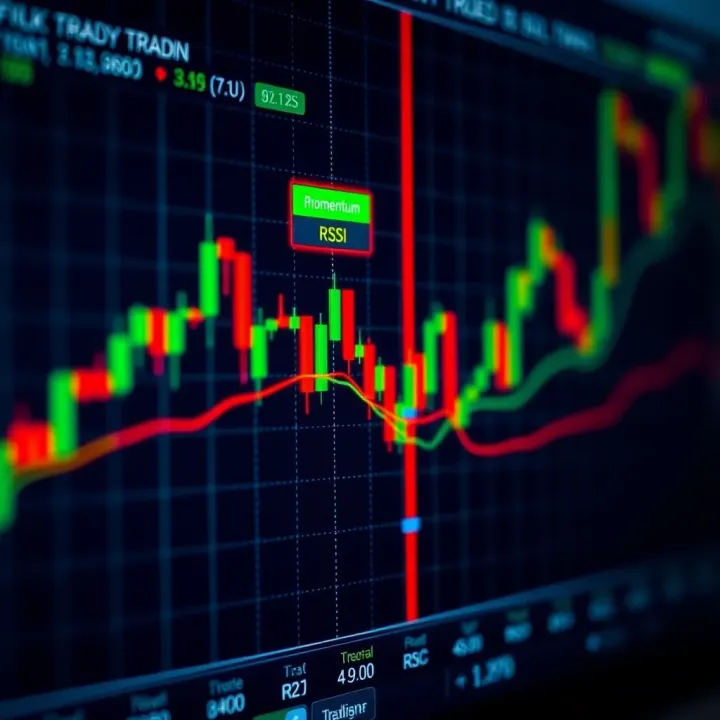
Average Directional Index (ADX) measures the strength of a trend, regardless of direction. Unlike moving averages that indicate trend direction, ADX tells you how robust that trend is. Values above 25 generally imply a strong trend, while below 20 suggests a range-bound market. This is handy for swing traders who want to avoid entering during choppy conditions — for instance, when the USD/ZAR pair is stuck sideways around election periods or during local economic uncertainty.
Relative Strength Index (RSI) helps assess whether a currency is overbought or oversold. It ranges between 0 and 100, with readings above 70 indicating overbought conditions and below 30 suggesting oversold levels. For example, if the EUR/ZAR RSI hits 75, it might be time to consider taking profits or looking for reversal signals. RSI can also hint at weakening momentum before prices reverse, giving swing traders a timely edge.
Stochastic Oscillator compares a closing price to a range over a specific period, signalling momentum shifts and potential trend reversals. Values above 80 indicate a likely overbought market, while below 20 suggests oversold. This indicator is particularly useful for spotting short-term pullbacks in a broader swing trend. So, if the GBP/ZAR stochastic dips below 20 during an overall uptrend, it might signal a good entry point.
Bollinger Bands use a moving average plus and minus a standard deviation to create upper and lower bands. When the bands tighten, it signals low volatility and potential for a breakout. Conversely, when bands widen, the market is more volatile. A South African trader watching the USD/ZAR might note Bollinger Band squeezes as hints of upcoming big moves, adjusting position sizes accordingly.
Average True Range (ATR) measures average price movement to indicate current volatility levels. It doesn't tell direction but helps set stop-loss levels and position sizing. For instance, if the ATR for USD/ZAR widens, you may want to increase your stop distance or reduce position size to manage risk better during unpredictable periods like around SARB interest rate announcements.
Using these indicators together allows you to assess trend direction, momentum strength, and volatility — the three pillars that swing trading leans on. South African traders can tailor these tools to local market quirks, making their strategies more resilient and timely.
Using several indicators together can help swing traders in the forex market develop a strategy that’s more reliable and less prone to false signals. Each indicator looks at price action from a different perspective—be it trend, momentum, or volatility. Combining them effectively means you get a fuller picture, improving your chances of entering and exiting trades at better points.
Confirming signals means using more than one indicator to validate a trade setup before acting on it. For example, if the moving averages suggest an uptrend but the momentum indicator shows weakness, it’s wise to hold off or reassess the entry. This kind of cross-check prevents jumping into trades based on a single indicator, which can often mislead, especially in forex markets prone to sudden moves caused by news or volatility.
Relying on confirmation reduces guesswork and improves your timing, ultimately protecting your trading capital.
Moving averages smooth out price data to indicate the overall direction of the market, while the Average Directional Index (ADX) measures the strength of that trend. When the price sits above a rising 50-day moving average and the ADX is above 25, it signals a strong uptrend. This combination helps you stay on the right side of the market. If the ADX falls below 20, even if the moving average shows an uptrend, it hints the trend might lack strength, advising caution.
The Relative Strength Index (RSI) and Stochastic Oscillator both spotlight when a currency pair is overbought or oversold, but they approach it differently. Using them together can refine entry points. For example, if the RSI dips below 30 (oversold) and the Stochastic also crosses from below 20 upwards, it’s a stronger signal that a price rebound is likely. South African traders can especially benefit from this combo in volatile pairs like USD/ZAR, where sudden moves can happen.
Volatility measures how drastic price swings are. The Average True Range (ATR) gives an idea of typical price movement size, while Bollinger Bands show when prices are moving toward the extremes. Combining these helps decide the right moment to enter or exit trades. If ATR rises and the price touches the lower Bollinger Band, it might signal a buying opportunity before a rebound. Traders should mind local sessions too—for instance, volatility tends to increase around London’s open, impacting ATR readings.
Adding too many indicators can confuse rather than clarify. Each new tool may give contradictory advice, leading to hesitation or missed trades. The key is to keep your setup simple and focus on indicators that complement each other. Most successful swing traders use no more than three to four solid indicators. This keeps analysis clear and decision-making quicker—critical in fast-moving forex markets.
In short, combining the right indicators smartly helps you build a strategy that’s much more than the sum of its parts. It guards against bad trades and sharpens your entries and exits for steady gains in South African forex trading.
Forex swing trading in South Africa comes with its own set of challenges and opportunities. To make the most of your trades, practical adjustments specifically tailored to local market realities are essential. Understanding how local conditions impact factors like liquidity, broker choice, and risk management can give you an edge.
South Africa’s forex market typically experiences varying volatility influenced by global events and local factors such as petrol price changes or SARB policy decisions. Traders must account for these fluctuations when timing entries and exits. For example, the rand (ZAR) tends to react sharply during SARB interest rate announcements, so it’s wise to avoid initiating new swing trades minutes before or after such events.
Additionally, given the 24/5 nature of forex, South African traders may find more favourable trading windows aligning with London or New York sessions, when volume and price movements are more pronounced. Timing your trades during these windows reduces slippage and enhances signal accuracy from your indicators.
Choosing a broker licensed by the Financial Sector Conduct Authority (FSCA) ensures you’re dealing with a regulated entity subject to local oversight, which adds a safety net. Most South African brokers offer MetaTrader 4 (MT4) and MetaTrader 5 (MT5), providing a familiar interface packed with useful indicators for swing trading.
However, brokers differ in spreads, commissions, and execution speed. For instance, a higher spread can eat into profits when your strategy relies on tight stop losses and take profits. Testing broker demo accounts before committing real funds helps identify the platform that suits your trading style and offers fast, reliable execution.
Beyond basic trading platforms, explore broker tools such as economic calendars focused on South African and global releases, and local news feeds—these keep you informed of events likely to trigger market moves.
Effective risk management is the backbone of long-term forex success, especially with swing trading where positions may be held several days. South African traders should calculate position sizes based on their account balance and risk tolerance, typically risking no more than 1–2% of capital per trade.
A practical approach is using the Average True Range (ATR) indicator to set stop-loss levels that adapt to current volatility rather than fixed pips. This prevents premature stop-outs due to normal market noise.
Always remember: controlling losses limits damage and preserves your ability to trade another day.
Consider the effects of local factors such as Eskom loadshedding impacting your access to the trading platform or internet reliability. Keeping trades and risk levels manageable means you’re less vulnerable to sudden disconnects or interruptions.
In sum, applying these practical tips—tailoring strategies to South African market rhythms, selecting trusted local brokers with supportive tools, and managing risk thoughtfully—makes forex swing trading more manageable and potentially more profitable for traders in Mzansi.
Swing trading forex in South Africa comes with its share of pitfalls, especially when relying on technical indicators. Knowing what mistakes to avoid can save you from costly false signals and help you sharpen your edge. Let’s look at three recurring errors traders make with swing trading indicators.
Indicators are tools, not crystal balls. Many traders fall into the trap of depending solely on indicator readings without incorporating price action, support and resistance levels, or broader market behaviour. For example, a Relative Strength Index (RSI) might suggest an overbought condition, but without considering a strong uptrend or significant news, acting solely on that reading could lead to premature exits or entries.
In fact, indicators often lag, reflecting past price movements rather than predicting future ones. It’s like using a rear-view mirror to drive—you need to glance forward too. Making decisions based only on indicator crossovers or thresholds can result in frequent whipsaws and frustration.
South African traders know well that global and local events can snap markets out of usual patterns. Indicators don’t account for unexpected developments like SARB interest rate changes, political shifts, or sudden shifts in commodity prices affecting the rand. If you ignore the market context, you might find your carefully planned indicator-based trades wrecked by unexpected volatility.
For example, an indicator may signal a good time to buy the USD/ZAR pair, but a surprise Eskom loadshedding announcement or new fiscal policy could cause rapid moves against your position. Integrating economic calendars and news feeds into your strategy alongside indicators helps you avoid getting caught on the wrong side of the market.
Jumping straight into live trading without thorough backtesting or demo trading is a costly mistake. Each market, currency pair, and timeframe behaves differently. What works on EUR/USD during European hours may not suit USD/ZAR swings in South African trading hours.
Backtesting your indicator combinations against historical data shows you how the strategy might have performed, highlighting weaknesses and strengths. Demo accounts offered by brokers such as IG or FXTM South Africa allow you to try out setups without risking real money. This step is crucial for building confidence and refining your approach before committing actual capital.
Taking time to avoid these common mistakes creates a more realistic and reliable trading approach, reducing emotional reactions and costly blunders.
By steering clear of these errors, South African forex swing traders stand a better chance of turning indicators into genuine guides rather than misleading signals. Remember, indicators support your trading—they don’t replace sound judgement, context awareness, and disciplined testing.
Discover top forex trading seminars in South Africa 🇿🇦. Learn how to pick the right one, what to expect, and weigh benefits against risks for smarter trading decisions 📈.
Explore how to trade forex the halal way in South Africa! Understand Islamic finance rules and practical tips for complying with Sharia standards 📈🌙
💹 Discover top free forex trading options in South Africa, including platforms, demo accounts, and strategies to trade smartly without risking your money.

📈 Discover how Forex trading sessions impact South African traders. Learn timing, market overlaps, and tips to optimize trading with local time zones. 🌍
Based on 9 reviews