
Forex Trading Basics for South African Traders
📈 Explore forex trading basics for South African traders. Learn practical steps, broker tips, currency pairs, common strategies, and smart risk management to trade confidently.
Edited By
Thomas Blake
Forex trading offers South African traders a chance to tap into the world’s largest financial market, where foreign currencies are bought and sold around the clock. Unlike local stock markets, forex operates 24 hours on weekdays, allowing you to trade whenever it suits your schedule, which can be handy given daily demands and periodic loadshedding.
Understanding the forex market means grasping a few basics. Currency pairs, such as USD/ZAR, reflect how much one currency is worth in terms of another. For example, if the USD/ZAR rate is 18.50, it means 1 US dollar costs 18.50 Rands. This rate fluctuates constantly due to factors like economic data, political events, and global market sentiment.
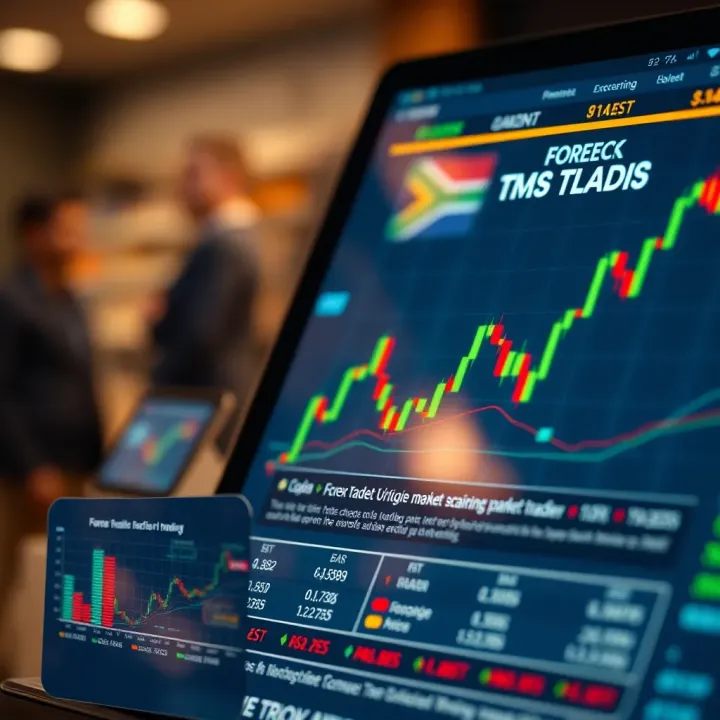
Trading forex isn’t about buying physical currency but rather speculating on whether the value will go up or down. This is done through contracts known as contracts for difference (CFDs) or spot forex trades.
It’s essential to have a clear strategy before trading. Jumping in without one can quickly drain your balance. Even seasoned traders keep risk management at the forefront.
Key terms every trader should know include:
Pip: The smallest price change a currency pair can make, usually the fourth decimal place.
Leverage: Using borrowed funds from your broker to control a larger position. While this can amplify profits, it also increases risk.
Spread: The difference between the buying price and selling price; essentially the cost of entering a trade.
For South African traders, choosing brokers regulated by the Financial Sector Conduct Authority (FSCA) offers a layer of protection. Also, consider how your Rand deposits and withdrawals are handled, as transfer fees and exchange rates can eat into your profits.
Starting with demo accounts can help you familiarise yourself with trading platforms without risking your money. Once confident, using fundamental and technical strategies tailored to local and international events will improve your chances of success.
Next sections will break down practical forex trading strategies and risk management tailored for Mzansi traders, along with tips on making the most of educational materials like PDFs for ongoing learning.
Understanding forex trading is the first step for anyone keen on entering the currency market. This section sets the foundation by outlining what forex trading involves, how currencies move on a global scale, and why it stands apart from other investment options. For South African traders, grasping these basics is key to making informed decisions and avoiding common pitfalls.
The foreign exchange (forex) market is where currencies are bought and sold. Unlike stock markets, it has no single physical location but operates 24 hours on weekdays through a global network of banks, brokers, and electronic platforms. For instance, when you exchange Rands to US Dollars, you’re participating in this market. The volume traded daily surpasses any other financial market, illustrating just how critical it is to global trade and investment flows.
Currencies are traded in pairs, reflecting how much one currency is worth compared to another. Major currency pairs include USD/ZAR, EUR/USD, and GBP/USD, making trading accessible to South Africans wanting to act on movements influenced by economic data or political events. Trades happen electronically, meaning a South African trader can buy Euros from their home without dealing with physical cash or banks.
Forex trading differs mainly in its liquidity and trading hours. Unlike shares or bonds that trade during set hours, forex operates across time zones from Asia through Europe to the Americas, allowing traders to act around the clock except weekends. It also tends to be more volatile, with prices influenced heavily by news, central bank decisions, and geopolitical events, offering both higher risk and reward potential compared to equities or bonds.
South African traders benefit from brokers regulated by the Financial Sector Conduct Authority (FSCA), ensuring safer trading environments. These brokers provide localised support, platforms in Rand, and access to tools tailored to the SA economy. For example, brokers like ThinkMarkets and IG offer demo accounts and educational resources suited to new traders here.
South Africa’s economy faces volatility from currency swings, political shifts, and global pressures. Forex trading lets individuals potentially profit from these fluctuations by speculating on currency moves rather than relying solely on traditional jobs or investments. During times when the Rand weakens against major currencies, traders can take advantage of these moves to generate income, although this comes with significant risk.
With forex markets operating virtually 24/5, South African traders can find active trading sessions during their waking hours. The London and New York sessions overlap during the afternoon here, providing the highest liquidity and volatility — ideal for traders seeking opportunities without needing to stay up late or wake at odd hours. This flexibility suits those balancing trading with regular work or study.
Grasping the essentials in this introduction helps South African traders approach forex with a clear understanding of how the market works locally and globally, setting a solid base for more advanced topics ahead.
Understanding the basic concepts in forex trading is essential for any beginner. These core ideas form the backbone of how trades are conducted, what risks are involved, and how to interpret market data effectively. In South Africa, where followers of the forex market are increasing steadily, grasping these concepts helps ensure that your trading efforts are grounded in solid knowledge rather than guesswork.
At the heart of forex trading is the currency pair. Every trade involves buying one currency while simultaneously selling another. The first currency in the pair is called the base currency, and the second is the quote currency. For example, in the USD/ZAR pair, the US dollar is the base currency, and the South African rand is the quote currency. A quote like 15.50 means one US dollar can be traded for R15.50.
South African traders often focus on pairs involving the rand, along with global majors like EUR/USD or GBP/USD. These major pairs are highly liquid with tight spreads, making them attractive for most traders. Minors and exotic pairs, such as USD/ZAR or EUR/ZAR, combine a major currency with a less frequently traded one. Exotic pairs can offer bigger price swings but usually come with wider spreads and less predictable liquidity.
To make sense of the market, you need to read forex quotes correctly. Quotes represent the price of one unit of the base currency in terms of the quote currency. If the USD/ZAR quote moves from 15.50 to 15.55, it means the rand has weakened, because it now costs more rands to buy one dollar. Understanding these movements helps traders anticipate profits or losses when entering or exiting trades.
Leverage allows you to control a large trade value with a relatively small deposit. For instance, a 1:100 leverage ratio means you can trade R100,000 with just R1,000 in your trading account. This ability magnifies both your potential profits and losses.
While leverage boosts buying power, it also multiplies risks. A small move against your position can quickly erode your capital. Margin is the amount you need to maintain to keep your trade open. If your losses reach a point where margin requirements aren't met, the broker will automatically close positions — known as a margin call.
South African regulations, overseen by bodies like the Financial Sector Conduct Authority (FSCA), have capped leverage at 1:200 for retail traders to help manage risks. This means you can’t overextend your trades blindly, encouraging responsible risk management. Brokers operating locally must comply with these rules, so always check their licence status before trading.
A pip is the smallest price movement in a currency pair, usually the fourth decimal place (0.0001) for most pairs. For USD/ZAR, because the rand has fewer decimal places used, the pip value might differ slightly. Knowing how to calculate pips is vital because they define your profit or loss per trade.
Trades are conducted in lots, which standardise trade sizes. A standard lot equals 100,000 units of the base currency. However, most brokers also offer mini lots (10,000 units) and micro lots (1,000 units), allowing traders with smaller capital to participate without risking too much.
Finally, spreads are the difference between the buying (bid) and selling (ask) price. They represent a direct cost to traders because you start a trade at a slight disadvantage. In liquid pairs like EUR/USD or USD/ZAR, spreads tend to be tighter, but with less traded exotic pairs, spreads widen and can affect profitability, especially for frequent traders.
Mastering these core concepts — currency pairs, leverage, pips, lots, and spreads — can help South African traders build confidence and make smarter decisions in the forex market without getting caught off guard by common pitfalls.
Understanding practical trading strategies is essential for any trader, particularly in the fast-moving forex market. These strategies provide a framework to make informed decisions and manage trades effectively in the South African context, where currency fluctuations and global events constantly impact prices.
Trend following is one of the simplest yet effective methods for beginners. It involves identifying the direction in which a currency pair is moving—upwards, downwards, or sideways—and trading in that direction. For instance, if the US dollar (USD) is steadily gaining against the South African rand (ZAR), a trader might enter a buy position to ride the trend. Breakout strategies, on the other hand, focus on moments when price breaks past established support or resistance levels, signalling potential strong moves. South African traders can spot breakouts by watching key levels during market openings or after major economic announcements.
Not all markets trend continuously; forex pairs often trade within ranges where prices bounce between support and resistance levels. Range trading means buying at the lower bound of this range and selling at the upper bound. For example, if the EUR/ZAR pair oscillates between R18 and R19 without clear trending, a trader could buy near R18 and sell near R19. This requires patience and quick recognition of when the price is reversing, rather than breaking out.
Support and resistance are price points where currencies tend to pause or reverse direction. Support acts as a ‘floor’ preventing prices from falling further, while resistance is a ‘ceiling’ capping price rises. Identifying these levels helps traders set entry and exit points. For South African traders, knowing key support and resistance for pairs like USD/ZAR can avoid entering trades just before sudden reversals, which happen frequently due to volatile local factors like political developments or Eskom announcements.
Indicators such as moving averages smooth out price data to highlight trends, while the Relative Strength Index (RSI) measures if a currency pair is overbought or oversold. These tools help South African traders avoid chasing trades against the trend or entering when the price is stretched. For example, if the RSI signals that ZAR is oversold against the USD, it might be a good time to consider buying.
Candlestick charts provide valuable information in each bar, not just price points. Patterns like “hammer” or “engulfing” can signal reversals or continuation of trends. Recognising these can enhance entry and exit timing. Since South African markets can react sharply to news, being alert to such patterns helps traders anticipate short-term moves and reduce losses.
The most common charts are line, bar, and candlestick charts. Candlestick charts are preferred for their detail in price action, showing open, close, highs, and lows at a glance. Using candlestick charts allows traders to spot market sentiment quickly, which is handy when reacting to South African Reserve Bank (SARB) rate decisions or political events.
Reports like South Africa's GDP growth, unemployment rates, and inflation figures have a direct influence on the rand’s strength. For example, a higher-than-expected inflation reading may lead to SARB considering higher interest rates, which can strengthen the rand. Keeping an eye on these indicators helps traders anticipate market moves before they happen.
SARB’s monetary policy decisions and statements heavily influence forex markets. When SARB changes the repo rate or signals tightening monetary policy, the rand can react sharply. Traders who monitor SARB’s announcements can plan trades around these events, aiming to benefit from volatility rather than being caught off guard.
Global political developments—including trade disputes, elections, or unexpected crises—often cause rapid currency swings. For South African traders, local factors like municipal protests, energy supply problems, or changes in diplomatic relations also matter. Being aware of these events and their potential effects can prevent unnecessary losses and open opportunities.
Staying informed and using a mix of trading strategies and analysis tools improves your chances of success in the volatile forex market. Always align techniques with your risk tolerance and trading goals, especially within the unique South African economic landscape.
Managing risks and emotions plays a vital role in forex trading, where market moves can be rapid and unpredictable. For South African traders, understanding how to control risk and keep emotions in check helps protect capital and make more objective decisions, especially amid an economic environment that experiences local and global shocks. Without risk controls and emotional discipline, even the best strategies can lead to costly mistakes.
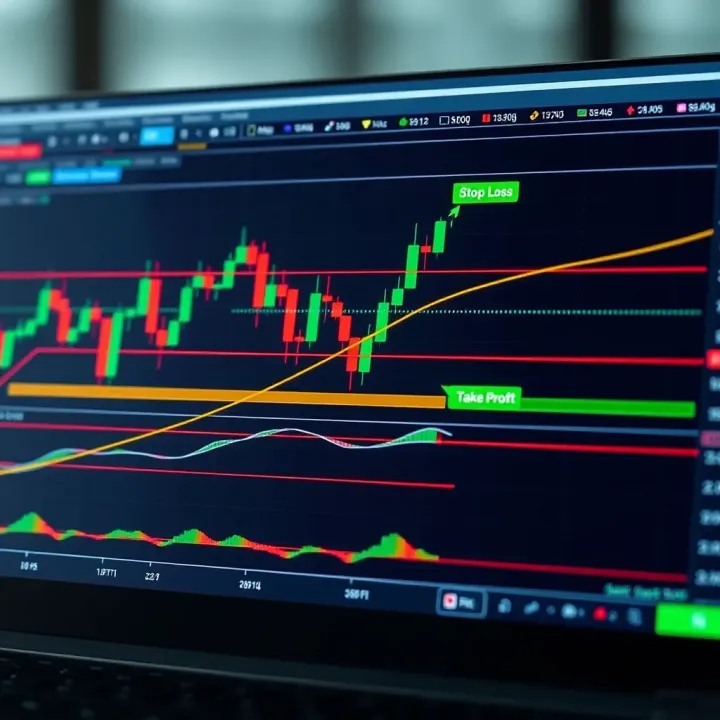
Setting stop-loss and take-profit points is a foundational practice for controlling potential losses and securing profits. A stop-loss order automatically closes a trade when the price hits a certain unfavorable level, limiting how much capital a trader loses on a single trade. Conversely, a take-profit point locks in gains once the price reaches a desired level. For example, if you buy USD/ZAR at R15.00 and set a stop-loss at R14.70, you control your maximum loss at roughly 0.30 Rands per unit, which could prevent bigger damage if the rand strengthens sharply.
Position sizing according to capital means adjusting the size of your trades so that losses don’t wipe out a big chunk of your account. A common recommendation is risking no more than 1–2% of your trading capital per trade. For instance, if your account balance is R10,000, setting a maximum risk of 1% means the most you should lose per trade is R100. This tactic prevents a string of losses from draining your entire pot and helps maintain steady growth.
Avoiding common risk mistakes such as overleveraging, chasing losses, or trading without a clear plan is key to long-term success. Overleverage, especially with brokers offering high multiples, can amplify both gains and losses dangerously. Chasing losses, driven by frustration or hope, often leads to bigger bets and bigger setbacks. Sticking to predefined risk limits and trading plans, even during volatile moments, can save you from rash decisions.
Dealing with fear and greed is about recognising how these emotions push you away from rational trading. Fear may cause premature exits or prevent entering trades altogether, while greed can tempt you to hold losing positions too long or overtrade. For example, a trader might close a profitable position too soon fearing a reversal, missing out on bigger gains. Awareness helps traders pause and review decisions more calmly.
Building discipline and patience means developing the habit to follow your trading plan consistently and waiting for setups that meet your criteria instead of forcing trades. Discipline stops impulsive decisions, and patience ensures you avoid jumping into the market without clear signals. Think of it as waiting for the robot to turn green rather than rushing into traffic out of eagerness.
Keeping a trading journal is a simple yet powerful tool to improve over time. Recording your trades, reasons for entering or exiting, and the emotions felt during the trade helps identify patterns of success and failure. Reviewing your journal regularly highlights where adjustments are needed and keeps you accountable.
Managing both risk and emotion isn't just part of trading; it’s the backbone of survival in the forex market. Without them, even the smartest strategies can run aground.
Forex trading PDFs and learning materials serve as valuable tools, especially for South African traders getting started or aiming to sharpen their skills. They provide structured, often step-by-step breakdowns of complex concepts like currency pairs, leverage, and trading strategies. By using these guides, you can absorb information at your own pace without getting overwhelmed by jargon or scattered online content.
Common topics covered typically include an introduction to the forex market, how to read currency charts, understanding pips and lots, risk management tactics, and often sample strategies. These PDFs often highlight real-world applications, explaining how economic indicators and central bank policies—like those from the South African Reserve Bank—affect currency values.
Beyond basics, good PDFs will dive into technical analysis tools such as moving averages and RSI, helping you recognise patterns that indicate potential trades. Learning these fundamentals through a well-organised document prevents hunters from piecing knowledge together from random sources with varying reliability.
How to identify quality materials is crucial. Look for PDFs authored or endorsed by reputable South African brokers or financial institutions. Materials that include clear definitions, up-to-date examples relevant to the rand (ZAR), and guidelines on local market practices stand out. Be wary of overly promotional content or vague explanations without supporting data or charts.
Well-edited PDFs free from errors and jargon demonstrate professionalism—something to watch for. Also, check if the PDF updates regularly since forex markets evolve with changing regulations and global events.
Benefits of structured guides include the ability to revise key points quickly and to use them as ongoing references. Unlike scattered articles or videos, PDFs often organise content logically, from beginner basics to advanced techniques, making revision easier. It’s like having a textbook specifically tailored for the South African context, which is handy given our unique market influences, such as Eskom load shedding or SARB rate changes.
Local trading communities and forums provide a grounded perspective that online global groups may lack. Engaging with South African traders in forums or WhatsApp groups can offer insight into prevailing market sentiment and locally relevant events affecting currency pairs, such as municipal elections or trade policy shifts.
These communities are also useful for troubleshooting strategy questions or sharing tips on brokers and tools, creating a support network that can keep you accountable and motivated.
South African brokers providing education are an important resource. Many brokers like IG South Africa, Plus500, or ETFinance offer webinars, tutorials, and demo platforms designed with the local trader in mind. Their educational content often includes commentary on the rand and guidance on managing forex trading tax reports in line with SARS requirements.
Taking full advantage of broker education can give you tailored support and practical examples on how to deploy strategies within relevant regulatory frameworks.
Using demo accounts to practice safely tops the list for building confidence without risking real capital. Most SA-registered brokers provide demo accounts where you trade with virtual money but under real market conditions. This hands-on approach lets you test strategies, understand platform mechanics, and develop discipline without pressure.
Make sure to treat demo trading seriously: track your performance, adjust your approach based on results, and simulate real risk conditions to avoid being caught off guard in live trading.
Using a blend of PDFs, local communities, broker education, and demo accounts equips South African traders with a well-rounded toolkit, paving the way for informed and confident forex trading in the rand market.
📈 Explore forex trading basics for South African traders. Learn practical steps, broker tips, currency pairs, common strategies, and smart risk management to trade confidently.
🤖 Considering which forex trading robot suits South African traders? Discover key features, local factors, risk tips, and popular choices to make smart forex moves.
Learn key forex terms every South African trader must know 🔍 From currency pairs to leverage and order types, boost your trading skills today!
📊 Master effective forex trading techniques tailored for South African traders. Learn smart strategies, risk management, tools, and plan your success!
Based on 14 reviews