
Essential Forex Terms Every South African Trader Should Know
Learn key forex terms every South African trader must know 🔍 From currency pairs to leverage and order types, boost your trading skills today!
Edited By
Daniel Foster
Forex trading in South Africa offers enticing opportunities, but it also carries substantial risks. The forex market’s volatility can turn a profitable trade into a loss in a blink. That's why smart risk management isn’t just a nice-to-have; it’s an absolute must for traders who want to survive and thrive.
Risk management means protecting your capital and controlling your exposure while aiming for reasonable returns. Unlike other investments, forex trading often involves leverage, which magnifies both profits and losses. For South African traders, understanding how to navigate this leverage thoughtfully is key — especially considering local brokers and regulatory frameworks like those from the Financial Sector Conduct Authority (FSCA).

Managing risk effectively prevents costly mistakes that can wipe out your trading account overnight. It’s the difference between sticking around for the long haul or quitting after a few bad trades.
A few key principles anchor sound risk management:
Set stop-loss orders: Always decide before entering a trade how much loss you’re willing to accept and set your stop accordingly. For instance, limiting your risk to 1% or 2% of your total trading capital per trade keeps the impact of any one losing position manageable.
Use leverage sparingly: Just because your broker offers 1:100 or higher doesn’t mean you should use it fully. Many traders benefit from using lower leverage, such as 1:10 or 1:20, to reduce exposure. This is especially important with the rand’s sometimes erratic swings against major currencies.
Diversify your trades: Don’t put all your eggs in one basket. Spread trades across different currency pairs or even other asset classes like commodities or indices offered on your platform to minimise correlated losses.
Keep a trading journal: Writing down every trade, the reasons behind it, and the outcome helps identify patterns, emotional triggers, and mistakes. This disciplined approach improves decision-making over time.
Clear-eyed risk management doesn’t mean avoiding risk altogether. It means knowing exactly what risks you face and having a plan that limits catastrophic loss without choking off potential gains. For South African traders contending with everything from Eskom loadshedding to unexpected rand volatility, these strategies form the backbone of sustainable forex trading.
From here, we’ll explore specific tactics and tools tailored to the South African forex environment to help you protect your capital and build confidence in your trading journey.
Grasping what risk means in forex trading is fundamental for anyone looking to protect their capital and make steady gains. Risk isn’t just about losing money; it reflects the various uncertainties that can sway outcomes. By understanding different risk types, South African traders can make smarter decisions, knowing which hazards they face and how to prepare for them.
Forex markets are famously volatile, with many factors influencing currency prices daily. For example, the South African rand (ZAR) can jump or drop sharply following an unexpected SARB interest rate change or political developments in Pretoria. These fluctuations can wipe out profits or amplify losses if traders don’t monitor positions closely or hedge appropriately.
Sudden moves driven by global events—like US Federal Reserve announcements or geopolitical tensions—increase unpredictability. This requires traders to remain alert and use tools like stop-loss orders to cap potential damage.
Leverage lets traders control a larger position with a smaller deposit, but it’s a double-edged sword. While it can boost profits, it can also magnify losses quickly, even wiping out your initial investment if the market moves against you.
South African brokers regulated by the FSCA typically offer varying leverage levels, but traders need to be cautious. For instance, using 100:1 leverage means a 1% market move against you could erase your entire margin. Proper position sizing and risk limits are essential to avoid blowing out your account.
Not all brokers are created equal. In South Africa, the FSCA regulates financial service providers to ensure transparency and safety, but traders should still vet their broker carefully. Issues like poor execution, hidden fees, or even outright scams can cost money beyond market losses.
For example, trading with an unregulated offshore broker might mean no recourse if your funds become inaccessible. Reliable brokers provide safeguards such as segregated client accounts and regular audits to protect traders.
Poor risk management leads to a slow, painful drain on capital. Instead of one big loss, repeated small losses can accumulate unnoticed, making it harder to recover. For a trader starting with R50,000, consistently risking 5% per trade could see the account wiped out in just 20 losing trades.
Therefore, setting clear loss limits and using tools like stop-loss orders is crucial to preserve trading capital over time.
Risk doesn’t just affect your wallet – it also messes with your mind. Losing streaks can shake confidence, prompting impulsive decisions or revenge trading where you chase losses recklessly.
For instance, after a big loss during Eskom-induced market swings, a trader might abandon their strategy and take larger risks to "win back" money, often worsening their situation. Maintaining discipline, sticking to plans, and recognising emotional triggers are as vital as the technical aspects of risk management.
A strong grasp of risk types and their consequences is the first step in developing effective strategies to protect your money and emotions while trading forex.
Through understanding these risks, South African traders can better balance opportunity and caution, tailoring their approach to local market quirks and regulatory standards.
Setting up a clear risk management plan is essential for any forex trader looking to protect capital while staying active in the markets. This is especially important for South African traders who face unique challenges, such as rand volatility and local brokerage constraints. A risk management plan provides structure, helping you make decisions based on your financial capacity and market conditions rather than emotion.
Assessing financial capacity and goals is the starting point. Before diving into trades, understand how much you can actually afford to lose without impacting your lifestyle or essential expenses. For example, if you have R50,000 allocated for trading, deciding to risk 2% per trade means a maximum loss of R1,000 on any single position. Aligning this with your financial goals—whether it’s growing capital steadily or aiming for short-term speculative gains—frames how aggressive or conservative your approach should be.
Defining acceptable loss thresholds takes this further by setting mental and financial boundaries that prevent reckless decisions. Traders often feel tempted to chase losses, but agreeing on a daily or weekly loss limit can stop you before such behaviour spirals. For instance, you might set a daily loss cap of 4% of your trading capital. Once hit, you close the market for the day. This discipline safeguards against the temptation to keep trading just to make back money, which often leads to bigger losses.
Calculating position sizes based on risk is a practical way to limit losses in volatile markets. Essentially, knowing how much you’re prepared to lose per trade helps you decide how large your position should be. For example, if your stop-loss is 50 pips and you’re willing to risk R1,000, your position size should not exceed R20 per pip (R1,000 ÷ 50 pips). This calculation helps you stay consistent with risk even if the market swings wildly.
Adapting sizes to changing market conditions is just as important. During periods of increased volatility—say, after a surprise South African Reserve Bank (SARB) announcement or amid Eskom-related load shedding worries—it’s wise to reduce your position sizes. Smaller positions mean smaller losses if the market moves against you. Conversely, when conditions are calm, slightly larger sizes may be acceptable. Flexibility here prevents locking in one fixed size that might be risky in uncertain times.
A focused risk management plan is your trading compass—it guides you through market ups and downs by clarifying limits, aligning your goals, and keeping your losses manageable.
By assessing your own financial capacity and setting acceptable loss levels, you create a safety net. Position sizing then becomes the tool that enforces this safety net across every trade. Together, they build a solid foundation before you even place your first order in the market.
In forex trading, especially in the South African context, having the right tools and techniques to control risk is essential. These tools help you protect your capital and maintain discipline, preventing unnecessary losses during volatile market swings. For traders here, managing risk is not just about cutting losses but also about ensuring consistent trading practices that align with personal goals and the peculiarities of the rand and global currencies.
Stop-loss orders are crucial for limiting potential losses. Setting these levels involves deciding the maximum amount you are willing to lose on a trade, based on your risk tolerance and the currency pair’s volatility. For instance, if you're trading USD/ZAR and expect price swings of around 100 pips daily, placing a stop-loss too close, say 10 pips away, might trigger premature exit due to normal fluctuations. Instead, positioning it at a sensible distance, say 50 pips, respects market noise while protecting your capital.
Predefined exit points like stop-loss and take-profit orders also help remove emotions from trading. When you set these in advance, you stick to a plan rather than reacting impulsively to market swings. For example, locking in profits with a take-profit order at R500 gain removes the temptation to hold a position too long, risking a reversal. This disciplined approach is especially important given how easy it can be to get caught up in sudden rand volatility driven by local news or global events.
South African brokers typically offer leverage ratios ranging from 1:10 to 1:200, but FSCA regulations and trading platforms each have their limits. Understanding these limits matters because higher leverage magnifies both gains and losses. Suppose the maximum leverage allowed for a particular broker is 1:100, using it aggressively without proper controls can wipe out your account in minutes during sharp rand movements.
Balancing potential gains and risks means using leverage cautiously. If you’re new or cautious, opting for lower leverage like 1:10 or 1:20 helps you stay in the game longer and learn market behaviour without huge stakes. Consider this: a R10,000 trading account with 1:20 leverage means controlling R200,000 worth of currency. A 1% price move against your position equals a R2,000 loss — a hefty hit if you're not prepared. So, wise use of leverage ties into broader risk management, ensuring that your rewards don’t come at the expense of risking your entire capital.
Tools like stop-loss orders and responsible leverage use form the backbone of sound risk management. Without them, even skilled traders can find themselves in deep water fast.
In short, these risk control techniques help South African forex traders stay steady amid the market’s twists, strengthening the chance for sustainable gains over time.
Discipline and solid decision-making form the backbone of successful forex trading, especially in volatile markets like South Africa's. Without these, even the best strategies can fail. Traders who develop good habits around sticking to their plans and managing impulses protect themselves from costly mistakes and erratic moves.
Avoiding emotional decisions is a challenge many traders face. When a volatile Rand (ZAR) move sends your trade into the red, it's tempting to panic-sell or double down rashly. However, emotion-driven trades often lead to bigger losses. Instead, following a clear strategy helps keep feelings in check. For instance, if your plan includes cutting losses at a certain stop-loss level, respect that rule even on difficult days. This discipline prevents chasing the market or holding onto losing positions out of hope.
Sticking to predefined plans means planning your trades before entering the market and trusting that plan despite short-term noise. Trades based on research and set rules tend to weather ups and downs better. For example, a trader who has analysed the ZAR/USD pair might set entry, exit, and risk parameters, then stick to these regardless of sudden news headlines or robot outages affecting market quirks. This steadiness avoids knee-jerk decisions that derail your overall performance.
Tracking trades and outcomes helps traders see patterns in their actions and results. Writing down every trade — including entry price, exit, reasons for the trade, and emotions at the time — creates accountability. It turns abstract performance into concrete data. For example, a Johannesburg-based trader might notice that trades taken around Eskom’s loadshedding announcements tend to underperform, highlighting specific timing risk.
Learning from mistakes and successes comes naturally from reviewing your journal. Reflecting on what went well and what didn’t allows you to adjust your strategy reasonably. Instead of blaming the market or luck, you begin spotting recurring errors, like overtrading after a win or ignoring stop-loss signals during stressful periods. This ongoing self-review builds discipline and sharpens your decision-making skills, making you a consistently better trader over time.
Keeping emotions out of trading and committing to a structured plan profoundly improves your chances of long-term success. A trading journal reinforces these habits by making your decisions transparent and ripe for improvement.
Trading forex in South Africa requires an approach tuned to local conditions. This means looking beyond just the charts to understand how regulations, economic shifts, and infrastructure affect your risk. Local factors can shape your trading strategy’s success or failure, so taking them seriously helps safeguard your capital.
South Africa’s Financial Sector Conduct Authority (FSCA) oversees financial services, including forex brokers. Choosing an FSCA-regulated broker isn’t just a recommendation—it’s a safeguard. These brokers must meet standards on transparency, capital adequacy, and fair treatment of clients. For example, FSCA regulation helps ensure your funds are protected in segregated accounts and reduces the chance of scams or fraudulent platforms, which unfortunately still crop up.
Compliance with financial laws means understanding the framework around forex trading here. The FSCA sets rules on leverage limits and client disclosures, ensuring traders don’t take on excessive risk unknowingly. Besides regulation, you must also comply with tax laws for profits earned. Declaring forex income through SARS and understanding any implications on your tax returns keeps you on the right side of the law, avoiding fines or penalties that can wipe out gains.
The South African Rand (ZAR) often swings with local economic news—think interest rate changes by the South African Reserve Bank (SARB), political developments, or GDP updates. Such volatility presents both opportunity and risk; a sharp rand movement can swiftly alter trade profitability. Keeping an eye on SARB announcements or Treasury statements helps you anticipate these jolts rather than react blindly.
Data costs and internet connectivity play a surprisingly big role. Forex trading needs real-time prices and swift order execution, which unreliable or expensive data can hinder. Many South African traders face limited or costly mobile data, especially outside Gauteng or coastal hubs. Using data-efficient trading apps or subscribing to affordable broadband plans can reduce interruptions. Plus, having backup access—like another mobile network or a prepaid data bundle—means you won’t miss out when crucial market moves happen.
Understanding these local market specifics isn’t just extra knowledge; it’s a vital part of managing your trading risk effectively.
By factoring in the FSCA’s role, staying compliant with financial laws, watching rand volatility, and managing connectivity wisely, South African traders equip themselves to trade smarter and safer.
Learn key forex terms every South African trader must know 🔍 From currency pairs to leverage and order types, boost your trading skills today!
📊 Master effective forex trading techniques tailored for South African traders. Learn smart strategies, risk management, tools, and plan your success!
💱 Understand Forex trading in South Africa: Learn how currency buying and selling works, key players, risks, strategies, regulations, and choosing the right broker.
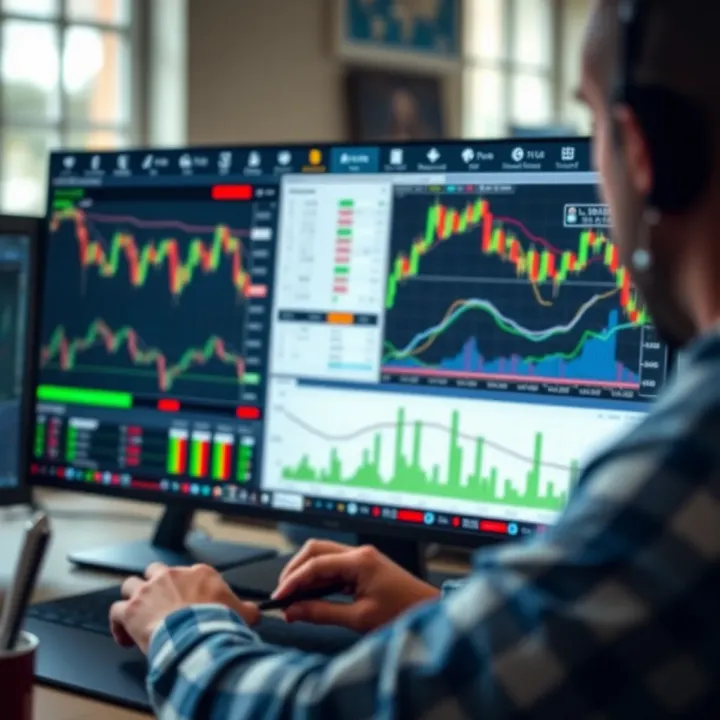
Explore essential forex trading software 🖥️ for South African traders! Learn types, features, security tips, and choose the right platform for success 📈
Based on 9 reviews