
Forex Trading Basics for Beginners in South Africa
Learn the basics of forex trading in South Africa 🇿🇦. Get practical tips, understand risks, and start trading confidently with local insights 📈💡.
Edited By
Benjamin Shaw
Starting with forex trading in South Africa can feel like stepping onto a busy robot-controlled intersection without a map. You’ve got to learn the basics, understand market movements, and develop strategies before risking your hard-earned Rands. A solid way to grasp these early stages is through carefully selected books that explain the essentials clearly and practically.
Forex trading books aren’t just about theory; they offer insight into how currency markets function, cover practical trading strategies, and help you avoid costly mistakes common amongst beginners. Since the South African rand (ZAR) is often influenced by global commodities and political factors, it’s even more vital to understand both the basics and the local flavour.
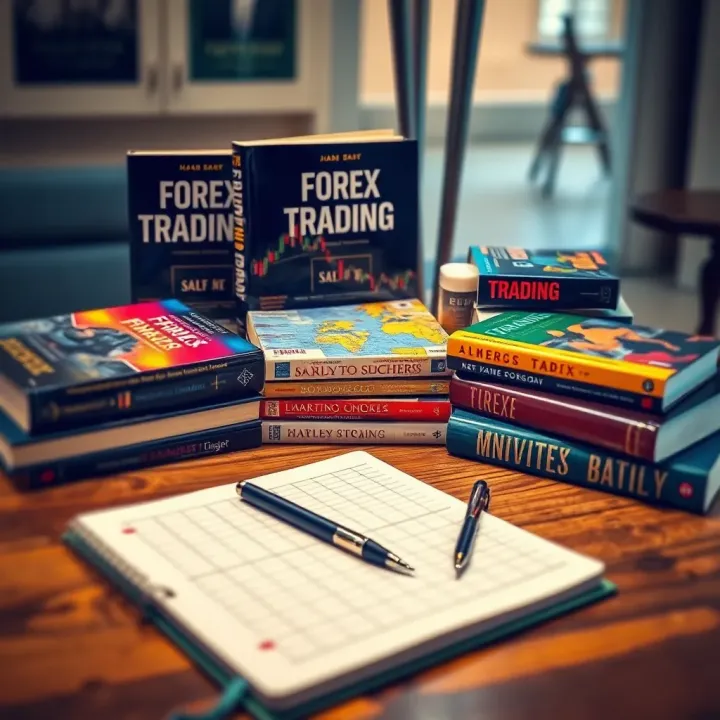
Reading the right forex books can strengthen your foundation and complement other learning tools like online courses or real-time demo trading, setting you up for smarter trading decisions.
When choosing books, look for those that explain:
How forex markets operate, including major and minor currency pairs
The impact of economic news and geopolitical events on currency values
Risk management techniques tailored for beginner traders
Step-by-step strategy guides suitable for different market conditions
Avoid books packed with jargon without explanation or ones that promise quick riches. Instead, opt for authors with a track record in forex education or trader mentoring.
Combine book knowledge with local trading realities, such as understanding how Eskom’s load shedding can affect market hours and liquidity, or how global trends link to South Africa’s economic cycles. This approach keeps your learning relevant and actionable.
In short, the books you pick should demystify forex trading, demarcate pitfalls, and balance theory with practical advice. Next, we will look at some carefully chosen titles that meet these criteria and fit the South African context well.
Getting a solid grasp on the basics of forex trading is not just helpful—it’s absolutely necessary if you want to avoid costly mistakes. This section will break down what forex trading is, as well as some key terms you will encounter right from the start. Knowing these foundations will make the rest of your learning curve smoother and boost your confidence when you start putting theory into practice.
Forex trading involves buying and selling currencies against each other. Think of it as exchanging your Rands for US Dollars or Euros, but with the intent to profit from small price movements. Unlike local markets, forex trading happens globally, nearly 24/5, with huge daily volumes—around $7 trillion worldwide. This vast scale makes it the largest and most liquid market, meaning you can generally enter or exit trades quickly.
In South Africa, trading forex usually happens through brokers who provide platforms for retail traders. Whether you’re looking to hedge against currency risks or try your hand at speculative trading, understanding how these currency pairs work and how the market functions is your starting point.
Currency pairs are the backbone of forex trading. Every trade involves two currencies—one you’re buying and one you’re selling. For example, the USD/ZAR pair shows the price of one US Dollar in South African Rand. When you hear about 'major pairs' like EUR/USD or GBP/USD, these are globally traded currencies with tight spreads and high liquidity.
A pip is the smallest price move you can see in the exchange rate. For most pairs, one pip equals 0.0001, though for USD/ZAR, which is quoted differently, it might be a slightly different value. Understanding pips helps you calculate your profits or losses accurately. So, if the USD/ZAR moves from 15.2000 to 15.2100, that’s a 100 pip change.
Leverage allows you to control a larger position than the money you have in your trading account by borrowing from the broker. For example, a leverage of 1:100 means R1,000 in your account can control R100,000 in the market. While this can increase gains, it equally increases losses, sometimes beyond your initial investment.
Margin is the amount of your own money you need to open and maintain a leveraged trade. If you don’t have enough margin, your position might be closed automatically to prevent further losses. Retail traders often overlook how quickly leverage can turn against them if markets move unexpectedly.
The forex market never really sleeps but opens and closes in cycles aligned with major financial centres—Sydney, Tokyo, London, and New York being the main hubs. For South African traders, the London session is especially relevant since it overlaps with local business hours and often sees the highest market activity.
Participants include central banks, commercial banks, hedge funds, corporations, and retail traders like yourself. Each plays a role in market liquidity and price movement. Being aware of when these players are active can help you time your trades better and avoid periods of low liquidity where spreads widen.
Understanding how currency pairs move and the risks of leverage, combined with knowing the timing of the market sessions, will save you from unnecessary losses and position you better for success.
By digging into these basics first, you set a strong foundation to understand more advanced topics and get the most from recommended reading or practical trading experience ahead.
Books lay the foundation for anyone stepping into forex trading. They provide a solid baseline that equips traders with the fundamental concepts and terminology needed to make sense of market movements. Especially here in South Africa, where access to formal forex courses might be limited or costly, books offer an affordable, accessible way to build knowledge without rushing into live trading.

Books cover a wide range of fundamental topics that beginners must grasp before risking real money. For instance, they explain currency pairs, pips, spreads, leverage, and margin in depth — topics that can confuse newcomers at first glance. A book like "Forex for Beginners" by Anna Coulling breaks these ideas down clearly, allowing you to revisit sections as needed without pressure. This thorough explanation ensures you understand the mechanics behind forex before applying the strategies.
Books typically follow a guided path, presenting information in a logical sequence. This structure helps learners progress smoothly from simple concepts to more complicated ones. Instead of piecing together information from random online sources, a book directs your focus, making it easier to retain and connect ideas. It’s like having a well-planned syllabus for your self-study, which is quite handy if you want to avoid jumping from one topic to another without making progress.
One of the biggest perks of books is that you can learn whenever it suits you — no fixed classes or deadlines. Whether you have an hour before work, or just ten minutes during your lunch break, books allow you to pause, reflect, and return when ready. For South African traders balancing work, family, and sometimes unreliable internet, this flexibility makes forex education manageable.
Forex markets are influenced by political events, economic releases, and global crises that shift rapidly. Books, especially printed ones, can't keep up with these changes. What you read about trading strategies or economic indicators might be outdated just months later. For example, a book written before the Covid-19 pandemic won’t cover the unusual volatility experienced in 2020.
Reading alone won’t make you a successful trader. Practical experience in a simulated or live environment is crucial. Trying out what you’ve learned on a demo account lets you test strategies without losing any capital. This hands-on practice sharpens decision-making skills, which books can’t provide by themselves.
To thrive in forex, you need current market information and insights. Following local sources like MyBroadband or BusinessTech, and global economic calendars, will keep you updated. Online courses or webinars can clarify complex topics quickly and offer interaction with experienced traders. Combining books with these real-time tools creates a well-rounded learning approach, especially for South African traders facing unique challenges like load shedding impacting their study or trade sessions.
Remember, books are a stepping stone. They open the door to forex, but walking through and thriving in that space requires ongoing learning and experience tuned to today's fast-moving markets.
Choosing the right books is a vital step for anyone starting out in forex trading, especially in a diverse market like South Africa's. These books don’t just explain the basics—they provide tools to understand market behaviour, trading strategies, and the psychological aspects of trading. By exploring a mix of foundational texts and specialised guides, beginners get practical knowledge that can be applied straight away, avoiding common pitfalls.
Currency Trading for Dummies by Brian Dolan provides a straightforward introduction to forex trading for absolute beginners. Dolan cuts through the jargon, breaking down complex terms like currency pairs, pips, and leverage into easy-to-understand language. This book is particularly useful for South African traders who might be overwhelmed by the fast-moving global forex market, as it explains key concepts with practical examples, making the learning process less intimidating.
The book also places emphasis on the mechanics of trading, helping readers understand how trades are executed and what factors affect currency prices. For instance, it discusses how economic events in countries like the US or China can impact the rand. This awareness is crucial if you want to trade with some sense of the bigger picture instead of just guessing.
Forex for Beginners by Anna Coulling complements Dolan’s work by giving readers a more visual and conceptual approach to forex. Coulling focuses on price charts and how to read them, offering insight into market patterns, trends, and overall market behaviour. This places the technical aspect of trading within reach even if you haven’t studied charts before.
What sets Coulling’s book apart for South African traders is the focus on building a trading plan — something often overlooked in beginner books. She helps readers understand how to develop rules for entry, exit, and risk, which are vital skills to avoid emotional decisions especially when trading the volatile rand.
Day Trading and Swing Trading the Currency Market by Kathy Lien dives deeper into active trading strategies. Lien shares tactics for both short-term (day trading) and medium-term (swing trading) approaches, making it practical for traders who want to engage with the market according to their lifestyle and risk appetite.
Especially in South Africa, where traders might have to manage interruptions like loadshedding, Lien’s emphasis on clear setups and disciplined execution is valuable. Her strategies include how to spot momentum shifts or trend reversals, which can be critical when timing trades in a constantly shifting environment.
Trading in the Zone by Mark Douglas tackles the often-underrated side of trading: mindset. Douglas explores how psychological biases and emotions — like fear or overconfidence — can sabotage even the best trading plans. He encourages traders to adopt a mindset focused on probabilities and discipline rather than chasing certainty.
This psychological insight is quite relevant for South African traders, who may face additional pressures such as market uncertainties or limited access to real-time information. Learning to stay calm and objective helps reduce costly mistakes and builds confidence in one’s trading approach.
The Disciplined Trader by Mark Douglas precedes his other book by focusing entirely on discipline as the backbone of successful trading. Douglas explains how self-discipline helps manage risks and how a trader’s habits can often determine overall profitability more than their strategies.
In the South African context, where forex trading is still growing and accessible platforms continue to improve, this book helps ensure that beginners don’t get carried away by hype or quick wins. It serves as a reminder that sticking to limits and plans prevents bigger losses and builds long-term success.
Forex Price Action Scalping by Bob Volman offers a specialised look at a very active form of trading called scalping—making lots of small trades over short periods. Volman breaks down price action techniques that focus on reading raw price movements rather than relying heavily on indicators.
This technique can be especially useful for traders who want to adapt quickly to the rand’s fluctuations or who have limited time during the day for trading. It demands focus and fast decision-making, and Volman’s book provides clear guidance on how to develop these skills without overcomplicating the process.
Choosing the right forex books helps build a balanced foundation: understand the basics, refine strategies, and prepare mentally to manage risks in South Africa’s unique market setting.
For a beginner in South Africa, simply reading forex trading books isn’t enough to become a confident trader. Practical application is key. Forex markets are dynamic, influenced by many factors including global events and local economic conditions. So, blending book knowledge with hands-on practice helps bridge theory and reality. For example, understanding pips and leverage from a book becomes clearer when you see their actual effect in a simulated trade.
Don’t just read—practice what you learn. Using simulation trading platforms, or demo accounts offered by brokers, allows you to test strategies without financial risk. Pretend you have R100,000 in virtual funds and trade currency pairs like USD/ZAR or EUR/USD. It’s a safe environment to see how your reading translates to decisions. This approach also highlights mistakes early and helps build confidence before using real money. Remember, even the best trading book can’t prepare you fully without some trial and error.
Forex markets react swiftly to news, so keeping an eye on both local and global financial developments is crucial. In South Africa, factors like Reserve Bank interest rate decisions, labour strikes affecting key industries, or political shifts can influence the rand’s value. Globally, events like US Federal Reserve announcements or Brexit news reverberate across currencies. For instance, if the SARB unexpectedly cuts the repo rate, the rand might drop, affecting your trades. Reading books equips you with foundational theory, but staying updated on news keeps your knowledge current and actionable.
Economic indicators such as GDP growth, inflation rates, unemployment numbers, and trade balances provide clues about a country’s currency strength. For South Africans, monitoring Stats SA releases or SARB economic outlooks can signal when the rand might weaken or strengthen. Globally, US Non-Farm Payroll data or Eurozone CPI figures can cause sharp moves in major pairs. Knowing how these indicators affect forex helps you anticipate market shifts, supplementing book knowledge with real-world signals.
Joining trading groups or meetups in South Africa offers interaction beyond the pages of books. Sharing experiences with others who understand local market quirks—like how loadshedding can delay trading responses—gives you practical insights. Networking can introduce you to local mentors or experienced traders who provide guidance suited to domestic realities rather than purely global perspectives.
Communities often share tools, charts, recommended broker reviews, or strategies that perform well locally. This resource pool saves you time and helps validate techniques found in books. Hearing firsthand about pitfalls others faced or successful trades they made enriches your learning. Plus, it’s motivating to engage with others who face the same challenges and celebrate wins together.
Combining book learning with real-world practice, current news, and trading communities creates a well-rounded approach that equips you for the unique South African forex environment.
Selecting the right books to kickstart or boost your forex trading journey is more than just picking titles—it’s a matter of matching your current knowledge and goals with relevant, practical information. The forex market can overwhelm if you jump into dense strategy guides before grasping the basics, or focus solely on beginner materials when you’re ready for more advanced concepts. Choosing wisely saves time, sharpens skills faster, and helps you avoid costly mistakes in the South African market, where local economic factors also play a role.
Before buying any forex book, take a moment to honestly assess what you already know about trading. Are you completely new to the idea of currencies, pips, and leverage? Or have you dabbled with demo accounts but want to deepen your understanding? Knowing where you stand helps avoid frustration—if you’re a beginner, books that cover basics like "Currency Trading for Dummies" offer solid groundwork. But if you’re familiar with fundamentals, books on trading psychology or strategy might be more relevant.
Basic understanding vs active trading skills: It's one thing to understand forex terminology and how the market works, but another entirely to trade effectively. Some learners want to grasp concepts like currency pairs and leverage just to follow market news or advise clients. Others intend to trade actively, requiring books that focus on strategy, risk management, and psychological discipline. Knowing whether you aim to learn forex theory or become an active trader guides your book choice.
Short-term vs long-term knowledge: Trading is a marathon, not a sprint. You might look for quick books that teach short-term tactics for day trading or scalping, but it’s also critical to build a long-term foundation covering market cycles, economic indicators, and patience in trading. A mix of both keeps you balanced—short reads for applying quick skills and detailed ones for mastering the wisdom forex demands.
Local bookshops and libraries often have a surprising range of forex trading books. Shops in major centres like Sandton or Cape Town CBD might stock titles tailored to beginners. Libraries provide access for those who prefer not to commit financially right away, and you can often borrow foundational books to get started without risk. While stock levels might be limited, these places are great for browsing and picking up physical copies.
Online retailers like Takealot offer convenience, especially for buyers outside major cities. You’ll find both new releases and classics, often with customer reviews to help gauge usefulness. Takealot frequently offers deals or packages related to trading and finance books. Plus, the ability to deliver right to your door suits traders juggling full-time work or study.
Forex forums and recommended reading lists bring invaluable perspectives. South African trader communities on platforms like MyBroadband or dedicated Forex forums list trusted book titles, updates about new releases, and even tips on how to combine reading with software or broker platforms. These peer recommendations can point you to less-known but practical reads that suit South African market conditions and regulations.
Choosing the right book isn’t just about the title or author. It’s about what stage you’re at, what you intend to achieve, and where you can find useful, reliable info that speaks to your learning style and market realities.
By approaching your forex reading systematically, you set yourself up for steady progress and smarter trades. In South Africa’s dynamic market, informed decisions start with the right resources at hand.
Learn the basics of forex trading in South Africa 🇿🇦. Get practical tips, understand risks, and start trading confidently with local insights 📈💡.

📈 Start your forex journey in South Africa with essential tips on brokers, market moves, risk management, and smart trading plans to boost your confidence and skills.
📈 New to forex? Get practical tips, risk strategies, and resource hacks designed for beginners in South Africa to trade confidently and smartly. 🇿🇦
Explore a free forex trading course designed for South African traders 🇿🇦! Learn key strategies, risk management, and market tips to trade confidently 💹.
Based on 5 reviews