
Understanding www.binary: A Beginner's Guide
Discover www.binary basics and how binary numbers & internet protocols shape tech today. Practical tips for South African users to master binary online 💻🌍
Edited By
Mia Turner
Binary is the language computers use to operate—it’s a number system that only uses two digits: 0 and 1. Unlike the decimal system we use every day, which has ten digits (0 through 9), binary works with just these two numbers. Understanding how this simple system underpins all digital technology can give you a clearer picture of how our gadgets, from smartphones to trading platforms, actually function.
At its core, each digit in a binary number is called a bit (short for binary digit). These bits are the building blocks of data in computers and electronic devices. When bits group together, they can represent more complex information, from numbers to letters, or even images and sounds.

For example, the binary number 1011 translates to the decimal number 11. Here's how that works:
The rightmost bit represents 2⁰ (which is 1)
Moving left, the bits represent 2¹ (2), 2² (4), and 2³ (8)
So, 1011 equals 1×8 + 0×4 + 1×2 + 1×1 = 8 + 0 + 2 + 1 = 11
Many South African traders and investors may not realise that behind the scenes of their mobile trading apps or online banking, this binary code powers every transaction and digital record.
The binary system is more than just a tech concept—it’s the foundation of all digital communication and processing in our increasingly connected world. Grasping it can sharpen your understanding of how data moves and is stored in digital finance platforms you use daily.
In the sections ahead, we’ll break down how to convert between binary and decimal numbers step by step. We’ll also explore how this system supports digital technologies important in South Africa’s markets, like blockchain and digital currency platforms. By demystifying binary, you’ll gain insights that can enhance your grasp of modern financial tools and technologies.
The binary number system is fundamental to how modern digital technology works. It forms the backbone of computing and all data processing, whether on your desktop, smartphone, or banking platforms. Understanding this system offers valuable insights for traders, investors, and financial analysts who rely on technology daily. It simplifies how computers represent complex data using just two digits rather than the ten digits of the decimal system we commonly use.
In the binary system, only two digits are used: 0 and 1. These digits are called bits. Each bit represents an off or on state, similar to a light switch—either it’s off (0) or on (1). This simplicity allows digital devices to reliably store and process a wide array of information by combining bits into groups known as bytes (usually groups of eight bits).
For example, the binary number 101 represents the decimal number 5. The rightmost bit has a value of 1 (2^0), the middle bit 0 (2^1), and the leftmost bit 1 (2^2). Adding those together (4 + 0 + 1) gives 5. Knowing this makes converting and troubleshooting simpler when dealing with data systems or software relying on binary code.
The decimal system, which most of us use daily, is base-10—it uses ten digits (0 to 9). Each digit's position represents a power of 10, making it intuitive for humans. Binary, however, is base-2 and uses only two digits, with each position representing a power of 2. This difference means binary numbers appear longer but are easier for machines to handle directly because electronic circuits naturally reflect two states.
Think of it like counting in stacks of different sizes: decimal uses tens, hundreds, thousands; binary uses ones, twos, fours, eights, and so on. This helps computers to process signals more efficiently, avoiding the complexity of representing all ten digits electrically.
Computers don't understand the decimal system like we do. Instead, they communicate using binary because physical components like transistors are either switched on or off. This on/off system maps naturally to zeroes and ones. Every bit stored or transmitted corresponds to an electrical state, which makes computing faster, cheaper, and more reliable in electronic terms.
For example, when you use online banking or financial software in South Africa, behind the scenes numerous binary operations ensure your transactions are recorded correctly and securely. Binary's efficiency is why vast amounts of financial data can be processed quickly with minimal error.
Besides binary, systems like octal (base-8) and hexadecimal (base-16) sometimes appear in computing contexts. These systems act as shorthand to represent binary data more compactly. Hexadecimal is common in programming and debugging because it condenses long strings of binary into manageable chunks.
However, unlike decimal, these systems still primarily serve humans who work directly with binary data. Devices always convert this information back into binary to perform operations. Thus, while octal or hexadecimal can simplify certain tasks, understanding binary remains essential for grasping the inner workings of digital technology relevant to finance and data management.
Knowing what the binary number system is and why it matters gives you an edge in understanding technology that powers South Africa’s digital economy, from mobile transactions to stock market analytics.
Binary uses only two digits: 0 and 1.
Decimal uses ten digits: 0 through 9.
Computers operate natively in binary due to their electronic design.
Other systems like hexadecimal simplify binary representation but aren’t used directly by computers.
Understanding these basics equips you with practical knowledge to interact confidently with the digital tools and platforms shaping today’s financial landscape.
Reading and writing binary numbers forms the backbone of understanding how digital devices work. Whether you're analysing data transmissions or managing technology infrastructure, grasping this skill offers practical benefits. It helps demystify what goes on under the hood of computers and mobile networks—both key in the modern South African economy.
Binary numbers use bits—the smallest units of data, represented by 0 or 1. Eight bits combine to make a byte, which can represent more complex data like a letter or a number. For example, the letter ‘A’ in ASCII code is stored as 01000001 in one byte. This system allows computers, including those used in Johannesburg stock exchanges or banks like Capitec and FNB, to handle and process information efficiently.
Each bit acts like an on/off switch. When it's on (1), a circuit is closed; when off (0), it’s open. These simple switches are the building blocks for digital operations, influencing everything from financial transactions to online trading platforms.
Starting from zero, counting in binary advances simply by adding one until you reach 16. It looks like this:
0 in binary: 0000
1 in binary: 0001
2 in binary: 0010
3 in binary: 0011
4 in binary: 0100
up to 16 in binary: 10000
Notice how each digit to the left represents a power of two, increasing from right to left: 1, 2, 4, 8, 16, and so on. This differs from decimal counting, which is based on powers of ten. Understanding this progression clarifies how digital data increments and how memory allocations work in actual devices.
Converting binary to decimal means adding up the values of the bits set to 1. For example, take the binary number 1011:
The digits represent 8, 4, 2, and 1 (left to right)
1 x 8 + 0 x 4 + 1 x 2 + 1 x 1 = 8 + 0 + 2 + 1 = 11 decimal
This method is especially useful for traders or analysts wanting a direct view of data behind digital signals without needing software tools. It also strengthens your understanding of how systems compute numbers.
Most smartphones and computers today offer basic calculators or built-in functions allowing decimal-to-binary and binary-to-decimal conversions. For instance, Windows’ calculator has a programmer mode that effortlessly converts numbers between formats.
These tools are practical in fast-paced environments like brokerages or investment firms where quick conversion aids decision-making. They save time and reduce errors if you’re working with binary-coded information during tasks such as system diagnostics or network troubleshooting.
Getting comfortable with reading, writing, and converting binary numbers makes tech less mysterious and boosts your confidence when working with digital data common in South Africa’s trading and financial sectors.
Binary is the backbone of almost every piece of technology we interact with daily. From the smartphone in your pocket to the computers that run banks and businesses, everything operates by converting information into a series of ones and zeros. This simple system enables complex instructions to be processed efficiently and reliably. Understanding how binary underlies technology can clarify why digital devices behave the way they do and why certain limitations or costs occur.
At its core, binary represents data using bits — the smallest units of information, each being either a 0 or a 1. In computers, these bits act like on/off switches or light bulbs that are either lit or unlit. These switches are the foundation of all computing processes, controlling electrical signals that can store or manipulate data. Because having just two states is easier to manage reliably in hardware, binary suits digital circuits perfectly.
When these bits combine into groups (usually 8 bits make a byte), they can represent more complex information. This leads us to how computers store various types of data:
Text: Each character, like a letter or number, corresponds to a unique pattern of bits using standards like ASCII or Unicode.
Images: Pictures break down into tiny dots called pixels; each pixel’s colour or shade translates into binary codes.
Sound: Audio signals convert into a series of binary numbers representing sound wave samples.
Storing everything in binary ensures seamless processing and compatibility across diverse devices, from laptops to ATMs.
South Africa's digital services rely heavily on binary data transmission to connect millions of users countrywide. For instance, mobile networks, such as Vodacom and MTN, use binary to send data packets over the airwaves. When you stream music, send a WhatsApp message, or browse the web, these networks translate your actions into binary signals transmitted via cell towers and base stations. The quality and cost of your data plan can depend on how efficiently these binary signals are handled across the network infrastructure.
Another practical South African example is digital banking and payment platforms like Capitec's app, FNB's eWallet, or services such as SnapScan and Zapper. Behind the scenes, these platforms rely on binary to securely encode transaction details, authenticate users, and process payments in milliseconds. This makes managing finances faster and safer, a clear benefit in a country where mobile banking is booming.
The next time you check your data balance or pay for groceries using your cellphone, remember it’s binary working quietly in the background — one tiny switch at a time.
In sum, the binary system is far from abstract maths; it is the practical code that powers everyday technology across South Africa and the world. Understanding its role gives you better insight into the digital services we take for granted and the choices you make when using them.
Understanding common questions about binary digits helps clear up confusion and gives you a firmer grip on digital technology. Whether you’re an investor studying tech stocks or a financial analyst reviewing tech-related trends, knowing why binary uses just two digits or how it impacts internet speeds makes your perspective more practical.
Binary has only two digits—0 and 1—because computers operate with simple electrical signals that are either on or off. This design makes hardware more reliable and easier to build. Think of it like a light switch: it’s either flipped up or down, no halfway. Using just two states reduces the risk of errors in data communication and storage, which is crucial when you’re dealing with sensitive financial transactions and online banking platforms. Imagine if your banking data used multiple voltage levels; a minor hiccup could lead to costly mistakes.
While binary itself doesn’t directly determine internet speeds, the way data is encoded and transmitted in binary impacts performance and costs. Your internet service provider (ISP) sends data as streams of bits, which require a certain bandwidth to move smoothly. For example, Vodacom and MTN in South Africa charge differently based on data packages, but the core data is always in binary form. Efficient binary compression and error correction techniques help reduce the amount of data sent, keeping costs manageable and speeds higher. So, understanding binary explains why bigger files take longer to download and why cheaper data bundles might come with slower speeds or data caps.
You don’t need to be a programmer or engineer to grasp binary basics. Start with simple exercises such as converting small decimal numbers (like 5 or 12) into binary using everyday tools like calculators or mobile apps. There are free online quizzes and games designed for learners of all ages. Even mnemonic tricks work, such as remembering binary weights (1, 2, 4, 8, 16) to make conversion easier. For South Africans keen on digital skills, some community centres and libraries offer beginner workshops, while schools are incorporating coding basics into their curricula. This foundational knowledge boosts confidence when navigating digital banking, online investments, or cybersecurity.
Grasping these common binary questions empowers you to approach tech with more confidence, ensuring you’re not lost when discussing internet performance, digital security, or tech investments.
Understanding binary is more than just a tech lesson; it’s a stepping stone towards smarter, more informed engagement with the digital world around us.
Grasping the basics of binary can seem abstract, yet its relevance to everyday life and work in South Africa is more tangible than you might think. As the backbone of computing and most digital systems, binary underpins the tech we rely on for financial decisions, communication, and data management.
Knowing how binary works helps demystify the technology used in offices, at home, and on the go. For instance, financial analysts often work with complex software that processes data in binary form—understanding it helps troubleshoot issues or make sense of performance metrics. For personal use, it aids in recognising why devices behave certain ways, like why a file might fail to open or how passwords are secured. Simple awareness of bits and bytes can make discussions with IT teams more productive, saving time and frustration.
Most South Africans now access services online—from mobile banking with platforms like FNB eWallet to government services via eNaTIS or the Department of Home Affairs portal. Binary is the language behind these platforms. If you understand the principles, you can better appreciate aspects like data encryption or internet connectivity, which affect security and speed. This knowledge empowers users to spot suspicious activity, understand data usage limits, and navigate app permissions without feeling lost in tech jargon.
South Africa’s push to enhance digital literacy relies on foundational knowledge like binary. Teachers and community leaders who are comfortable with these basics can foster curiosity and capacity in learners, creating pathways toward careers in IT, programming, or digital entrepreneurship. In township schools and rural libraries, basic binary concepts can unlock interest in how devices work, encouraging young people to think critically about technology and how it impacts their lives and futures.
Understanding binary equips South Africans not only to keep up with digital transformations but also to actively shape them, making technology a tool rather than a black box.
In short, binary knowledge serves as a practical toolkit. Whether you're analysing financial markets, managing personal data, or supporting community education, it helps you make sense of the tech that shapes modern South Africa. It’s about building confidence with digital systems, reducing dependence on others for basic tech tasks, and opening doors to new opportunities in the digitally driven economy.
Discover www.binary basics and how binary numbers & internet protocols shape tech today. Practical tips for South African users to master binary online 💻🌍
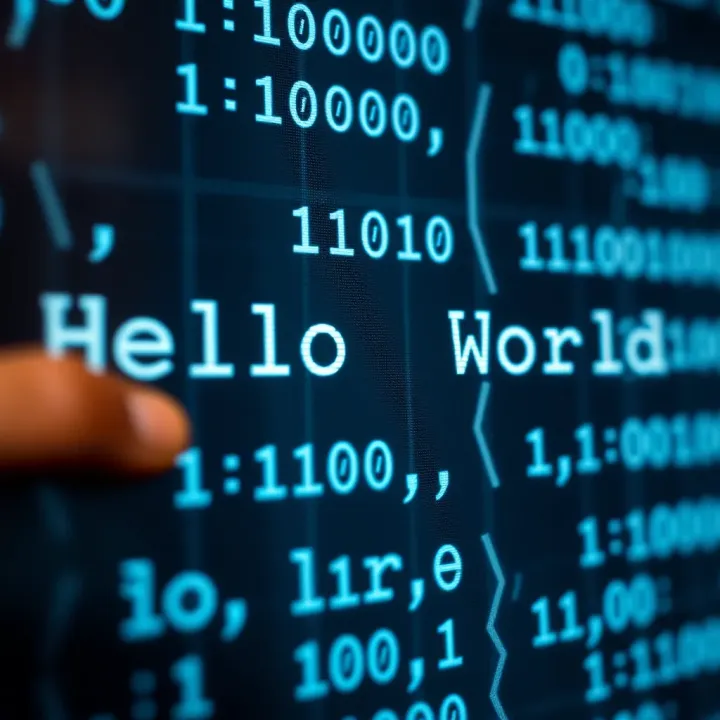
Explore how 'Hello World' is converted into binary code 💻. Learn ASCII encoding, step-by-step text conversion, and how computers read text in bits.
🧮 Discover how to convert Gray code to binary easily! Learn key differences, step-by-step methods, and real-life applications in digital systems.

💸 Explore how free money offers in binary options trading work in South Africa. Learn their sources, risks, conditions, and tips for smarter trading decisions.
Based on 7 reviews