
Understanding Forex Trading Accounts in South Africa
📈 Learn about forex trading accounts for South African traders: types, leverage, spreads, regulation, plus tips to choose and manage your account wisely in local markets.
Edited By
Emma Clarke
Forex trading accounts open the door for South African traders to the foreign exchange market, where currencies are bought and sold around the clock. But a trading account is more than just a gateway—it’s the foundation for your trading activities, holding your funds and enabling you to place trades, monitor positions, and manage risks.
Opening a forex account requires careful consideration to fit your trading style, budget, and risk appetite. Brokers usually offer different types of accounts, such as standard, mini, or micro accounts, each with varying minimum deposit requirements and contract sizes. For example, a micro account might allow you to trade in smaller lots with less capital, suitable if you’re just starting out or want to test strategies without risking large amounts.
South African traders need to be mindful of factors like regulatory compliance, broker reputation, and the safety of client funds. Registered brokers under the Financial Sector Conduct Authority (FSCA) provide an added layer of protection against shady practices. Plus, understanding the fees attached to your account—spreads, commissions, rollover charges—helps you avoid surprises that can eat into your profits.
Managing your forex trading account goes beyond just the initial setup. Regular monitoring is key, especially considering the volatility of the forex market and South Africa’s specific factors like Rand fluctuations and potential impacts from local economic events. Keeping track of your margin levels and ensuring you don’t get overexposed can save you from forced liquidations or hefty losses.
Always treat your forex trading account like a business account—know exactly how much you’re putting in, what costs you’ll incur, and how to manage your trades properly.
Whether you’re a seasoned investor or just testing the waters, combining solid account management with choosing the right broker means a smoother, safer journey through the forex market.
A forex trading account is the essential gateway for traders to access the foreign exchange market. It acts as a digital workspace where you can deposit funds, place trades, track profits and losses, and manage your exposure to currency fluctuations. For South African traders, understanding how this account operates is critical — it governs how you interact with the market, manage risks, and navigate broker relationships.
At its core, a forex trading account holds your money and trade records, much like a bank account but specifically for currency trading. Instead of simply storing cash, it allows you to buy and sell currency pairs. Think of it as your personal toolkit; without it, you can’t participate in forex trading. For example, if you want to trade the USD/ZAR pair, you need this account to execute those trades and manage your funds.
When you place a trade, the instructions flow from your account through the broker to the forex market. Your broker works as the intermediary, matching your buy or sell orders with market liquidity. The trades you place aren’t direct market purchases but agreements brokered by your account platform. The trading account records these transactions and adjusts your balance accordingly, reflecting gains or losses as market prices change.
The trader, broker, and forex market form a triangular relationship where the broker connects you to the wider currency market. For South African traders, selecting a well-regulated broker is vital since they ensure fair play and secure fund handling. Your forex trading account resides with the broker, who executes your trades and provides the trading platform. The market, in turn, is where currencies are bought and sold globally—your account serves as the link to this dynamic environment.
Your account balance shows the available funds for trading and reflects the ongoing profit or loss from open positions. South African traders must watch their margin closely—that’s the amount brokers set aside as security to open and maintain positions. If you have R10,000 in your account but trade on margin, you might control a much larger position, but your available margin drops accordingly. This demands careful oversight to avoid margin calls that force your trades to close unexpectedly.
Leverage lets you control bigger positions than your actual deposit by borrowing funds from the broker. For example, with leverage of 1:100, R1,000 can control R100,000 worth of currency. While leverage can multiply profits, it does the same to losses, increasing your risk substantially. South African traders should understand leverage limits set by brokers and the financial authority to avoid getting into over their heads.
Forex accounts offer access to a variety of currency pairs, broadly divided into majors, minors, and exotics. Majors include popular pairs like USD/ZAR, EUR/USD, or GBP/USD, which are typically more liquid with tighter spreads. Exotics like USD/TRY or ZAR/JPY might have higher spreads and volatility. Choosing pairs depends on your trading style and risk appetite, with South African traders often focusing on USD/ZAR due to local market familiarity and available economic data.
A forex trading account isn’t just an entry point—it’s the control centre for your trading activities, so knowing its functions and features is key to trading success.
Choosing the right forex trading account can make a world of difference for South African traders. Different account types suit various investment levels, risk tolerance, and trading goals. Understanding these can help you avoid unexpected costs and align your trading style with what’s available locally.
Standard accounts with fixed spreads provide a straightforward trading experience. Here, the spread, or the difference between buying and selling prices, remains constant regardless of market volatility. For example, if the EUR/USD pair has a fixed spread of 2 pips, you pay that exact amount each trade. This setup is particularly useful for traders who prefer predictable costs and avoid sudden spikes in charges during high volatility. However, fixed spreads might be slightly wider than variable spreads during calm market periods.
Micro and mini accounts for smaller investments lower the barrier to entry. Instead of jumping in with huge capital, you can trade smaller contract sizes — micro accounts handle 1,000 units and mini accounts 10,000 units of base currency, compared to 100,000 units for standard accounts. This scaling means you risk less capital per trade and gain practical exposure without burning through your funds. A local trader starting with a R5,000 deposit could use a micro account to build confidence before scaling up.
Islamic (swap-free) accounts for compliance with local needs cater to traders who observe Sharia law, which prohibits earning or paying interest on overnight positions. Swap-free accounts modify typical overnight fees to comply with this regulation. South African Muslims, who form a significant trading community, often prefer these accounts to trade without ethical concerns. However, brokers may charge alternative fees to cover overnight financing costs, so it is wise to compare terms closely.
Purpose and advantages of demo accounts lie in risk-free practice. These accounts mimic real market conditions using virtual funds, allowing traders to try strategies, explore the platform, and understand how trades execute. Especially for novices, this means no financial risk while learning. Local brokers like IG and HotForex offer demo accounts that replicate their live conditions, so you get a genuine feel for trading without risking Rands.
Limitations compared to live accounts include the absence of emotional pressure and sometimes simplified execution. Since demo accounts don’t involve real money, traders tend not to experience the same intensity or hesitation that comes with actual losses or gains. This can lead to overly optimistic strategies that might fail under real conditions. Furthermore, some demo platforms don’t perfectly replicate slippage or execution delays that occur during actual trading, which can create gaps in preparation.
Trying a demo account first is a smart move, but transitioning to live trading needs care — the stakes and psychology change significantly.
Choosing the right account type, whether standard, mini, swap-free, or demo, depends on your priorities, whether it’s managing costs, ethical adherence, or gaining experience. For South African traders, understanding these practical differences will set a solid foundation for a well-managed forex journey.
Opening a forex trading account in South Africa involves several key steps that ensure you begin trading safely and efficiently. From selecting a trustworthy broker to securing your funds, each stage plays a part in protecting your investment and setting a solid foundation for trading. For South African traders, understanding the local requirements and regulations is essential to avoid headaches down the line.
It's vital to choose a broker licensed by the Financial Sector Conduct Authority (FSCA). This regulator enforces rules and safeguards to protect traders against fraudulent operators. For example, an FSCA-regulated broker must segregate client funds from their operational money, reducing the risk of misuse. Brokers without this licence might not comply with South African laws or offer fair trading conditions, exposing traders to unnecessary risk.
Checking broker reputation offers practical insight beyond licensing. Forums like MyBroadband or Trustpilot provide reviews from South African traders who share experiences about execution speed, customer service, and withdrawal times. If a broker consistently receives complaints about delayed payments or poor platform stability, it’s a red flag. Always weigh both positive and negative feedback before committing your money.
During registration, you’ll need to submit copies of your South African ID and a recent utility bill as proof of residence. This isn't just red tape—it helps brokers meet legal requirements and verify your identity to prevent money laundering. For instance, if your proof of address is older than three months, many brokers will reject it, so prepare current documents.
RICA (Regulation of Interception of Communications and Provision of Communication-Related Information Act) compliance often comes into play during account opening. Brokers may require additional verification steps to comply with RICA guidelines and confirm your contact details. These measures contribute to the legal integrity of your forex account and can prevent identity theft or fraud.
In South Africa, depositing funds via electronic funds transfer (EFT) is common and generally cost-effective. Many brokers also accept card payments, but these might attract higher fees. Using methods like EFT from your local bank (FNB, Standard Bank, Absa, etc.) ensures quicker clearing times and transparent tracking of your funds.
If your broker accepts only US dollars or euros, you'll incur currency conversion costs when funding your account with rand. These fees can add up and reduce your capital. Some brokers offer rand-denominated accounts to avoid this issue—handy if you want to keep your trading simple and cost-efficient.
Minimum deposits vary widely; some brokers ask for as little as R500, making forex trading accessible, while others set higher thresholds (R5,000 or more). Knowing these figures upfront ensures you pick an account matching your budget and trading goals without overstretching yourself financially.
Opening and funding your forex account correctly from the start saves time and helps avoid costly mistakes later, especially when dealing with South African regulations and currency considerations.
By understanding these steps clearly, South African traders can get their accounts set up securely and trade with confidence in the dynamic forex market.
Managing your forex trading account well is fundamental to long-term success in the market. Sitting back and ignoring how your trades and balance evolve can leave you vulnerable to losses or unnecessary fees that chip away at your capital. For South African traders, regular account oversight helps navigate unique challenges like volatile ZAR pairs and intermittent internet access due to loadshedding.
Local traders often gravitate towards platforms like MetaTrader 4 or 5, plus cTrader, because they support multiple brokers and offer robust mobile apps. These platforms provide real-time quotes, charts, and risk management tools, which are crucial for making quick decisions, especially during volatile market hours influenced by global events or local economic news. For instance, during a SARB interest rate announcement, you want a platform that updates instantly and doesn't freeze due to poor connectivity.
Keeping a detailed eye on your profits and losses is more than just logging numbers—it helps identify trading patterns and potential weaknesses. Monitoring margin levels is equally vital; it shows how much of your available funds are tied up in open trades, preventing unexpected margin calls. Suppose you have a R20,000 account with a leverage of 1:100. If your open positions grow too large, your margin utilisation can spike quickly, risking automatic position closures by your broker unless you inject more funds.
Most brokers make money through spreads—the difference between buying and selling prices. In South Africa, spreads can vary across currency pairs, with majors like USD/ZAR often having wider spreads due to volatility. Some brokers also charge commission per trade, especially for ECN accounts. Understanding these costs upfront allows traders to calculate break-even points more accurately and avoid falling into a cycle of stealthy fee erosion.
If you hold positions overnight, swap rates or rollover fees apply and can either credit or debit your account depending on the interest rate differential between currencies. For example, holding a USD/ZAR long position overnight might incur charges if the South African Reserve Bank’s rate is higher than the US Fed’s. Traders using Islamic (swap-free) accounts avoid these fees but often face slightly higher spreads.
Withdrawals are usually free up to a point, but some brokers levy fees when the amount is small or when frequent withdrawals occur. Inactivity fees can also catch inattentive traders off guard; a dormant account might face monthly fees after a period of no activity. If you trade sporadically, it’s best to confirm these charges with your broker to avoid surprise deductions.
Regular management of your forex account protects your capital, keeps you aware of trading costs, and ensures you make timely adjustments ahead of market swings or fees taking a bite.
Smooth management isn't complicated but requires discipline and awareness—two things every trader can develop with practice and the right tools.
Forex trading carries significant risks that South African traders need to understand clearly. Unlike more predictable investments, forex markets can swing unpredictably, and without proper safeguards, losses can mount quickly. Awareness of these risks and taking steps to protect your account and capital forms the backbone of a responsible trading approach.
Currency markets are known for their volatility, meaning prices can rise and fall sharply within short periods. For South African traders, this can be seen during geopolitical events, like sudden changes in SARB (South African Reserve Bank) policies or unexpected shifts in commodity prices that affect the rand. Such swings can wipe out profits or push traders into losses if they aren't prepared.
For instance, during times when Eskom implements loadshedding at higher stages, the rand often weakens, affecting currency pairs involving ZAR. Traders who only monitor global trends and ignore local economic factors may find themselves caught off guard. So, staying updated on local events alongside global developments is crucial to managing volatility risks effectively.
Leverage lets you control a larger position with a smaller amount of capital. While this can boost your gains, it can equally amplify losses. Say you trade with a leverage of 1:100; a 1% adverse move means you could lose your entire initial investment. This risk is especially relevant for new traders unfamiliar with managing margins.
In the South African context, brokers often offer high leverage, tempting traders to overextend. But considering local economic unpredictability, it’s safer to start with modest leverage and steadily build experience. Remember, every rand you borrow on margin doubles both your potential return and your exposure to loss.
Regulation acts as your safety net. Brokers authorised by the Financial Sector Conduct Authority (FSCA) comply with rules designed to protect clients. Trading with such brokers reduces the risk of unfair practices or sudden account freezes.
Top South African brokers often hold FSCA licences and provide client fund segregation, meaning your money is kept apart from the broker’s operational funds. This arrangement limits your exposure if the broker runs into financial trouble. Always verify a broker's regulatory status before handing over any cash.
Your trading account access is your gateway to funds. Using strong, unique passwords cuts down on hacking risks. Two-factor authentication (2FA) adds an extra layer by requiring a code sent to your mobile device or email when logging in.
Given the rise in cyberattacks targeting online platforms in South Africa, enabling 2FA on your forex trading account should be non-negotiable. Without it, even a simple phishing scam could cost you dearly.
Forex scams exist everywhere, including in South Africa. Common tricksters promise guaranteed returns or insider tips to lure investors. Some fake brokers mimic legitimate companies, making verification difficult.
Watch out for unsolicited calls or messages asking for deposits, promises of big profits with zero risk, and requests to send money via untraceable means like crypto wallets or Western Union. Do your homework by checking reviews, and don’t hesitate to contact FSCA or consult trusted financial advisers if unsure.
Always treat forex trading with caution — understanding the risks upfront and taking practical steps protects your wallet and peace of mind.
Following these precautions helps South African traders approach forex markets more confidently, balancing opportunity with safety. Even a well-planned strategy needs solid protections to avoid unnecessary losses or fraud.
📈 Learn about forex trading accounts for South African traders: types, leverage, spreads, regulation, plus tips to choose and manage your account wisely in local markets.
💱 Understand Forex trading in South Africa: Learn how currency buying and selling works, key players, risks, strategies, regulations, and choosing the right broker.
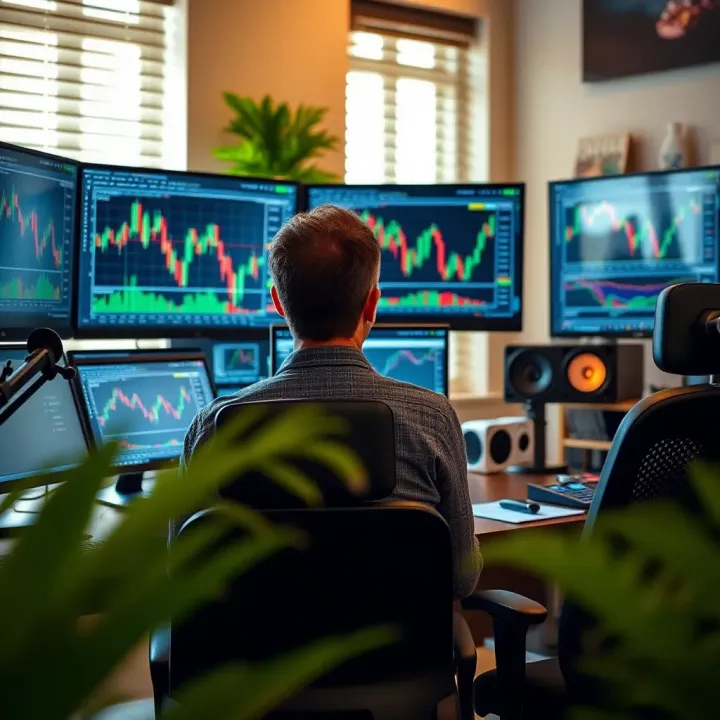
👨💻 Discover how demo forex trading in South Africa helps you test strategies risk-free, build smart habits, and pick the best local platforms to trade with confidence.
📊 Discover how binary trading accounts work in South Africa, key risks, regulations, and tips to manage your account confidently and safely in rand markets.
Based on 6 reviews