
Forex Trading Basics for Beginners in South Africa
Learn the basics of forex trading in South Africa 🇿🇦. Get practical tips, understand risks, and start trading confidently with local insights 📈💡.
Edited By
Emma Clarke
Forex trading, also known as foreign exchange trading, involves buying and selling currencies to profit from fluctuations in exchange rates. For South African traders, it offers an accessible way to enter global financial markets without the high capital requirements typical of shares or property. However, successful trading demands a solid grasp of market fundamentals and cautious risk management.
The forex market operates 24 hours a day across major financial centres like London, New York, Tokyo, and Johannesburg. This continuous cycle allows traders to engage at almost any time, but it also means prices can shift rapidly, especially during geopolitical events or economic releases such as South Africa's quarterly GDP figures or US Federal Reserve announcements.
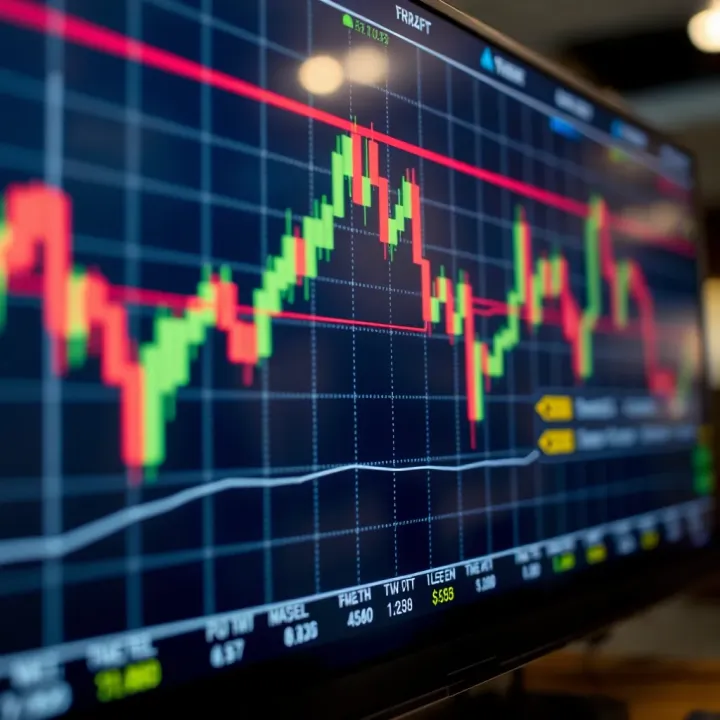
It's crucial to understand currency pairs, the foundation of forex trading. For example, the USD/ZAR pair reflects how many South African Rand one US Dollar can buy. If USD/ZAR moves from 18.50 to 18.80, that means the Rand has weakened against the Dollar, and traders holding USD in this pair gain value.
Key point: Forex trading isn’t gambling but a skill-based activity requiring constant learning and discipline.
Beginners should focus on a few clear areas:
Market mechanics: How order types, spreads, leverage, and margin function.
Economic indicators: What drives currency moves, such as interest rates, trade balances, and inflation.
Trading platforms: Getting familiar with tools like MetaTrader 4 or ThinkMarkets, widely used in South Africa.
Risk control: Setting stop-loss orders, managing position sizes, and never risking money you can’t afford to lose.
For local traders, choosing a broker regulated by the Financial Sector Conduct Authority (FSCA) offers some protection and aligns with South African financial legislation.
Getting started doesn’t require a huge investment. Some brokers allow opening accounts with as little as R1,000. Demo accounts also help beginners practise without real money, avoiding costly mistakes early on.
Understanding the rhythm of the market—when Johannesburg’s trading session overlaps with London’s, for instance—can also help spot higher volatility and trading opportunities.
In short, forex trading in South Africa provides real chances for profit but demands respect for its complexities. With a clear plan and informed approach, you can build confidence and gradually grow your knowledge and portfolio.
Understanding the basics of forex trading is the first stepping stone for anyone looking to trade currencies effectively. It lays the groundwork for more advanced concepts, helps reduce costly mistakes, and equips you with the knowledge needed to interpret market movements and trading signals. For instance, knowing how currency pairs work can prevent confusion when choosing trades involving the South African rand (ZAR) against the US dollar (USD) or euro (EUR).
Forex trading involves buying one currency while simultaneously selling another. It is the global marketplace where currencies are exchanged, allowing businesses, investors, governments, and traders to participate in currency fluctuations. This market operates 24 hours a day during weekdays because currencies worldwide trade in different time zones, meaning trades happen on a rolling cycle.
Unlike you might find in stock or commodity markets, forex trading focuses exclusively on currency pairs, reflecting how one currency performs against another. For example, if you believe the rand will strengthen against the dollar, you might buy the ZAR/USD pair.
One clear distinction is that forex trading happens over the counter (OTC), meaning it is a decentralised market without a physical exchange like the JSE (Johannesburg Stock Exchange). This means transactions occur directly between parties via electronic networks.
Additionally, forex trading typically offers higher liquidity and operates round the clock during the working week. Contrast that with the stock market, which functions only during official exchange hours. This means forex is often more flexible but can also be more volatile, requiring nimble decision-making from traders.
In forex, currencies are traded in pairs like USD/ZAR, EUR/USD, and GBP/USD. Major pairs always include the US dollar and represent the most traded and most liquid pairs globally. For South African traders, pairs involving the rand, like USD/ZAR and EUR/ZAR, hold particular importance due to economic ties and market familiarity.
The forex market includes banks, commercial companies, central banks, hedge funds, and individual traders. Each group has different motivations—banks might trade to manage currency risk, while retail traders seek profit. Understanding these roles helps you gauge market sentiment and trading volumes.
Forex trading is divided into sessions aligned with major financial centres: Sydney, Tokyo, London, and New York. For example, the London session overlaps with New York’s for a few hours, often resulting in higher volatility and trading volumes. South African traders can find the London session particularly relevant as it aligns closely with their local timezone.
Currency values change based on factors like interest rates, inflation, political stability, and economic data releases. For instance, if the South African Reserve Bank (SARB) raises interest rates, it could attract foreign investment, strengthening the rand. Traders monitor these updates closely to anticipate price shifts.
Exchange rates fluctuate continuously due to supply and demand forces in the market. Unexpected geopolitical events or sudden economic announcements can cause sharp moves. For example, a change in US Federal Reserve policy might quickly move USD/ZAR prices, creating trading opportunities or risks.
Start your trading journey by grasping these core concepts—they form the foundation for reading markets wisely and making smarter decisions.
This foundation in forex basics will help you avoid pitfalls and trade with greater confidence in dynamic market conditions.
Getting started in forex trading involves more than just signing up on a platform and making a trade. This stage lays the groundwork for your trading journey by helping you establish a secure setup, understand the tools at your disposal, and get comfortable with essential terminology. For South African traders, making informed choices here can prevent costly mistakes and improve your chances to trade confidently in a market that runs 24/5.
Choosing a reliable broker is the first step. A trustworthy broker acts as your gateway to the forex market, executing your trades and providing the trading platform. In South Africa, you'll find brokers regulated by the Financial Sector Conduct Authority (FSCA), which adds a layer of security. Opting for an FSCA-licensed broker reduces the chance of fraud or unfair practices. For example, FNB’s EasyEquities platform offers regulated forex brokerage with a strong local presence, making it easier for traders to access Rand-based accounts.
Understanding account types is crucial because brokers often offer several options catering to different trading styles and capital sizes. Common account types include standard, mini, and micro accounts. A mini account lets you trade smaller lot sizes, which helps control risk while learning. Some brokers also provide Islamic accounts with no swap fees, important for traders seeking Shariah-compliant options. Knowing the differences helps you pick an account that suits your budget and risk appetite.
Importance of regulation and safety cannot be overstated. Beyond choosing an FSCA-regulated broker, check if your broker uses segregated client funds and has negative balance protection. These measures protect your money if the broker experiences financial troubles or the market moves sharply against you. For instance, some offshore brokers might offer tempting bonuses but lack proper regulation, exposing learners to unnecessary risks. Being cautious helps you keep your capital safe over the long haul.
Popular platforms used in South Africa include MetaTrader 4 (MT4), MetaTrader 5 (MT5), and cTrader. These platforms are user-friendly and packed with features to analyse charts, execute orders, and manage your trades. Brokers often support mobile versions too, so you can check your trades on the go. For example, using MT4 on your phone, you can quickly respond during peak trading hours across London, New York, and Asian sessions.
Charting software and technical indicators form the backbone of technical analysis. Tools like Moving Averages, Relative Strength Index (RSI), and Bollinger Bands help you spot trends, potential reversal points, and market momentum. Mastering these indicators increases your trading precision. Most platforms allow you to customise chart settings, enabling you to focus on strategies that fit your style, whether day trading or longer-term swing trades.
Accessing news and market data is vital, especially since fundamental events affect currency pairs. Many platforms offer integrated news feeds from Reuters or Bloomberg. Staying updated on South African Reserve Bank (SARB) interest rate decisions or global geopolitical events can shape your trades. Also, economic calendars pinpoint key releases like employment stats or inflation reports. Ignoring these can leave you blindsided by sudden market volatility.
Pips, lots, leverage and margin explained helps you grasp trade size and risk. A pip represents the smallest price move, usually 0.0001 for most currency pairs. Lots define the trade volume: one standard lot equals 100,000 units of the base currency, but beginners often start with mini (10,000) or micro (1,000) lots. Leverage lets you control a large position with relatively little capital, but it amplifies both gains and losses. Margin is the required amount to open a leveraged trade. For instance, with 1:100 leverage, you need just R1,000 margin to control R100,000.
Bid, ask, and spread meanings are fundamental to understanding trade costs. The bid price is what buyers pay; the ask price is what sellers want. The difference between them, the spread, is effectively the broker's fee on each trade. Some brokers offer fixed spreads, while others vary according to market volatility. Tight spreads are preferable, especially for scalpers or day traders, since wider spreads increase costs and reduce profit potential.
Getting your setup right and understanding these basics put you in the driver’s seat to trade smarter and safer. Start small, focus on learning the platform, and pay close attention to your chosen broker’s credibility and tools. That way, you’re building your forex skills on solid ground.
Understanding the forces behind currency movements is essential for anyone serious about forex trading. The forex market reacts to a mix of economic data, central bank decisions, geopolitical events, and price patterns that emerge on charts. Identifying these fundamental and technical triggers can improve your ability to make educated trading decisions rather than relying on guesswork. For South African traders, this means keeping tabs on local and global developments, as they can ripple through the Rand and other major currencies.
Economic indicators offer a snapshot of a country's financial health and can sway currency values significantly. These include GDP growth rates, unemployment figures, inflation statistics, and trade balances. For instance, if South Africa publishes better-than-expected GDP growth, it tends to strengthen the Rand because it signals a robust economy. Conversely, rising inflation without wage growth can undermine currency value as purchasing power drops.
Focusing on accurate timing of these releases through economic calendars helps traders anticipate volatility. Knowing that the US Non-Farm Payroll figures or South Africa’s consumer price index (CPI) data are imminent allows you to prepare for sudden market swings.
Central banks like the South African Reserve Bank (SARB) and the US Federal Reserve influence forex largely through interest rate changes. When a bank raises rates, it usually attracts foreign investment because higher returns are on offer, boosting demand for that currency. For example, a surprise SARB rate hike may cause the Rand to appreciate.
Besides rate moves, central banks’ policy statements and minutes often reveal economic outlooks or warnings about inflation pressures. Traders who pick up on these signals can position themselves before price moves unfold. Remember, though, that markets sometimes react contrary to expectations, so hedging your bets is prudent.
Political developments—elections, trade disputes, unrest, or even natural disasters—can disrupt forex markets unexpectedly. In South Africa, events like municipal elections or debates over mining regulations might affect the Rand’s outlook. On a global scale, tensions between major economies such as the US and China or crises like Brexit impact multiple currencies simultaneously.
Geopolitical risks increase uncertainty, often leading to ‘flight to safety’ trades. This means currencies like the US dollar or Swiss franc might gain as investors seek lower risk assets. Staying alert to news cycles and understanding the local and global political climate is vital to anticipate such moves.
Charts are the bread and butter of technical analysis. They display price movements over time, helping you spot patterns and trends. For example, recognising an upward trend in the Rand/USD pair means that buying on pullbacks could be a sound strategy.
Traders often use candlestick charts, which show opening, closing, high, and low prices for each period. Identifying higher highs and higher lows signals bullish momentum, while lower highs and lower lows indicate bearish trends. Getting comfortable with these visual tools aids quick decision-making when the market moves fast.
Technical indicators like Moving Averages (MAs), the Relative Strength Index (RSI), and Bollinger Bands add an extra layer to chart analysis. Moving Averages smooth out price data and help confirm trends; a rising 50-day MA hints at sustained upward momentum.
RSI evaluates whether a currency is overbought or oversold, suggesting potential reversals. For instance, an RSI above 70 might warn that a currency is due for a pullback. Combining several indicators can increase the reliability of your signals but avoid cluttering your charts with too many.
Support and resistance represent price levels where currencies tend to stop and reverse direction. Support is a floor where buying interest might push prices up, while resistance acts as a ceiling keeping prices down. For example, if the Rand repeatedly bounces back from R15/USD, that level is a support zone.
Identifying these zones can help you set entry and exit points effectively. If the price breaks a resistance level, it often leads to further gains, whereas a failure at resistance might prompt a sell-off. Using support and resistance alongside fundamental cues can fine-tune your trading approach.
Getting a grasp on both fundamental and technical factors equips you with practical tools to read the forex market with more confidence and clarity.
Managing risk and developing trading discipline are the backbone of successful forex trading. Without a solid approach to risk, even the most promising strategies can lead to significant losses. And a lack of discipline often causes traders to stray from their plan, compounding mistakes. This section breaks down practical ways to protect your capital and maintain steady progress in the market.
Setting stop-loss orders is one straightforward but powerful tool that every trader should use. A stop-loss order automatically closes your position at a pre-set price, limiting any further losses. For example, if you buy the EUR/USD at 1.1500 and set a stop-loss at 1.1450, your maximum loss is capped to 50 pips, regardless of how far the market may fall. This helps prevent emotional decisions during sudden market moves and keeps losses manageable.
Besides stop-losses, proper position sizing is key to managing exposure. It means deciding how much of your trading capital to risk on a single trade. Many experienced traders risk no more than 1–2% of their total capital on one trade. If your account has R10,000, risking 2% means you should not lose more than R200 per trade. Position sizing depends on stop-loss distance and trading capital size, ensuring that one failed trade won't severely dent your overall account.
Defining clear goals and strategies is critical before placing any trade. Your goals might include a target monthly return or constraining maximum drawdown. Strategies could involve technical indicators or fundamental analysis tailored to your style. Having these laid out prevents chasing quick wins or jumping in and out of the market without direction, common pitfalls among beginners.
On top of that, keeping a trading journal is a simple yet effective habit. Recording every trade's details—entry point, exit, reasons for the trade, and emotional state—helps identify patterns and mistakes over time. For instance, you might notice that impulsive trades late at night lead to losses. The journal becomes an unbiased coach that aids refining your approach.
Avoiding common psychological traps like fear, greed, or revenge trading goes hand in hand with risk management. Fear might make you close a winning trade too early, while greed can push you to risk too much. Revenge trading, where you impulsively try to recover losses, often leads to bigger problems. Understanding these traps and recognising your biases keeps your decisions rational.
Finally, maintaining patience and consistency often separates profitable traders from the rest. Forex trading isn’t a sprint; it's more like a marathon with ups and downs. Sticking to your plan even during losing streaks builds long-term discipline. Rather than forcing trades, waiting for clear signals boosts your chances of success and preserves your capital.
Remember, the markets will always be there tomorrow. Protect your capital today, and your trading journey can last for years to come.
Learn the basics of forex trading in South Africa 🇿🇦. Get practical tips, understand risks, and start trading confidently with local insights 📈💡.
📊 Learn the basics of forex trading, from understanding market terms to managing risks effectively. Practical tips for trading confidently in South Africa 🇿🇦.
📈 Learn practical forex trading strategies designed for beginners! Discover key tactics, risk management tips, and how to make smart decisions in the forex market.
📈 Practical forex trading tips for beginners in South Africa! Learn about market basics, risk management, choosing brokers, and crafting winning strategies. 💡
Based on 13 reviews