
Forex Trading Basics for South African Newcomers
📈 New to forex trading in South Africa? This step-by-step guide covers market basics, key terms, smart strategies & risk tips to trade confidently.
Edited By
Daniel Foster
Forex trading, at its core, is the buying and selling of currencies on the foreign exchange market, aiming to profit from fluctuating exchange rates. Unlike shares or bonds, forex operates 24 hours a day because it’s a global market spanning multiple time zones. This makes it an especially accessible field for South African traders who want flexibility around their day.
The forex market is the largest financial market in the world, with an average daily turnover exceeding $6 trillion. Major currency pairs like the US dollar (USD), euro (EUR), British pound (GBP), and South African rand (ZAR) dominate trading volumes. Understanding how these currencies interact is key to grasping forex fundamentals.
Forex trades always involve two currencies: you buy one and sell the other. This is why you see quotes like USD/ZAR — the price shows how many rands it costs to buy one US dollar.
Several groups drive the forex market:
Banks and financial institutions: They provide liquidity and often trade large volumes.
Central banks: Influence currency values through interest rates and monetary policy.
Corporates: Engage in forex for international trade and hedging.
Retail traders: Individual investors seeking profits from currency movements.
Familiarity with basic terms smooths the learning curve:
Pip: A small unit of price change (usually the fourth decimal place).
Spread: The difference between buy (ask) and sell (bid) price, representing cost.
Leverage: Borrowed capital allowing traders to control larger positions, but it also raises risk.
Lot: The standardised size of a trade. Commonly, one standard lot equals 100,000 units of the base currency.
Currency values fluctuate due to various forces:
Economic data: Inflation, employment, GDP growth figures.
Political events: Elections, policy changes, or geopolitical tensions.
Market sentiment: Often driven by news or rumours affecting risk appetite.
For South African traders, paying attention to local economic events like SARB’s interest rate decisions or political developments is just as crucial as monitoring global news.
Knowing these basics equips you to start analysing the market more critically and develop your own trading approach, tailored to the realities of trading from South Africa.
Grasping how the forex market operates gives you a solid footing to navigate the complexities of currency trading. The forex market moves fast, influenced by countless factors—from economic reports to central bank policies—so knowing who the major players are and how currencies are traded can save you from costly mistakes.
Forex trading means buying one currency while selling another simultaneously. It happens on a global, decentralised market where currencies fluctuate in value relative to each other. For example, when you trade the USD/ZAR pair, you’re exchanging US dollars for South African rand or vice versa, betting that one currency will strengthen against the other.
Central Banks and Governments: These institutions set monetary policy, including interest rates and currency reserves, which directly impact currency supply and demand. For instance, the South African Reserve Bank’s decisions on repo rates influence the rand’s value. When central banks intervene—buying or selling their own currency—they can stabilise or sway exchange rates, impacting traders' strategies.
Commercial Banks and Financial Institutions: These entities handle the bulk of forex transactions, executing trades for clients, hedging corporate exposure, or speculating for profit. Large banks like Standard Bank or First National Bank manage vast currency flows daily, creating liquidity essential for smooth market functioning.
Retail Traders and Brokers: Individual traders in South Africa use brokerage platforms to access the forex market. Brokers act as intermediaries, offering trading accounts and platforms like MetaTrader 4 or 5. Retail trading might be small in volume compared to banks but has grown significantly, especially with increased internet access and mobile trading.
Corporates and Exporters: Companies involved in international trade use forex markets to hedge currency risk. A Durban-based exporter receiving payments in euros will convert these to rand, often using forward contracts to lock exchange rates and protect profit margins.
Base and Quote Currency Explained: Forex pairs list two currencies. The first is the base; the second is the quote. The pair's price shows how much of the quote currency you need to buy one unit of the base. For example, if USD/ZAR is 18.50, one US dollar costs R18.50. This helps traders understand the relative value and manage their positions accordingly.
Major, Minor and Exotic Pairs: Major pairs always involve the US dollar and include ones like EUR/USD or GBP/USD. They generally offer high liquidity and tighter spreads, favoured by most traders. Minor pairs exclude the dollar but involve other major currencies (e.g., EUR/GBP). Exotic pairs combine a major currency with one from emerging markets, such as USD/ZAR—these have wider spreads and higher volatility, demanding cautious risk management.
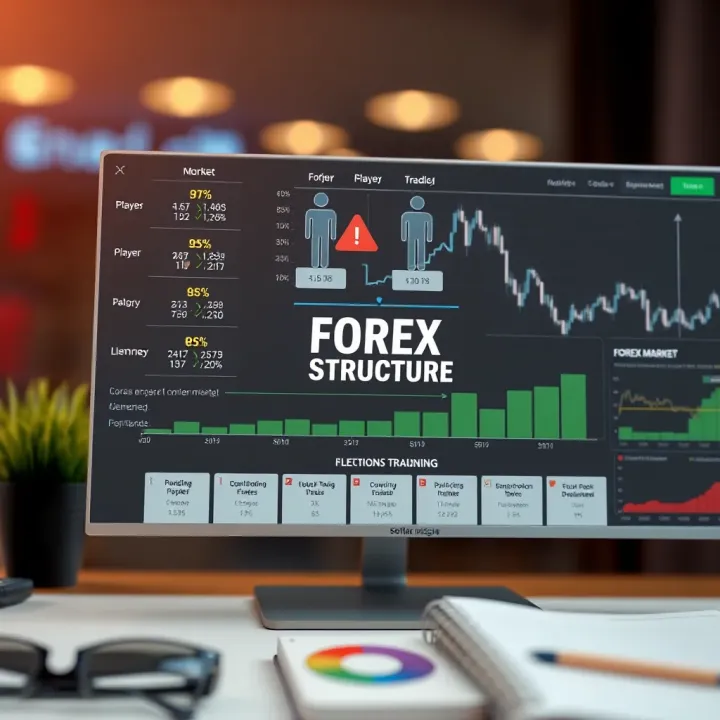
The forex market’s size and 24-hour nature mean understanding its structure and participants isn't just theory—it's a practical necessity for effective trading.
By knowing the roles of each participant and how currency pairs work, you’re better placed to spot trading opportunities and anticipate market moves based on real-world developments affecting supply and demand in currencies.
Grasping key concepts and terminology is essential for anyone trading forex, especially to navigate the fast-moving, sometimes unpredictable currency markets. Without understanding terms like pips, lots, leverage, spreads, and order types, it’s easy to make costly mistakes. These fundamentals shape how trades are placed, how risks are managed, and ultimately how profits or losses are realised.
A pip is the smallest price move that a forex pair can make based on market convention, usually the fourth decimal place (0.0001). For example, if the EUR/USD moves from 1.1500 to 1.1501, that 0.0001 change equals one pip. Understanding pips helps traders quantify gains or losses precisely and gauge market volatility.
Lot sizes define the volume of currency traded. A standard lot equals 100,000 units of the base currency, a mini lot is 10,000 units, and a micro lot is 1,000 units. This range allows traders to control exposure according to their capital. For instance, a beginner might start with micro lots to keep risks manageable.
Leverage allows traders to control a larger position than their actual capital. With a leverage of 100:1, for example, you can trade R100,000 worth of currency with just R1,000 in your account. While leverage can amplify gains, it also magnifies losses, so understanding margin requirements and managing how much you expose is vital.
Forex prices are quoted with two figures: the bid (the price at which you can sell) and the ask (the price at which you can buy). The difference between these, the spread, represents the trading cost and is how brokers often make their money. For example, if USD/ZAR has a bid of 18.2000 and an ask of 18.2100, the spread is 10 pips.
Because spreads affect profitability, especially for short-term traders like scalpers, choosing currency pairs with tight spreads or brokers that offer competitive rates is important. Remember spreads can widen during low liquidity or news events, increasing costs.
Understanding market orders and limit orders is key when opening or closing trades. A market order executes immediately at the current market price. This is useful when you want to enter the market instantly, like capitalising on a price move.
Conversely, a limit order sets a price level where you want to enter or exit automatically, but it only executes if the market reaches that price. For example, placing a limit order to buy USD/ZAR at 17.9500 means the trade will open only if the pair drops to that level.
Managing risk also means using stop-loss and take-profit orders. A stop-loss instructs the platform to close your trade at a fixed loss limit to prevent bigger losses. On the other hand, a take-profit order locks in profits when the price hits your favourable level. Both tools help avoid emotional trading and protect your capital.
Mastering these key forex terms helps you trade with more control and clarity, reducing guesswork and improving decision-making in a market where timing and precision matter.
Understanding what moves currency prices is key for any forex trader looking to make informed decisions. Prices rarely shift by chance; instead, various factors like economic data, political events, and market sentiment play a role. Getting a grip on these influences helps you anticipate possible moves and manage risk more effectively.
Interest rates and inflation are among the most closely watched indicators by forex traders. When a country’s central bank raises interest rates, its currency usually gains strength because higher rates offer better returns to investors. For instance, if the South African Reserve Bank hikes rates, the rand might appreciate as investors seek higher yields. Inflation ties into this because persistently high inflation often forces central banks to respond with interest rate adjustments, which in turn affect currency values.
GDP growth and unemployment figures provide a snapshot of a country’s economic health. Strong GDP growth signals a robust economy, attracting investment and boosting the currency. Conversely, rising unemployment can hint at economic troubles, denting confidence and weakening the currency. For example, if Stats SA reports lower GDP growth alongside rising joblessness, traders might see this as a negative sign for the rand.
Elections and policy changes bring uncertainty that can unsettle currency markets. Traders react swiftly to outcomes that might alter fiscal policies, trade agreements, or economic direction. If a newly elected government in South Africa signals policy shifts favouring business growth, the rand could rally. But if there’s political infighting or unclear policy plans, investors often become cautious, causing the currency to dip.
Geopolitical tensions also impact forex markets. Conflicts or diplomatic strains affect global confidence and can lead to sudden currency fluctuations. For example, tensions in the Middle East can push traders towards safe-haven currencies like the US dollar or Swiss franc, while emerging market currencies such as the rand might suffer.
How traders’ perceptions move markets is often underestimated. Forex is not purely driven by hard data; expectations and mood swings among traders can sway prices significantly. If traders believe the rand is undervalued, they might buy it, pushing up its price even before fundamentals catch up. This behaviour can cause short-term volatility.
Role of news and rumours cannot be ignored. Information spreads quickly, and even unconfirmed reports can move markets. A missed economic target or an unexpected election result leaked early might result in sharp currency moves. Staying alert to credible news sources is vital to avoid being caught off guard.
Successful forex trading hinges not only on crunching numbers but also on understanding the broader picture — economic signals, political winds, and what the market feels and expects.
By keeping an eye on these factors, you can better read currency price trends and position yourself smartly in the market.
When it comes to forex trading, how you analyse the market and select your trading approach can make a big difference to your success. Approaches to trading and analysis help you make sense of price movements, decide when to enter or exit trades, and manage risk. Understanding both technical and fundamental analysis gives traders a solid foundation to adapt in various market conditions.
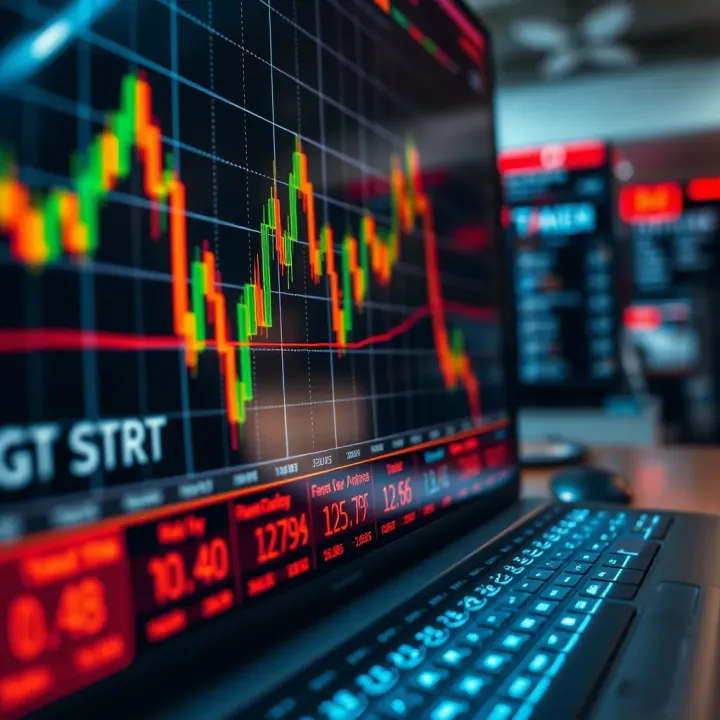
Charts are the bread and butter of technical analysis. The most popular types include line charts, bar charts, and candlestick charts. Candlesticks are especially common among forex traders because they show open, close, high, and low prices within a specified time frame, making it easier to spot patterns and trends. For instance, a trader might notice a series of bullish candles forming a rising trend, signalling potential buy opportunities.
Trend lines are straight lines drawn on a chart to connect successive highs or lows, showing the general direction of price movement. Support levels are prices where a currency usually stops falling and starts to climb, while resistance levels are where it typically faces selling pressure. Recognising these areas helps traders anticipate where price might reverse or break out. For example, if the rand (ZAR) consistently bounces back at R15.50 to the US dollar (USD), that level acts as support – a useful reference to manage trades.
Indicators like moving averages smooth out price data to identify trends, while oscillators such as the Relative Strength Index (RSI) help spot overbought or oversold conditions. These tools allow traders to back up their decisions with objective signals rather than guesswork. Say you see the RSI dropping below 30 for the EUR/ZAR pair – it might hint at a buying opportunity since the currency is oversold.
Economic data like inflation rates, employment figures, and GDP growth provide clues about a country's economic health and can move currency prices. Traders watch these reports closely. For example, a stronger-than-expected unemployment drop in South Africa could boost the rand as investor confidence rises.
The South African Reserve Bank’s statements on interest rates and monetary policy affect the rand’s value strongly. When SARB increases rates, the rand often strengthens as returns on investments rise. Traders who follow central bank news can anticipate such moves and adjust their positions accordingly.
Day traders open and close positions within one day, aiming to profit from small price moves. Scalpers take this further, executing dozens of quick trades to accumulate gains. These styles demand discipline and fast decision-making but can work well for those who can monitor markets during business hours. For instance, a scalper trading USD/ZAR might capitalise on brief volatility following local news.
Swing traders hold positions for several days or weeks to catch short- to medium-term trends. Position traders go even longer, sticking with trades for months based on fundamental outlooks. These approaches suit traders with less time for constant monitoring and those focusing on bigger market moves. For example, a position trader might buy rand pairs ahead of anticipated economic growth in South Africa.
Selecting the right analysis methods and strategy depends on your trading goals, time availability, and risk tolerance. Mixing technical and fundamental insights often yields the clearest picture of forex market movements.
Managing risk in forex trading isn't just a box to tick – it's what keeps your trading journey sustainable over time. The foreign exchange market moves fast and often unpredictably, so having solid risk controls protects your capital from unexpected swings and costly mistakes. By managing risk well, you can trade with confidence, knowing you’ve got a plan for losing trades as well as winning ones.
Before you start trading, it’s key to set realistic goals. Forex isn’t a quick road to riches; it’s more like farming than hunting – patience and consistency bring the harvest. For example, aiming for a stable 5% return monthly is more sensible than chasing a 50% gain in a week. Realistic targets help you keep emotions in check and avoid reckless decisions.
Your goals should also include learning milestones. Initially, focus on understanding market behaviour and your trading platform rather than making big profits. Setting clear trading rules for when to enter and exit trades, and sticking to them, will help you build discipline over time.
Stop-loss orders are your safety net in volatile forex markets. They automatically close a trade when losses reach a set amount, protecting you from bigger losses. Without stop-losses, a sudden move could wipe out a large chunk of your account.
Place stop-losses based on market structure, not just arbitrary numbers. For example, if EUR/USD recently bounced off a support level at 17.5000, you might put your stop just below that to allow some room for noise but still protect against a serious break. Moving your stop-loss too tight can trigger early exits; too loose and you risk bigger losses.
Using stop-loss orders diligently helps keep your losses small and your mindset clear, which is crucial to longevity in forex trading.
Managing exposure means controlling how much of your trading capital is at risk on any single trade. A good rule of thumb is not to risk more than 1–2% of your account balance on one position. For instance, if you have R10,000 in your trading account, avoid risking more than R100–R200 per trade. This limits the damage if the market goes against you.
Besides individual trades, consider your total open positions. Don’t run too many trades at once, as multiple small losses can add up quickly and drain your account without you realising it.
Avoiding overtrading is about quality over quantity. It’s tempting to jump on every perceived opportunity, especially during choppy market conditions. But trading too often usually results in poor decisions and higher costs from spreads and commissions. Stick to your strategy and wait for setups that meet your criteria, even if that means fewer trades.
For example, a swing trader might only place a handful of trades a month, focusing on setups that align with their analysis. Overtrading in such a strategy just increases exposure and risk without improving results.
Managing risk thoughtfully through position sizing and disciplined trading habits keeps your capital intact and your mind sharp, two essentials for lasting success in forex.
Trading forex from South Africa offers unique opportunities but also demands specific attention to local conditions and regulations. Understanding how to begin correctly can save you time and money while avoiding common pitfalls. This section covers essential steps like choosing a regulated broker, setting up your trading account, and knowing when to trade based on session overlaps and local time.
The Financial Sector Conduct Authority (FSCA) is South Africa’s watchdog for financial markets, including forex trading. Their role is to regulate and supervise brokers, ensuring they operate fairly and protect traders’ interests. Choosing an FSCA-regulated broker means you trade with a company that complies with strict standards, like holding client funds separately and providing transparent pricing. This regulatory oversight offers legal recourse if disputes arise and improves overall market trust.
When picking a broker, look beyond just regulation. Check whether they offer competitive spreads, swift execution speeds, and a variety of currency pairs that interest you. For instance, some brokers specialise in major pairs but don’t offer exotic ones, which could limit your trading options. Customer support and platform usability are also crucial — a local broker providing support in South Africa Standard Time (SAST) can make a big difference, especially when urgent assistance is needed during trading hours.
Opening a trading account usually requires identity verification under South Africa’s Financial Intelligence Centre Act (FICA). Once verified, you’ll be able to deposit funds, typically via EFT, credit card, or even popular mobile payments. Selecting the right trading platform is equally important. Most brokers offer MetaTrader 4 or 5, which are widely used and reliable. However, some local brokers provide platforms with additional tools tailored for South African traders, such as integration with local bank accounts or tailored risk management alerts.
The forex market operates 24/5 but knowing when sessions overlap can influence your strategy. The biggest overlaps occur between the London and New York sessions, offering higher liquidity and narrower spreads. South African traders should note that this overlap runs roughly from 3 pm to 8 pm SAST, aligning conveniently with local afternoon and early evening hours. This window is often favoured for day trading and scalping strategies due to increased price movement.
Local time matters greatly, too. Since South Africa is two hours ahead of London during standard time but only one hour ahead when the UK shifts to summertime, your trading hours will shift accordingly. Understanding this helps avoid attempting to trade during low liquidity periods, which can increase costs and risk. Many traders also tune in to major economic announcements from the US and Europe, so syncing your schedule around these events pays off.
Starting forex trading in South Africa needs more than just understanding global markets. It requires attention to local regulations, broker choices, and timing — all essential for building confidence and consistency in trading results.
📈 New to forex trading in South Africa? This step-by-step guide covers market basics, key terms, smart strategies & risk tips to trade confidently.
Learn the basics of forex trading in South Africa 🇿🇦. Get practical tips, understand risks, and start trading confidently with local insights 📈💡.
📘 Learn forex trading in South Africa with essential skills, risk tips, local regulations, and trusted resources to trade smart and stay safe in the market. 💹

Explore forex trading's key benefits 🇿🇦: high liquidity, easy access, and profit potential. Learn how South Africans can engage with this dynamic market safely and smartly 📈🌍.
Based on 10 reviews