

Understanding Risk Management Frameworks
📊 Explore practical risk management frameworks to spot, assess, and handle risks effectively. Boost your organisation’s resilience and decision-making skills.
Edited By
Isabella Green
Forex trading can feel like driving on a winding mountain pass without guardrails. The currency markets swing wildly, influenced by global events, economic data, and even political shifts. Without a solid risk management approach, traders risk losing more than they can afford. This is where a forex risk management calculator steps in to provide much-needed control.
A forex risk management calculator helps you define exactly how much of your trading capital to risk on any single trade. It factors in your account size, the currency pair’s volatility, and the stop-loss distance to calculate the ideal trade size. This prevents taking on oversized positions that could quickly blow your account during an unexpected move.

Consider this example: Suppose you have a trading account with R50,000 and want to risk no more than 2% on each trade. Your stop loss for a particular trade is 50 pips. The calculator will tell you the position size (in lots or units) that keeps your potential loss within that R1,000 limit. By sticking to these rules, you protect your capital and stay in the game longer.
Here are the main inputs a good forex risk calculator usually requires:
Account balance: Your total trading funds.
Risk percentage: How much you’re willing to lose per trade.
Currency pair: Volatility varies between pairs like USD/ZAR versus EUR/USD.
Stop-loss distance: Size of your stop loss in pips.
Managing forex risk is not about avoiding losses but controlling them to safeguard your investments.
Using this tool builds discipline by eliminating guesswork and emotional decision-making. It integrates seamlessly with your trading plan and helps you adjust exposure dynamically as your account grows or shrinks. For South African traders, where rand fluctuations add another layer of uncertainty, precise risk control becomes even more valuable.
Next, we'll unpack how these calculators work in detail, highlight their key features, and share practical tips to include them in your day-to-day trading routine.
Understanding how forex risk management calculators work is essential for traders aiming to control losses and protect their accounts. These tools take key trade parameters to estimate potential risk in monetary terms, helping you make informed decisions before placing trades. For example, instead of guessing how much you might lose if the market moves against you, the calculator shows exactly what portion of your account is at risk.
Trade size and lot types: The size of your trade—expressed in lots—directly influences your exposure. Forex trades generally come in standard lots (100,000 units), mini lots (10,000 units), and micro lots (1,000 units). Picking the right lot size is crucial because a standard lot will move your profit or loss by roughly $10 (or R-equivalent) per pip, while micro lots move about $0.10 per pip. The calculator needs this input to gauge how each pip movement translates to your account impact.
Stop-loss and take-profit levels: These pre-set points determine where you exit a losing or winning trade. The calculator uses the stop-loss level to calculate your maximum risk. For example, if you set a stop-loss 50 pips away, the calculator figures what that pip distance means in terms of Rands lost. This insight helps avoid overexposure and ensures that your exit strategy aligns with your risk tolerance.
Account balance and risk percentage: Knowing your total available funds and what percentage per trade you're willing to risk shapes your position sizing. Say your account balance is R10,000 and you risk 2% per trade; your maximum loss would be R200. The calculator integrates these numbers to suggest the optimal lot size and stop distance, preventing unintended oversized positions.
Determining the pip value: A pip is the smallest price change in forex pairs, but its monetary value varies with the currency pair and lot size. For instance, trading the USD/ZAR pair with a mini lot may mean a different pip value than trading EUR/USD. The calculator figures this out, so you precisely know how much each pip move costs or gains you.
Converting risk to monetary terms: Traders often think in pips but need clarity on what the risk means financially. Once pip value is set, the calculator multiplies it by the stop-loss distance to show the risk in Rand. This direct translation helps avoid confusion and fosters better money management.
Adjusting for currency pairs and leverage: Different currency pairs can shift pip values, especially if your account is not denominated in that pair's base currency. The calculator adjusts for these differences seamlessly. Plus, leverage—borrowing power offered by brokers—magnifies both profits and losses. The calculator factors in leverage to advise on safe position sizes and avoid margin calls.
Using a forex risk management calculator takes the guesswork out of trading. It provides a clear picture of potential losses based on your inputs, helping you manage risk with discipline and avoid surprises.
By understanding these components, you can enter trades with better clarity and safeguard your funds over the long term.
Setting appropriate risk levels is a fundamental part of any forex trading plan. Without defining how much of your capital you’re willing to risk on each trade, you’re essentially flying blind. This is where a risk management calculator shows its worth—it helps you pin down your exposure precisely, avoiding costly guesswork. By choosing the right risk percentage per trade, you can protect your account from big losses and extend your ability to stay in the market longer.
When deciding how much to risk per trade, traders generally fall into two camps: conservative or aggressive. Conservative traders usually risk about 1% or less of their trading account on a single position. This low percentage means even a string of losses won’t wreck their entire capital, allowing them to trade patiently and learn from their mistakes. For example, a trader with an account of R50,000 risking 1% exposes only R500 per trade, which keeps losses manageable.
On the other hand, aggressive traders might risk 2% or more per trade aiming for higher returns in a shorter time. While this can speed up gains when trades go well, it also significantly increases the chance of depleting the account quickly. The risk with this approach is that a few bad trades could end a trading career prematurely unless the trader has strict controls and solid strategies.
The impact on account longevity is clear: smaller risk percentages help preserve capital and offer more trading opportunities over time. Think of your account like a dwindling resource—risk too much, and you burn through it fast; risk too little, and growth becomes painfully slow. Finding a personal balance is key, and the risk management calculator assists by showing exactly what you stand to lose with each move.
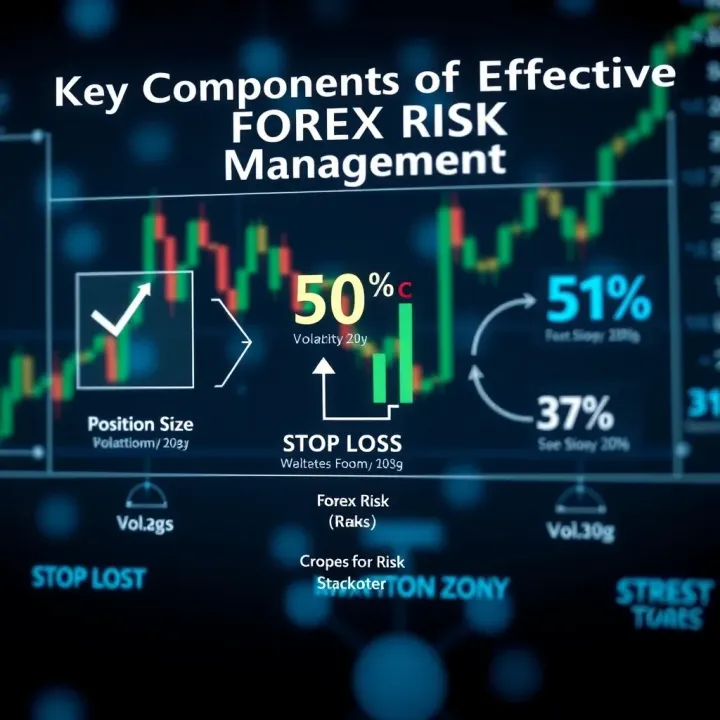
The style of trading you choose should influence your risk levels. Scalping, for instance, involves taking many quick trades often targeting small gains. This style demands low risk per trade, because losses can pile up fast due to the high volume of trades. Day traders also require tight risk control but may accept slightly higher risk per trade since they monitor positions all day.
Swing traders, who hold trades for several days to capture larger price moves, often set wider stop-loss levels and thus might risk a slightly higher percentage. Their trades bear more exposure to market swings, but the lower frequency of trades means the cumulative risk balances out.
Adjusting risk management to suit your trading style means:
Scalpers should use very tight stop-loss limits and only risk about 0.5% or less per trade.
Day Traders might risk 1% to 1.5% depending on their market monitoring capacity.
Swing Traders often stretch up to 2% risk per trade to account for larger price action.
Understanding and aligning your risk management with your trading style not only safeguards your funds but also sharpens your approach to the markets.
By matching risk settings to your style and appetite, your risk management calculator becomes an essential tool rather than a deadweight. It helps you make informed decisions about position size and stop losses, ensuring your trading stays on track, whatever the market does.
Incorporating a forex risk calculator into your trading strategy adds a practical layer to managing exposure. It isn’t just about plugging in numbers; it’s about making informed decisions before and during trades. Using these calculators helps you plan precisely, adjust swiftly, and protect your account from unexpected swings, especially given the volatility common in currency markets.
A well-set stop-loss is your safety net. A forex risk calculator can help you determine exactly where to place this stop-loss level to maintain your risk within acceptable bounds. For example, if your risk percentage per trade is set at 2% of your account balance, the calculator uses current price and pip value to suggest the stop-loss distance that won’t exceed this limit.
This practical approach avoids guesswork. It ensures you’re not risking more than intended on any single trade, which is key to surviving choppy market conditions and preserving capital for future opportunities.
One useful feature of these calculators is the ability to evaluate the risk-reward ratio before you commit. Before entering a trade, you can input your anticipated stop-loss and take-profit levels. The calculator will then show you how much you stand to lose versus gain in real terms.
This helps filter trades where potential reward doesn’t justify risk, meaning you avoid traps where you’re exposed to disproportional loss potential. For example, if the calculator indicates a risk-reward ratio of 1:1 but your strategy demands at least 1:2, you can walk away or adjust your levels accordingly. This discipline keeps losses manageable and profits sustainable.
Forex prices rarely move in a straight line. Once a trade is live, market swings can change your risk profile. A risk calculator lets you update your risk as price shifts, so you know if your stop-loss or position size needs adjusting.
For instance, if the price moves closer to your stop-loss, the calculator can show if your risk now exceeds your set threshold. Conversely, if the price moves favourably, recalculating can help you decide if tightening your stop-loss to lock in gains makes sense.
Ongoing trade management is more than watching charts. Using a forex risk calculator during open trades allows you to fine-tune your exposure. It supports decisions such as scaling out of positions or trailing stops based on evolving market conditions.
For example, a trader might reduce their position size if the market becomes choppy, as confirmed by updated risk calculations. Or, if a currency pair’s volatility changes due to economic news, recalculating risk helps you adapt quickly, protecting your capital without missing out on profitable trends.
Consistently integrating your risk calculator within every stage of your trades not only safeguards your investments but also builds disciplined, data-driven habits essential for forex success.
This hands-on use of risk calculators transforms them from mere tools into active elements of your trading strategy. It’s about trading smart, staying in control, and navigating forex markets with greater confidence and precision.
A forex risk management calculator is only as useful as the data and understanding you feed into it. Traders often slip up by overlooking key details that skew risk assessment, leading to unexpected losses or poor trade management. Getting these basics right protects your capital more effectively and lets you trade with confidence—even during choppy markets.
Failing to update your account balance in the risk calculator can lead to risky miscalculations. If you don’t enter the current balance, the calculator might base trade size and risk percentage on outdated figures. For instance, after a run of losses, your balance could drop significantly. Sticking to an old, higher balance means you’ll risk more than intended. This mistake often results in bigger drawdowns than planned.
Always input your accurate, up-to-date account balance before calculating risk. This keeps position sizing precise and aligns risk with what you can actually afford to lose. Many South African traders find it helpful to check their account after every trade or before planning a new one, especially if they’re actively managing multiple open positions.
Leverage amplifies both profits and losses. Using high leverage increases the nominal position size relative to your margin. While this can boost returns, it also ramps up risk substantially. The risk calculator needs to factor in leverage correctly because margin calls happen when losses wipe out your available margin.
For example, at 1:100 leverage, a small price swing against your position can trigger a margin call quickly, forcing you to close out trades at a loss. Many traders jump in with 1:200 or 1:400 leverage without fully considering the consequences. Overleveraging makes risk management trickier and less forgiving.
The key is to use leverage conservatively and adjust your risk percentage accordingly. Include leverage details in the risk calculator to get realistic exposure estimates and avoid nasty surprises that could wipe out your trading account.
Not all currency pairs have the same pip values or behave the same way when it comes to risk measurement. For instance, the pip value for a USD/ZAR contract differs from that of EUR/USD, due to differing exchange rates and lot sizing conventions.
Ignoring this can throw off your risk calculations. Say you assume a standard pip value for a South African Rand pair but the platform calculates it differently. Your monetary risk per pip might be higher or lower than expected, impacting your position size decisions.
Ensure you understand how pip values change with currency pairs and update your risk calculator accordingly. This is particularly important when trading exotic pairs or crossing the ZAR against strong currencies like USD, EUR, or GBP. Adjusting for pip value differences sharpens your capital protection and aligns expectations with reality.
Avoiding these common pitfalls when using a forex risk calculator takes just a little effort but pays off in smoother trading and fewer costly mistakes. Always check your numbers, factor in leverage carefully, and understand pip behaviour for each currency pair you trade.
Managing risk in forex trading demands more than just plugging your numbers into a risk calculator. It calls for blending tools and habitually reviewing how you trade to adapt to an ever-shifting market. This section covers practical strategies that help you stay in control, protect your capital, and sharpen your decision-making.
A risk calculator gives you clear numbers, but a trading journal adds depth to your risk insights. By writing down every trade’s details — entry, exit, size, and outcome — you build a bank of data to analyse patterns over time. This helps you spot recurring mistakes or strategies that consistently work. For example, if your journal shows frequent losses during volatile news releases, you might decide to avoid trading those times altogether.
Pairing the calculator with analytic reviews of your journal allows smarter tweaks. You may find that even when the risk calculator signals a safe trade size, your past experience suggests otherwise. This layer of reflective practice refines your forex risk management beyond raw calculations.
Setting stop-loss orders isn't just about limiting losses; it’s about placing them thoughtfully within your trading context. The risk calculator helps decide the size of your stops based on risk tolerance and account balance, but where you place your stops in relation to market structure matters too.
For instance, placing a stop just beyond a key support or resistance level rather than a random price point reduces the chance of getting stopped out by normal market noise. Using trailing stops can also protect profits by adjusting as the price moves in your favour. Combined, the calculator’s guidance and strategic stop placement guard your capital and allow room for trades to breathe in South Africa's often volatile forex environment.
Forex markets don’t stay still, and neither should your risk settings. When volatility spikes—say during major US Federal Reserve announcements or unexpected rand moves—you might want to dial down your risk percentage. The reverse applies during quieter periods; you might cautiously increase risk slightly to seize opportunities.
Adjusting your calculator inputs regularly keeps your risk realistic and aligned with current market conditions. Neglect here can mean risking too much or too little, both of which hurt your trading edge and account longevity.
Your past trades are a goldmine of lessons if you pay attention. Reviewing your successes and failures helps identify if slippage, too-tight stops, or excessive position sizes erode profits or lead to losses. Revisiting your trading journal alongside calculator outcomes reveals if you consistently over- or underestimate risk.
Take one example: if you find you’re often stopped out just before a favourable price move, you might need to reconsider your stop-loss strategy or risk per trade. That insight leads you to refine your calculator usage and other risk tools, creating a cycle of gradual improvement.
Consistent risk management is less about avoiding every loss and more about managing them smartly. Combining tools and regularly learning from your trades helps you preserve capital and build confidence in your forex journey.
📊 Explore practical risk management frameworks to spot, assess, and handle risks effectively. Boost your organisation’s resilience and decision-making skills.
📊 Understand the risk management process—from identifying and assessing risks to controlling and monitoring them. Learn best practices and how to improve continuously.
📈 Learn how to find, download, and safely use forex trading systems. Get tips on installation, performance checks, and avoiding common mistakes in trading.

🔍 Explore effective strategies to detect, prevent, and manage fraud risks in South African businesses. Learn about tools, frameworks, and regulations for strong protection.
Based on 6 reviews