

Effective Forex Trading Strategies for Consistent Success
Discover practical forex trading strategies for all risk levels 📈. Learn technical & fundamental methods, risk control, and boost your trading mindset 💡.
Edited By
Edward Walsh
Binary options trading has gained traction among South African traders due to its straightforward nature and potential for quick returns. However, success in this arena demands more than just luck; it requires effective strategies tailored to the market’s unique rhythms.
Binary options are a type of financial contract where the payoff is either a fixed amount or nothing at all, based on whether an underlying asset meets a condition at expiry. For example, you might bet on the direction of the JSE Top 40 index: if it closes higher than the strike price at expiry, you win a predetermined return; if not, you lose the stake.

Understanding the mechanics is one thing, but developing strategies that can manage risk while capturing opportunities is another beast altogether. South African traders face specific hurdles, such as local regulations, data costs, and the impact of Eskom's loadshedding on market hours and emotional trading.
That said, there are several time-tested approaches to improve consistency:
Trend-following: Capitalising on prevailing market movements rather than trying to predict reversals.
Hedging: Using counter positions to limit downside risk.
Risk management: Setting limits to protect capital, including position sizing and stop losses.
Selecting the right strategy depends on personal risk appetite, market understanding, and time availability. Importantly, no approach guarantees success, but disciplined execution combined with ongoing learning can build a steady track record.
This article will guide you through practical strategies, helping you navigate binary options trading with greater confidence in South Africa’s unique environment.
Understanding the basics of binary options trading sets the foundation for making informed and confident decisions. Without grasping the core concepts, traders risk making impulsive moves or falling for common pitfalls. This section aims to clarify what binary options are, how they operate, and the key terms you need to know—especially important for South African traders navigating this fast-paced market.
Binary options are a simplified form of financial trading where you predict whether the price of an asset will be above or below a certain level at a specific expiry time. Think of it as a straightforward yes-or-no bet — for example, will the price of gold be above R30,000 per kilogram at 2 pm? If your prediction is right, you receive a fixed payout; if not, you lose the amount you invested in that trade. This all-or-nothing aspect means potential returns and losses are clear from the start.
In practice, binary options trading involves selecting an asset like a stock, index, currency pair, or commodity and choosing a direction: call (price will rise) or put (price will fall). Your trade has a set expiry time—often as short as 60 seconds or up to several hours or days. Once that time hits, the platform checks the asset’s price and settles your trade accordingly.
For example, if you buy a call option on the JSE Top 40 index at 10:00 am that expires at 11:00 am, and by expiry the index is indeed higher than at the time you bought the option, you profit. Otherwise, you lose your stake. This makes binary options attractive for traders looking for quick, clear outcomes without the complexity of traditional trading.
Familiarity with binary options-specific terms helps you trade with clarity:
Strike Price: The price level you predict the asset will be above or below at expiry.
Expiry Time: The moment at which your option closes and the outcome is determined.
Payout: The fixed return you get if your prediction is correct.
Premium: The amount you pay to enter a trade (your stake).
In the Money: When the option finishes favourably, meaning you win.
Out of the Money: When the option finishes unfavourably, leading to a loss.

Knowing these terms reduces confusion, helping you to focus on developing effective strategies instead of getting lost in unfamiliar jargon.
Grasping these basics ensures you're not just throwing darts in the dark but playing smart in South Africa’s binary options scene. Having a clear picture of how binary options function allows you to better analyse risks, choose assets wisely, and manage your trades effectively.
Understanding popular binary option strategies is vital for traders aiming to secure consistent success. These approaches offer frameworks to read the market, anticipate movements, and make well-informed trades rather than relying on guesswork. Different strategies suit different market conditions and personalities, so familiarising yourself with these can improve your flexibility and results.
Identifying Market Trends is about spotting sustained movement in one direction—either upwards (bullish) or downwards (bearish). This approach banks on the idea that what’s moving strongly now tends to keep moving. For instance, a trader monitoring the JSE Top 40 index could notice a steady upward trend over several weeks. By confirming this momentum, they might buy binary options predicting the trend will continue over the short term.
Using Indicators for Confirmation helps reduce guesswork by backing trends with technical evidence. Common tools include moving averages, which smooth out price data to highlight the overall direction, and the Relative Strength Index (RSI), which signals when an asset might be overbought or oversold. For example, if a share price is above its 50-day moving average and RSI is below 70, a trader can feel more confident in placing a call option expecting the upward trend to continue.
Recognising Support and Resistance Levels means identifying zones where prices repeatedly bounce off or stall. Support is a price floor where demand tends to increase, while resistance is a ceiling where supply tends to kick in. Imagine a currency pair fluctuating between R14.20 and R14.50 for several days. Spotting this range allows the trader to place binary options predicting price rebounds within these limits rather than betting on breakouts.
Best Market Conditions for Range Trading are periods of low volatility and sideways movement. When markets aren’t trending strongly, range trading can be safer as assets tend to hover between key levels rather than making unpredictable jumps. For example, during calm phases between economic data releases, traders might prefer range strategies to avoid the whipsaw effect often seen in volatile times.
Timing Trades Around Economic Releases involves using scheduled announcements, like South Africa’s SARB interest rate decisions or employment stats, to capitalise on short-term market reactions. Traders watch the calendar closely, entering trades just before or immediately after such news, aiming to predict the direction of sudden price swings.
Managing Volatility Risks is critical here because news often triggers sharp and unpredictable movements. Setting tight trade expiry times or reducing trade amounts can help limit exposure. For example, after a poor employment report, the rand might plunge sharply for minutes before stabilising. A trader using news-based strategy needs to be quick but cautious to avoid unnecessary losses from market noise.
Choosing the right strategy depends on your comfort with risk and market conditions. The key is to test these methods thoroughly before committing real money, preferably through demo accounts, to build familiarity and confidence.
Managing risk thoughtfully is not just a side note in binary options trading — it’s the backbone of lasting success. Given how volatile and fast-paced the market can be, especially in South Africa where economic news and global shifts quickly ripple through, having a well-thought-out risk strategy can save your trading account from unnecessary blows.
A solid trading budget defines how much money you’re willing and able to risk before you even enter the market. This budget acts as a financial fence, keeping you from chasing losses or gambling more than you can afford to lose. For instance, setting a monthly limit of R5,000 for binary options trading can prevent your day-to-day expenses from getting skewed by a rash decision made after a tough day.
Beyond the overall budget, it’s wise to cap the size of individual trades. Many traders stick to risking no more than 1-2% of their capital on any single trade. Say you have an R50,000 trading fund; limiting each trade to R500 or less ensures that a few losses won’t wipe you out. Keeping this discipline means you can stay in the game, learn from mistakes, and keep your emotions in check.
Hedging in binary options is like buying insurance for your trades—it helps protect you when the market doesn’t move your way. You might place an opposing trade that profits if your original position loses. For example, if you bought a call option on the rand strengthening against the dollar, placing a put option on the same pair can reduce losses if the rand weakens instead.
This strategy demands good timing and understanding of market signals. While hedging doesn't guarantee profit, it limits damage and softens the emotional impact of inevitable setbacks. Traders should also consider costs since hedging doubles the trades placed and potentially spreads your capital thin.
Many traders rush into binary options without a clear plan, which often leads to costly errors. One common mistake is ignoring market conditions and blindly sticking to a strategy even when it isn’t suitable. For example, a trend following strategy can backfire during sideways or choppy markets.
Another trap is chasing losses—trying to quickly recover from a losing trade by increasing bet sizes usually deepens losses. Also, neglecting to review trade outcomes or learn from mistakes stunts progress. To avoid these, maintain a trading journal, stick to your limits, and don’t trade under stress or fatigue.
Risk management isn’t about eliminating risk—it’s about understanding and controlling risk so your trading can last, adapt, and hopefully grow steadily over time.
In shorter words, a focus on managing your trading budget, using smart hedging, and steering clear of predictable mistakes sets you up for a clearer, steadier path in the binary options market. This discipline helps guard your capital so you can keep reacting to market moves rather than reacting to losses.
Picking a binary option strategy that suits your trading style isn’t just a recommendation — it’s essential. A mismatch here can see you chasing losses or fumbling trades because the approach doesn’t fit your comfort with risk or market behaviour. For instance, a trader who prefers slow and steady gains might find the trend following strategy too demanding, especially in volatile markets, while someone more risk-tolerant might thrive with news-based trading.
Understanding how much risk you’re willing to take shapes your strategy choice. If sudden losses make you sweat, it's best to avoid aggressive tactics like heavy news trading that can lead to wild swings. Instead, consider conservative strategies like range trading that operate within defined price bands. A handy way to gauge your risk appetite is to keep a trading journal for a week, noting your reactions to gains and losses objectively. This helps match strategy to temperament rather than trial and error under pressure.
Market behaviour changes constantly, and the right strategy often depends on current conditions. If the market’s moving sideways, range trading offers better odds by capitalising on support and resistance levels. On the other hand, in trending markets with clear direction, trend following can pay off. For example, during a steady rise in commodity prices, a trend follower would look for bullish signals to trade upswings confidently. Assessing the market each day before trading helps avoid forcing a strategy into an unsuitable environment, which can drain your capital fast.
Before putting real money on the line, trial your chosen strategies on demo accounts offered by many brokers. These simulated platforms mimic live trading without risk, allowing you to see how your strategy performs under different conditions. You might discover, for instance, that your plan needs tweaks around economic announcements or that some indicators just don’t jive with your timing. Demo testing brings clarity and confidence, enabling you to enter the real market with a well-honed, battle-tested approach.
Choosing a strategy that fits your style and current market condition isn’t optional – it’s how you stay in the game longer and trade smarter.
In summary, know yourself, watch the market, and test before you invest. This practical combo sets the foundation for consistent binary option trading success in South Africa’s ever-changing market.
Discover practical forex trading strategies for all risk levels 📈. Learn technical & fundamental methods, risk control, and boost your trading mindset 💡.

Master key forex trading strategies 🤑 for South Africans 🇿🇦 to boost your market skills with practical tips, risk management, and proven technical and fundamental methods.
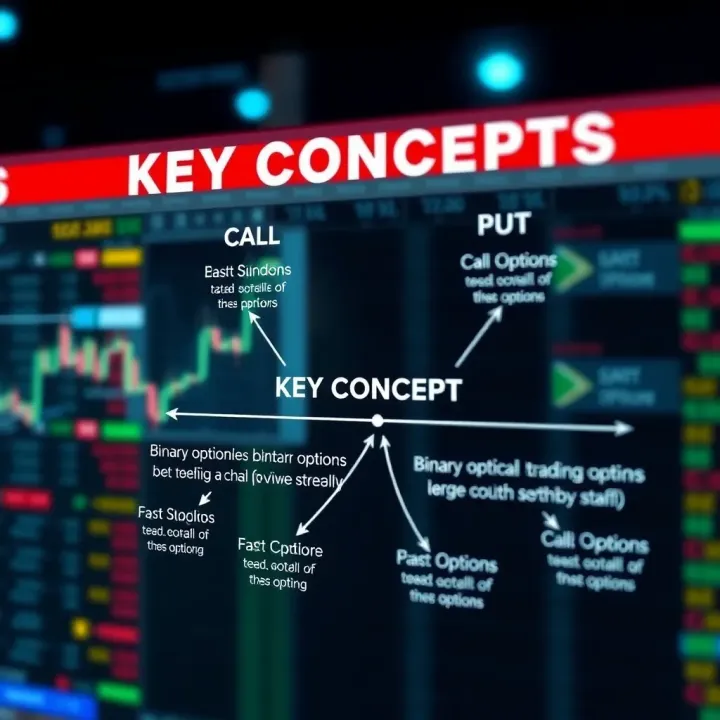
📈 Learn how binary options trading works, explore practical strategies, spot common risks, and access handy PDF guides tailored for South African traders seeking clear insights.

🤖 Learn how binary robots automate your trades in binary options, understand their strategies, benefits, and risks, and see if they fit your trading style in SA.
Based on 5 reviews