
Understanding Forex Trading Signals in South Africa
📈 Discover how forex trading signals can guide your trades with clear advice, pros, cons & tips for South African traders to boost market confidence.
Edited By
Isabella Morgan
Forex trading charts are the bedrock of any trader's toolkit. They offer a snapshot of market action, showing price movements over time and helping you spot trends, reversals, and key levels of support or resistance. Whether you're trading rand-dollar pairs or global currencies, understanding these charts will give you an edge.
The most common types of forex charts are line charts, bar charts, and candlestick charts. Each provides different layers of information:
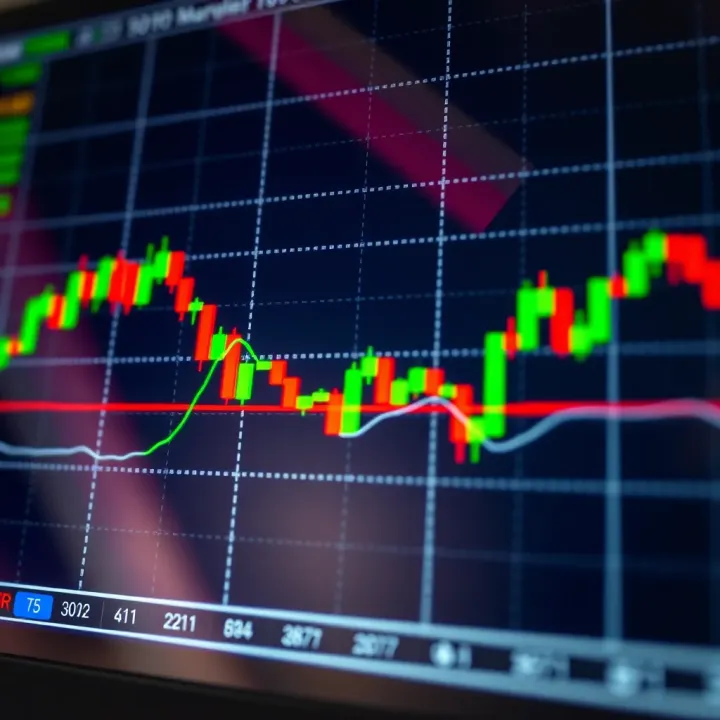
Line charts connect closing prices over time. Simple and clean, they give a quick idea of overall direction but miss intraday price action.
Bar charts illustrate the open, high, low, and close (OHLC) for each period, offering a more detailed look at price volatility.
Candlestick charts also display OHLC data but with a visual style that highlights bullish and bearish sentiment clearly.
The choice of chart type depends on your trading style and the level of detail you need. For example, scalpers rely heavily on candlesticks for quick signals, while long-term investors might favour line charts to track broader trends.
Charts come with timeframes, ranging from minutes to months, which influence the granularity of the data. South African traders often use 15-minute or hourly charts for intraday trading and daily charts for swing or position trading.
Understanding chart components is key:
Price axis (vertical) shows the price levels.
Time axis (horizontal) marks the passage of time.
Volume indicators provide clues on trade activity.
Besides these, tools like trendlines, moving averages, and support/resistance zones help interpret chart patterns and make better decisions.
Getting comfortable with forex charts lets you read the market’s mood more accurately and find better entry and exit points. This foundation sets you up to combine technical analysis with market news, risk management, and strategy development—all essential to trading success.
Understanding the basics of forex trading charts is essential for anyone keen on navigating the currency markets. These charts offer a visual representation of price actions and trends—allowing traders to make better-informed decisions instead of going in blind. For example, a Cape Town-based forex trader might study the daily chart of the South African rand against the US dollar (ZAR/USD) to spot patterns indicating a likely price move.
At its core, a forex trading chart shows how a currency pair’s price has changed over a specified period. This could be minutes, hours, days, or even weeks. Imagine watching the ZAR/USD pair over a month: a chart would map each trade's opening, closing, high, and low prices in relation to specific time intervals. This historical view isn’t just for curiosity—it helps you see whether the market is leaning bullish (prices rising) or bearish (prices falling).
Charts reveal more than just raw numbers; they help identify trends and market swings. Trend direction helps traders decide whether to buy or sell, while volatility shows how sharply prices change. For instance, a trader in Johannesburg might notice that the rand exhibits more volatility around economic data releases, such as SARB interest rate announcements, signalling a time to either tread cautiously or capitalise on price swings.
Though forex is a decentralised market, volume indicators on charts provide clues about how many trades are happening. Higher volume often confirms strong trends, while low volume can indicate uncertainty or a lack of interest. For example, if a spike in volume accompanies a price surge in EUR/USD, it’s a sign that many traders back the move, making it more reliable than a price change on thin volume.
Choosing the right timeframe on a chart is vital. Short timeframes like 5-minute or 15-minute charts suit day traders looking for quick moves, while longer timeframes such as daily or weekly charts appeal to swing traders or investors spotting broad trends. A Durban-based trader might prefer a 1-hour chart to catch daily market rhythms without getting overwhelmed by noise.
Charts typically display prices on a vertical scale, either logarithmic or linear. Linear scales map equal price increments equally, which works fine for small ranges. Logarithmic scales represent percentage changes evenly, revealing relative price movements better when prices range widely, like when a currency depreciates sharply. Choosing the right scale affects how you interpret price action and can prevent misreading market signals.
Grid lines and axes on forex charts serve as a reference framework, helping traders pinpoint price levels and time intervals instantly. Horizontal lines assist in spotting support and resistance zones, while vertical lines mark trading sessions or weeks. For instance, Johannesburg traders might use grid lines to quickly see how prices moved during the Asian, European, and US sessions, aiding decisions about the best times to trade.
Mastering these basic chart elements lays the groundwork for more advanced analysis and better trading outcomes in South Africa’s dynamic forex market.
Understanding the types of forex trading charts is vital for any trader aiming to read the market more effectively. Different chart types reveal price movements in distinct ways, helping traders spot trends, reversals, or breakouts. These visual tools are more than just lines and bars — they paint a picture of market behaviour that traders use to make decisions.

Line charts create a simple representation by connecting closing prices for a currency pair over a given timeframe. For example, a daily line chart will plot the closing price each day and join these points with a continuous line. This simplicity offers a clear overview of the market’s direction without the extra noise.
Line charts’ main advantage is their straightforwardness, making them ideal for beginners or for a quick snapshot of price trends. They highlight overall market direction effectively but leave out details like volatility or intraday price movement. Traders looking to identify precise levels or patterns will find line charts too basic as they miss highs and lows within the time period.
Bar charts display more detail with a vertical line illustrating the price range: from the lowest to the highest point during the interval. A short horizontal dash to the left shows the opening price and one to the right marks the closing price. This OHLC format provides a concise summary of each trading period's activity, telling you not just where prices ended but the journey they took.
By reading the shape and length of bars, traders can gauge market volatility and direction. For instance, a long lower shadow suggests buying pressure after a sell-off, while a close near the high could indicate bullish sentiment. Compared to line charts, bar charts give more cues for tactical decision-making, which can be useful for short-term trading or assessing the strength of trends.
Candlestick charts are essentially bar charts but with a block (the body) between open and close prices. The body is coloured, usually green (or white) for upward moves and red (or black) for downward moves. Lines called wicks or shadows extend above and below, representing the high and low prices within the interval.
Candlesticks form patterns like dojis, hammers, or engulfing bars that traders use to predict reversals or continuation. For example, a hammer pattern after a downward trend often signals a potential price rebound. Recognising these patterns helps traders anticipate shifts without solely depending on indicators.
Candlestick charts combine visual clarity with detail, making them the favoured tool of many forex traders. They reveal price action vividly, supporting quick interpretation of market momentum and psychology. In South Africa’s often volatile forex market, these charts assist traders to time entries and exits more precisely than simpler chart types.
To sum up, each chart type serves a specific purpose—from line charts’ simplicity, bar charts’ detail, to candlesticks’ rich visual signals. Choosing the right one depends on your trading style and the depth of analysis you require.
Indicators and tools on forex charts provide a clearer picture of market behaviour beyond mere price movements. These elements help traders and analysts identify trends, potential entry and exit points, and overall market momentum. Using technical indicators alongside chart patterns offers a more informed base for trading decisions, especially in a volatile market like forex.
A simple moving average (SMA) calculates the average price over a set number of periods, giving equal weight to each point. For example, a 20-day SMA totals the closing prices of the last 20 days divided by 20. On the other hand, an exponential moving average (EMA) gives more weight to recent prices, making it more responsive to recent market shifts. This responsiveness means an EMA reacts quicker to price changes, which can be crucial for traders wanting timely signals.
Using the SMA suits traders who prefer smoother, less noisy signals, while the EMA fits those who need to catch trends early, such as scalpers or short-term traders. For instance, in fast-moving forex pairs like USD/ZAR, an EMA might highlight sudden shifts more clearly than an SMA.
Moving averages smooth out price data, making it easier to identify the overall trend direction. When prices consistently stay above a moving average, it signals an uptrend; below suggests a downtrend. Traders often watch for crossovers — such as when a short-term average crosses above a long-term average — to confirm trend reversals or entries.
In practical terms, a trader might see the 50-day EMA crossing above the 200-day EMA (a "golden cross") as a buy signal. Conversely, the opposite crossover might signal a sell. These cues help mitigate emotional decisions, providing a systematic approach to trend spotting.
Support and resistance levels act like invisible walls where price tends to pause or reverse. Support is a price zone where buying pressure typically stops the price falling further, while resistance caps upward movement. These levels form from historical highs and lows or through psychological price points, like round numbers (e.g., R15.00 in USD/ZAR).
Identifying these levels can involve spotting repeated price bounces or consolidations at certain points. Over time, these zones become self-fulfilling, as many market participants place their orders around them.
Knowing support and resistance zones informs when to enter or exit trades and where to set stop-loss orders. For example, entering a long position near a strong support level reduces risk, as the price may bounce up. Conversely, placing sell orders close to resistance can maximise profits before a reversal.
Ignoring these levels often leads to premature exits or late entries. Traders who treat support and resistance as reference points generally make smarter decisions in South African forex markets, which can be sensitive to these technical triggers.
The RSI measures the speed and change of price movements on a scale of 0 to 100. Values above 70 often signal overbought conditions, suggesting a price reversal or pullback may be near. Values below 30 indicate oversold conditions that might precede a bounce.
For example, if the EUR/USD RSI spikes above 70 during a uptrend, traders might prepare to take profits or tighten stops. RSI helps avoid chasing price extremes and serves as an early warning tool.
Bollinger Bands consist of a moving average line with upper and lower bands based on standard deviations. These bands expand when volatility rises and contract during quiet phases. When price touches or breaks the bands, it signals potential overextension and possible reversal or continuation depending on context.
Traders in SA markets may use Bollinger Bands on pairs like GBP/ZAR during volatile news events. A price pushing the upper band with rising volume might indicate a strong uptrend, while a squeeze in bands suggests a volatility break-out is imminent.
MACD shows the relationship between two EMAs, typically the 12-day and 26-day. The MACD line crossing above the signal line (a 9-day EMA of the MACD) generates buy signals and vice versa for sell signals. It also tracks momentum and strength of price moves.
Using MACD helps traders confirm trends and spot potential reversals. For example, in a weakening USD/ZAR trend, a bearish MACD crossover could prompt exiting long trades early. It adds a layer of confirmation alongside price action and other indicators.
Technical indicators aren't foolproof but serve as practical tools to enhance decision-making. Combining these tools thoughtfully helps decode forex charts, avoiding knee-jerk moves.
In summary, mastering moving averages, support and resistance, and other indicators sharpens your ability to read forex charts. This improves timing and confidence, crucial when trading South African rand pairs alongside global currencies.
Practical tips for reading and using forex charts help traders make smarter decisions and avoid costly errors. While understanding the types of charts and indicators is key, applying that knowledge effectively defines your success in the markets. This section offers hands-on advice to pick the right tools and read them in context, enabling you to respond well to South Africa's forex environment.
Factors to consider include your trading style, time availability, and market focus. For instance, if you’re a day trader in Johannesburg watching volatile currency pairs like USD/ZAR or EUR/ZAR, quick charts such as 5-minute candlesticks provide detailed short-term movements. Conversely, a longer-term investor might prefer daily or weekly line charts to track broader trends without getting distracted by short-term noise.
Another consideration is how comfortable you are with analysing visual patterns. Some traders find candlestick charts rich in information with colour coding and patterns, while others stick to bar or line charts that feel cleaner. Also, consider the specific forex pair liquidity and spreads, as some charts might reveal volatility spikes better in busy pairs.
Matching charts to trading style means aligning your chart choice with your entry and exit points. Scalpers benefit from high-frequency bar charts that highlight rapid price swings, allowing them to jump in and out fast. Swing traders often find candlestick charts most helpful to spot reversal patterns or continuation signals over days or weeks. Position traders might focus on weekly or monthly line charts, concerned primarily with long-term support and resistance.
For example, a swing trader looking to buy Rands against the US Dollar based on overextended price moves might use candlestick charts paired with moving averages to time the entry. A position trader in Cape Town might check monthly line charts combined with fundamental news to determine when to hold or exit.
Over-reliance on single indicators is a common trap. Relying solely on RSI or moving averages without cross-checking can lead to false signals. For instance, RSI might show oversold conditions but without confirming price support, you risk buying too early. It’s best to combine indicators for a fuller picture.
Many traders jump at a single indicator's sign without looking at volume or support levels. In South Africa’s market, where liquidity can spike around news releases or during loadshedding disruptions, this mistake can cost dearly. Using multiple indicators helps filter noise and confirms trends.
Misreading chart patterns happens when traders assume a pattern guarantees a move. For example, a bullish engulfing candlestick does not always mean prices will rise — it needs to be seen with volume confirmation or relevant support nearby. Many newcomers mistake random fluctuations for meaningful formations.
It’s important to build experience recognising when a pattern is reliable in context. For example, a resistance level near a pattern’s completion adds weight to a reversal signal. South African traders should be wary of sudden moves influenced by geopolitical events or changes in SARB monetary policy that distort typical patterns.
Fundamental analysis complements chart reading by providing the broader economic context. For example, knowing when the South African Reserve Bank (SARB) announces interest rate decisions or GDP data is vital. These fundamentals often drive major price movements that technical charts only reflect after the fact.
A trader in Durban using technical signals for USD/ZAR should check SARB announcements or commodity price shifts, as these affect the rand’s strength. Fundamentals help prevent being caught on the wrong side during unexpected shifts.
News and economic events play a huge role as well. Sudden announcements like Eskom load shedding upgrades, political developments, or global events such as changes in US Federal Reserve policy can cause sharp volatility. Even the best charts won’t accurately predict such moves but can help spot reaction patterns.
For example, a trader might notice a candlestick shadow forming immediately after an SARB announcement, signalling market uncertainty. Monitoring a reliable news feed alongside charts provides you with a real-time edge, ensuring your trades account for events beyond just price history.
Combining technical charts with fundamental insights and news sharpens your trading edge, helping you trade with confidence in the dynamic South African forex scene.
📈 Discover how forex trading signals can guide your trades with clear advice, pros, cons & tips for South African traders to boost market confidence.

📊 Discover how Forex Trading View helps South African traders with tools and insights to make smart forex decisions. Essential tips for beginners and pros!
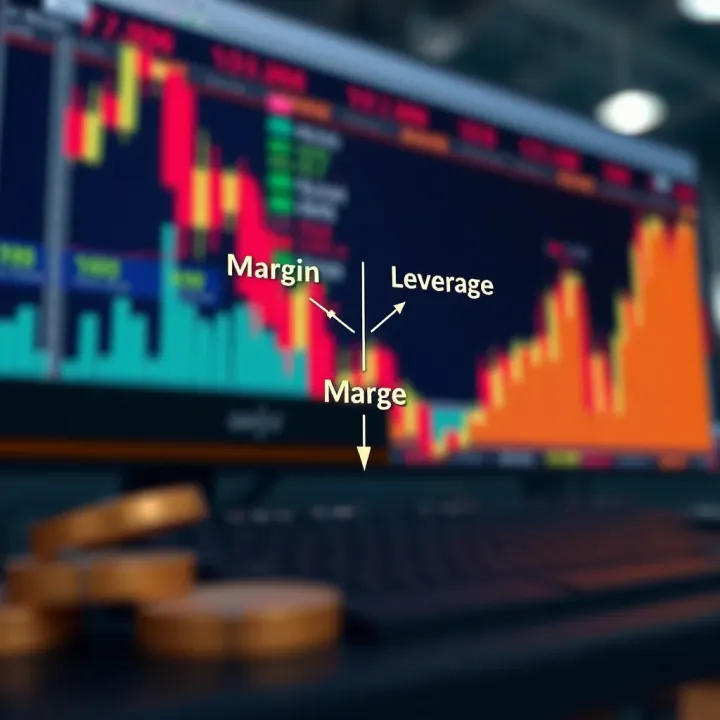
Learn how margin works in forex trading 📊 Explore leverage, margin calls, and smart risk management to trade confidently and avoid costly mistakes!

Learn how the forex market works, explore currency pairs, platforms, and risks, plus practical tips for South African traders wanting to trade forex confidently 📉💱📱
Based on 8 reviews