
Understanding Forex Trading in South Africa
Learn how the forex market works, explore currency pairs, platforms, and risks, plus practical tips for South African traders wanting to trade forex confidently 📉💱📱
Edited By
James Harrington
Forex trading quotes show the prices at which currencies change hands. Understanding these quotes is key for anyone active in the South African forex market. They determine how much rand (ZAR) you’ll get when trading against the US dollar (USD), euro (EUR), or other major currencies.
At its simplest, a forex quote consists of a currency pair, for example, USD/ZAR. This means you are looking at how many rands one US dollar can buy. The first currency is the base, the second the quote currency. A price of 18.75 for USD/ZAR means 1 USD equals 18.75 ZAR.
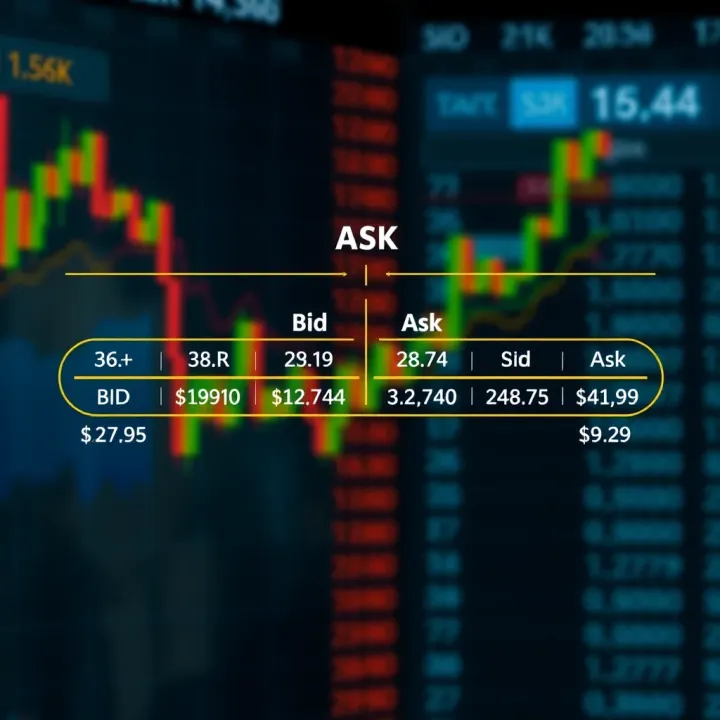
Forex quotes reflect the current market value and fluctuate constantly due to demand, supply, and various economic factors.
South African traders often focus on major pairs involving the rand because imports, exports, and investment flows directly affect the local economy. For instance, when Eskom announces a worsening loadshedding schedule, the rand might weaken, shifting forex quotes.
Reading forex quotes involves understanding the bid and ask prices: the bid is what buyers are willing to pay, and the ask is what sellers want. The difference between these two is called the spread. Smaller spreads usually mean lower costs for traders.
Currency pairs are divided into:
Majors: pairs including USD and other strong currencies (e.g., USD/EUR, USD/GBP)
Minors: pairs without USD but still prominent (e.g., EUR/GBP, AUD/NZD)
Exotics: pairs involving emerging market currencies like the ZAR (e.g., USD/ZAR, EUR/ZAR).
Price movements hinge on multiple elements like interest rates set by the South African Reserve Bank (SARB), geopolitical developments, commodity prices (platinum, gold), and global risk sentiment.
Understanding these quotes and market forces helps you make better trading decisions and manage risks. It’s not just about watching numbers but interpreting what those numbers tell you about the direction of the rand and connected markets.
In the following sections, we will break down the anatomy of forex quotes, how to read currency pairs, and practical tips tailored to South African traders navigating the forex space.
Understanding the basics of forex trading quotes is essential for any trader, especially in South Africa, where currency fluctuations directly affect investment outcomes. Forex quotes show the price at which one currency can be exchanged for another, forming the backbone of every transaction in the foreign exchange market. By grasping how these quotes work, you can make better-informed decisions rather than just guessing based on market noise.
A forex quote is essentially the current rate at which you can buy or sell a currency pair. It’s expressed as the value of one currency relative to another, for example, the USD/ZAR quote tells you how many South African Rand (ZAR) you need to buy one US Dollar (USD). This quote updates constantly throughout the trading day, reflecting real-time market demand and supply.
Understanding forex quotes matters because it helps traders time their entry and exit points. For instance, if the USD/ZAR rate is 18.50, it means you pay R18.50 to buy one US dollar. Monitoring these fluctuations can reveal opportunities to profit from short-term moves or hedge against longer-term exchange rate risks.
Every forex quote includes two prices: the bid and the ask. The bid price is what buyers are willing to pay for the base currency, while the ask price is the price sellers want to receive. The difference between these two is called the spread, which is a hidden cost every trader pays.
For example, if the USD/ZAR bid is 18.45 and the ask is 18.47, you can sell dollars at R18.45 but have to pay R18.47 to buy. Knowing the bid and ask prices is practical because it helps you understand transaction costs upfront, enabling smarter trade planning, especially when you’re trading smaller amounts or on thinly liquid pairs.
Currency pairs are the core of forex trading. Each pair consists of a base currency (first) and a quote currency (second). The base currency is what you’re buying or selling, and the quote currency is what you’re using to pay. In the pair GBP/USD, the British Pound (GBP) is the base currency and the US Dollar (USD) is the quote currency.
This structure matters because the quoted price shows how much of the quote currency you need to buy one unit of the base currency. If GBP/USD is 1.38, you’ll pay 1.38 US dollars for one British pound.
Some currency pairs are traded more frequently and have tighter spreads due to higher liquidity. These include major pairs like EUR/USD, USD/JPY, and USD/ZAR. For South African traders, USD/ZAR and EUR/ZAR pairs are often the most relevant because they directly involve the rand and are heavily influenced by local economic news and political events.
Trading popular pairs has the advantage of better price accuracy and easier execution. However, it also means you face more competition. Conversely, exotic pairs like USD/TRY or USD/MXN can be more volatile and costlier due to wider spreads but sometimes offer bigger profit potential if you understand the risks.
Understanding these basics helps South African traders navigate the market in a practical way, especially when juggling rand volatility and global currency trends. Start by watching the bid, ask, and quote structures then build your strategies around what move suits your risk appetite and market outlook.
Understanding how to read and interpret forex quotes is key for any trader looking to navigate the currency markets effectively. Especially for South African traders, being able to quickly grasp what quotes represent can mean the difference between spotting a good trade and missing the opportunity. Forex quotes show the value of one currency relative to another, so knowing their format and the terminology involved helps you make smarter, timely decisions.
Standard quote presentation usually shows two currencies paired together, for example, ZAR/USD, where the South African rand (ZAR) is compared against the US dollar (USD). The quote tells you how much of the quote currency (here, USD) is needed to buy one unit of the base currency (ZAR). In practice, this helps you understand whether the rand is strengthening or weakening against the dollar, guiding your trade decisions.
These quotes are often displayed with a bid price and an ask price. The bid is what buyers are willing to pay, while the ask is the price sellers want. The gap between these two prices is the spread, which is crucial when considering trading costs.
Direct and indirect quotations differ in which currency is the base and which is the quote. A direct quote is when the domestic currency (like ZAR) is the quote currency, showing its value against another currency (USD/ZAR). An indirect quote flips this, placing the domestic currency as the base (ZAR/USD). South African traders should know both formats since different brokers or platforms might use either style. It impacts how you read your potential gains or losses in the local currency.
What a pip means: A pip (percentage in point) is the smallest price movement a currency pair can make. For most pairs, it’s the fourth decimal place, like 0.0001. For example, if the EUR/USD moves from 1.1200 to 1.1205, that’s a 5-pip change. South African traders can relate this to the cost and profit potential of trades — tiny shifts can add up, especially when trading with leverage.
Calculating spreads: The spread reflects the cost of opening a trade, showing the difference between the bid and ask prices. For instance, if USD/ZAR is quoted with a bid of 18.50 and an ask of 18.55, the spread is 0.05. Lower spreads usually mean cheaper trades, while wider spreads can eat into your profits, particularly in volatile market conditions or less liquid pairs.
Significance of price changes: Price movements indicate market shifts driven by economic reports, political events, or market sentiment. For South African traders, watching how the rand fluctuates against major currencies can signal opportunities or risks. Sudden moves, even if small in pips, should alert you to adjust stops, limits, or close positions to manage risk wisely.
Mastering the nuances of forex quotes lets you act decisively and avoid costly mistakes. Tracking pips, spreads, and quote formats builds the foundation for smarter trading in Mzansi and beyond.
In summary, being fluent in reading quotes help you gauge market conditions, gauge trading costs, and judge price movement impact. This skill is unavoidable for traders wanting to maintain an edge in the fast-moving forex market.
When trading forex, understanding what moves the prices behind the quotes is key to making better decisions. Several main factors influence forex quotes, shaping how currencies are valued against one another. Recognising these elements helps traders predict potential shifts or avoid surprises, especially in South Africa where external and local factors intersect.
Economic indicators such as inflation, interest rates, and gross domestic product (GDP) offer clear signals about a country's financial health and currency strength. For instance, rising inflation can erode the purchasing power of the rand (ZAR), prompting traders to adjust forex quotes to reflect that weakness. Similarly, if the South African Reserve Bank (SARB) increases interest rates to curb inflation, the rand often strengthens as higher yields attract investors. A weaker GDP figure versus expectations may signal economic slowdown, causing the currency to slip in forex markets.
Political events also have a direct impact on forex quotes. South Africa’s political climate—whether it involves leadership changes, policy shifts, or election outcomes—can create uncertainty, shaking investor confidence. For example, when the government announced changes to mining regulations or energy policy, markets quickly priced in risks around currency volatility. Traders often sell off the rand if they anticipate instability, pushing quotes in the opposite direction.
Trader behaviour influences price movements more than many give credit for. If a majority expects the rand to weaken due to negative news, collective buying or selling creates momentum that shows up in forex quotes. This herd mentaly can exaggerate price changes even when fundamentals haven’t shifted drastically. Understanding prevailing sentiment lets traders spot possible overreactions and time entries or exits better.
Liquidity—how easily a currency can be bought or sold—also plays a crucial role in quote accuracy. The US dollar (USD), euro (EUR), and South African rand enjoy high liquidity during business hours but tend to thin out overnight or during public holidays. Low liquidity can cause spreads to widen and quotes to fluctuate sharply, which adds risk for traders. For South African traders, being aware of local market hours and liquidity conditions helps avoid nasty surprises or costly slippage when executing trades.
Forex quotes reflect a blend of measurable indicators and human emotion; managing both sides improves trading outcomes.
Economic stats tell you the "why" behind price moves.
Political events often trigger sudden quote swings.
Trader sentiment can amplify market reactions.
Liquidity conditions affect the reliability of quoted prices.
Keeping an eye on these factors together gives a fuller picture of forex quote behaviour and the forces behind the numbers. That way, South African traders can navigate the market with more confidence and less guesswork.
Understanding how to use forex quotes is fundamental for making smart trades. The forex market operates on rapid price changes, and knowing when and how to act based on those changes can spell the difference between profit and loss. Traders rely on quotes to gauge the cost of buying or selling currency pairs, making these figures the first step in crafting trading strategies.
Reading live quote changes requires attention to real-time market data. Forex prices update every second as global events and market sentiment shift. For instance, if you notice the Rand (ZAR) moving against the US dollar (USD) during a volatile period following a political announcement, you can decide to enter a trade quickly before the price adjusts further. Live quotes give you the immediate snapshot needed to seize short-term opportunities or to limit exposure during adverse moves.
However, not every change warrants a trade. You need to understand the pace and scale of these movements. Platforms showing live tick data or candlestick charts help you interpret what these changes mean and when to act. Watching these quotes is like listening to the market’s heartbeat—sometimes calm, sometimes racing.
Recognising trends and volatility is equally vital. A trader who spots a steady upward price movement in EUR/ZAR over several hours can align their trades to follow the trend rather than fight it. Volatility, the measure of price swings, signals potential profit but also increased risk. High volatility in forex markets often happens during major economic reports or when Eskom announces loadshedding schedules, which can influence local currency operations.
South African traders can use trendlines and moving averages to lock into the market's momentum. For example, if the ZAR strengthens persistently against the British pound (GBP), a trader might anticipate further gains or prepare for a reversal. Understanding these patterns can inform whether to hold, enter, or exit trades.
Popular South African forex platforms like IG, Plus500, and FXTM offer traders access to live and historical forex quotes. These platforms typically include features tailored for local traders, such as ZAR-based accounts, local payment methods, and educational resources aligned with South African regulations. The key benefit is the ease of combining live quotes with news on local factors, helping traders make informed decisions quickly.
Mobile apps and real-time data play a big role in today’s trading environment. Apps like MetaTrader 4 and 5, offered by many brokers, provide live streaming of forex quotes on smartphones and tablets. This means traders in Johannesburg or Durban don’t need to be glued to their desktops; they can monitor quotes anytime, anywhere. Real-time alerts for price movements and news events ensure no sudden market shift goes unnoticed.
Having up-to-the-minute forex quotes on your mobile gives flexibility and responsiveness, essential in a market where seconds can change outcomes.
These tools also help with risk management, where you can swiftly execute stop-loss orders or adjust positions based on live quotes. They support traders in coping with the rand’s sensitivity to local economic changes and global events.
By combining timely quote interpretation with reliable platforms, South African traders can navigate foreign exchange markets more confidently and rigorously.
Forex trading isn’t just about understanding quotes — South African traders must also be aware of certain risks and factors that could impact their investments. Local market conditions, economic environment, and operational challenges all influence how forex trading plays out here. Knowing these practical considerations helps protect your capital and make smarter trades.
Margin represents the amount of money you need to open a forex position, while leverage allows you to control a larger position than your actual capital. Because forex quotes dictate the price of currency pairs, sudden shifts in quotes can affect your margin call — the demand to top up your account to cover potential losses.
If the exchange rate moves against your position, and your available margin falls below the broker’s required level, you’ll get a margin call. For example, if you’re trading USD/ZAR and the rand weakens sharply, the leveraged position might blow out quickly, forcing you to add funds or close out at a loss. So, watching how quotes move is key to managing your risk and avoiding unexpected margin calls.
Leverage magnifies both profits and losses. Using high leverage — say 100:1 — might look tempting because you can control large positions with little capital. But the risk is very real: a small unfavourable move in the forex quote can wipe out your trading account. Many South African brokers offer varied leverage ratios, but the higher the ratio, the greater the danger of losing more than you invested.
Keep in mind that leverage is a double-edged sword. While it can boost returns during favourable market moves, it can also accelerate losses during volatile periods, especially when rand swings are sharp. Managing leverage carefully is crucial to stay afloat.
The rand (ZAR) is known for its volatility, often reacting to domestic political shifts, commodity prices, and global trends. This volatility affects forex quotes involving the rand, making trading more unpredictable compared to majors like EUR/USD.
For traders dealing with USD/ZAR or EUR/ZAR pairs, sudden rand fluctuations can result in quick gains but just as fast losses. For instance, if Eskom-related concerns spike, causing rand weakness, your open positions could see big swings within minutes. This demands constant monitoring and quick decision-making.
Another local factor is Eskom’s loadshedding, which affects internet stability and power supply. A sudden blackout during active trading hours could cut your access to trading platforms, preventing timely order execution. This lag could lead to missed opportunities or unwanted losses.
South African traders should consider backup power solutions like UPS (uninterruptible power supplies) or mobile data connections as contingency plans. Plus, choosing reliable brokers with efficient platforms that function well under constrained bandwidth can make a difference.
Being aware of margin requirements, local currency volatility, and operational hurdles like loadshedding is more than good practice — it’s essential for surviving and succeeding in South African forex trading.
By grasping these risks and practical points, traders can approach the forex market with a better sense of control and readiness for twists that local conditions often bring.
Learn how the forex market works, explore currency pairs, platforms, and risks, plus practical tips for South African traders wanting to trade forex confidently 📉💱📱
🤖 Discover how forex trading robot software automates currency trades and learn key tips for South African traders on choosing reliable tools, managing risks, and following tax rules.
💡 Discover how forex trading signals work and learn to spot reliable ones. Tips and risks explained for South African traders aiming for smarter trades! 🇿🇦
📈 Explore forex trading jobs in South Africa, from analyst to broker roles. Understand skills needed, career paths, and how to enter this financial sector field with confidence.
Based on 14 reviews